• Home
  • EXPLORE AITC
  • SHOP
  • About Us
  • Masthead
  • Work
  • Contact Us
  • Standards
    • Our Philosophy
    • Diversity & Representaion
    • Editorial Standards
    • Editorial & AI Standards
    • Ethics & Corrections
    • Partnerships & Sponsorships
  • Privacy Policy
  • Terms & Conditions
  • Menu

Afros in tha City

Stories Shaping Culture
  • Home
  • EXPLORE AITC
  • SHOP
  • About Us
  • Masthead
  • Work
  • Contact Us
  • Standards
    • Our Philosophy
    • Diversity & Representaion
    • Editorial Standards
    • Editorial & AI Standards
    • Ethics & Corrections
    • Partnerships & Sponsorships
  • Privacy Policy
  • Terms & Conditions

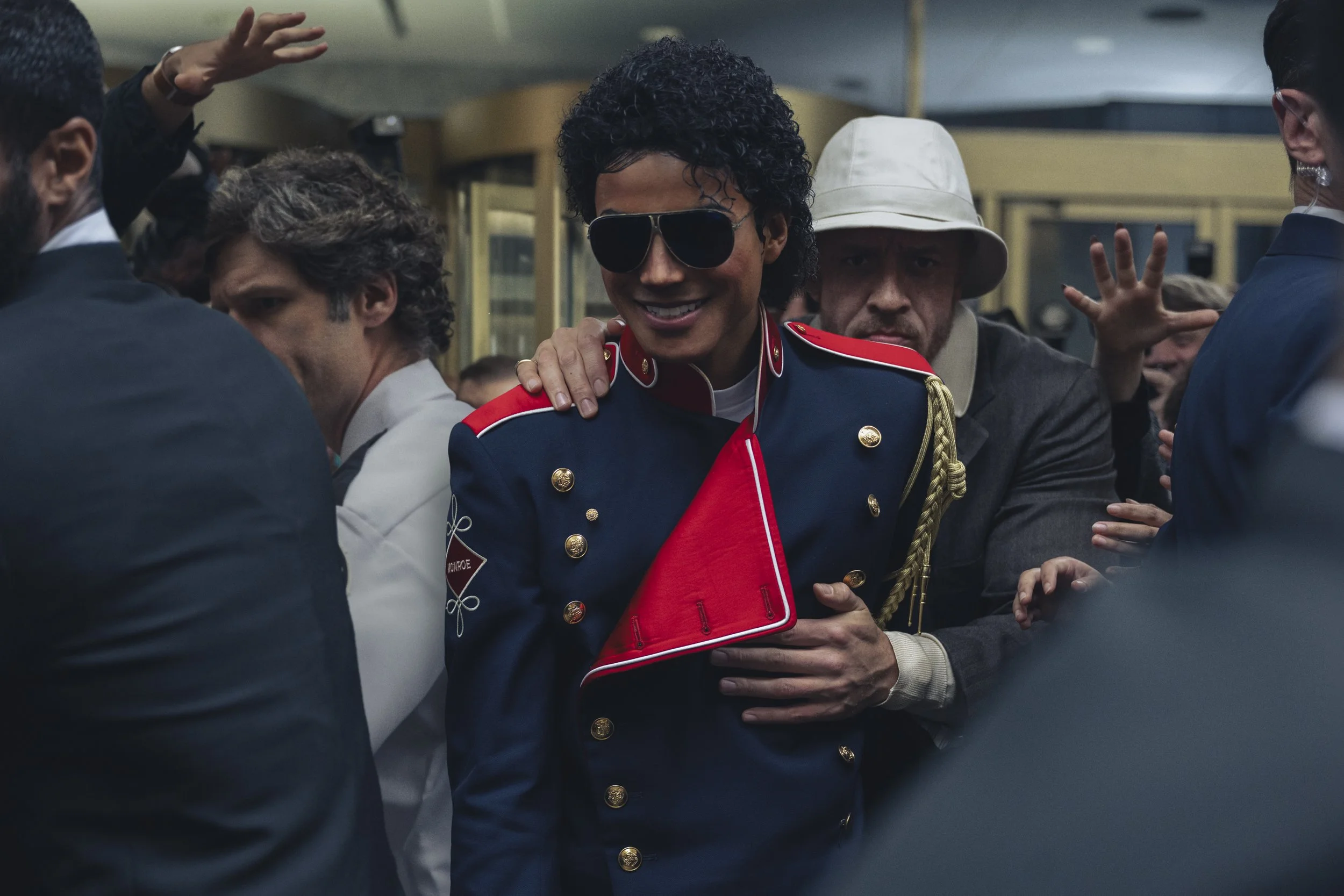
Jaafar Jackson as Michael Jackson and KeiLyn Durrel Jones as Bill Bray in Michael. Photo Credit: Glen Wilson for Lionsgate.

Michael: Time, Memory, and the Return of an Icon

April 01, 2026 in Film

There are few names in global culture that exist beyond time. Michael Jackson is one of them.

For decades, his influence has shaped music, performance, fashion, and the very language of pop culture itself. But influence at that scale often comes at a cost. One that is rarely explored with care, depth, or nuance.

Set for release on April 24 2026, Michael, directed by Antoine Fuqua, steps into that space with intention. Rather than retelling what the world already knows, the film positions itself as a closer look at the man behind the phenomenon, tracing his journey from childhood prodigy to global icon, and the relentless discipline that defined his path.

At the center of the film is Jaafar Jackson, whose casting carries both weight and expectation. Portraying one of the most recognizable figures in history is no small task. But, it also signals a continuation…a passing of story through lineage itself.
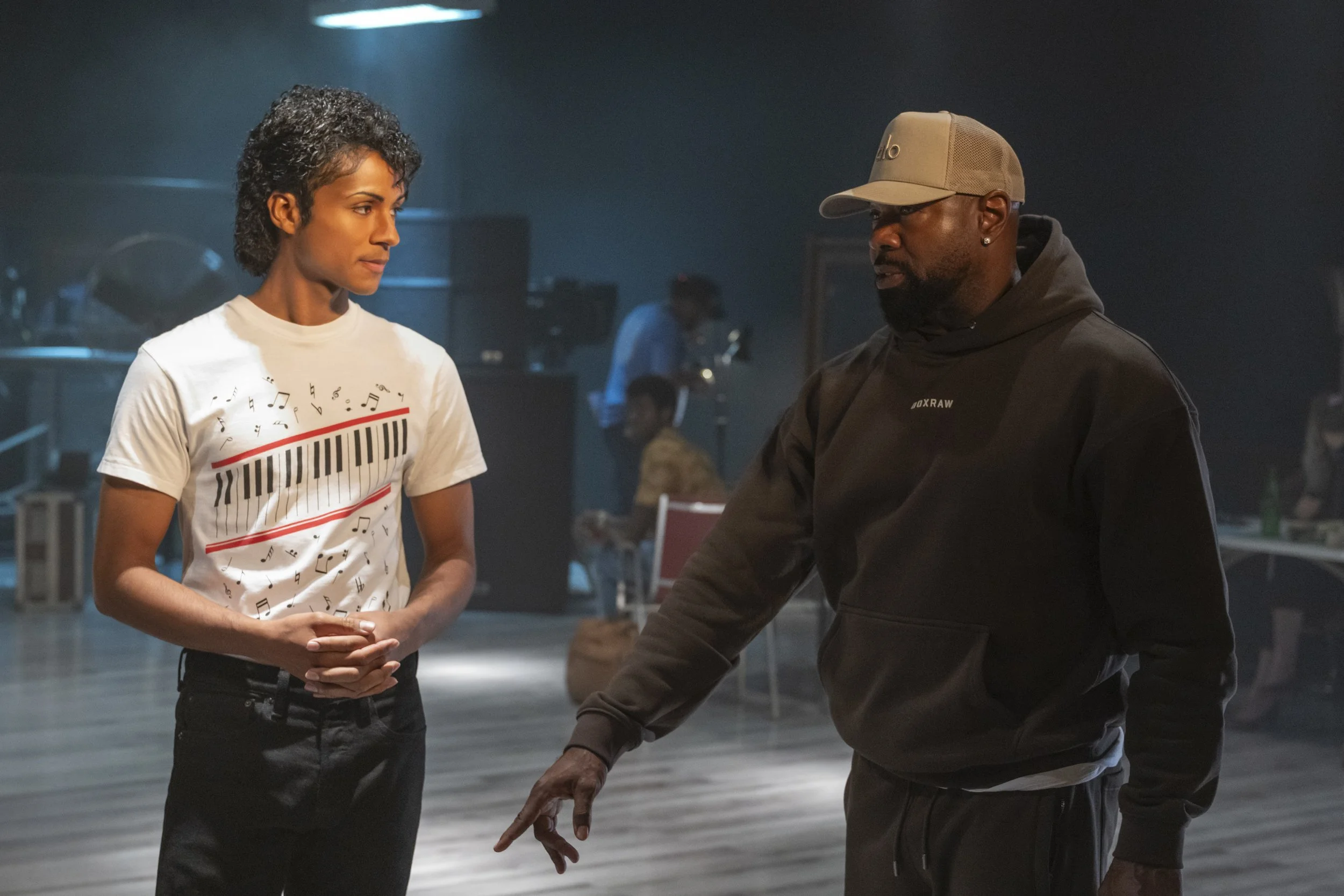
Jaafar Jackson as Michael Jackson and Director Antoine Fuqua on the set of MICHAEL. Photo Credit: Glen Wilson for Lionsgate.

Beyond Performance

What makes Michael significant is not simply its subject, but its timing.

We are in a moment where audiences are asking for more than spectacle. There is a growing desire to understand the full picture. To sit with complexity rather than reduce it. In that sense, this film arrives not just as entertainment, but as an opportunity to revisit a legacy that has often been flattened by headlines, persecution, and myth.

A Personal Frame

For many, the connection to Michael Jackson was never casual.

Michael was my The Beatles. The reference point for what greatness looked like, felt like, and sounded like. But more than that. He was a constant. As a kid I lined up outside stores to buy whatever I could find. Records. Posters. Magazines released officially by Michael. Anything that carried his name. This was before algorithms, before streaming, before the world moved at the speed it does now. You had to show up for the things and the people you loved…physically. I wrote letters. I mailed letters. I stayed glued to television, video releases, album releases, my friends and I, my parents and I we followed the signal whenever a release was announced because when we were at schools our parents took the time to stand in those lines. It was a shared responsibility. 

And we did so with out pressure, maybe with some tears and begging but there was an ease to it and the fanbase rode strong.
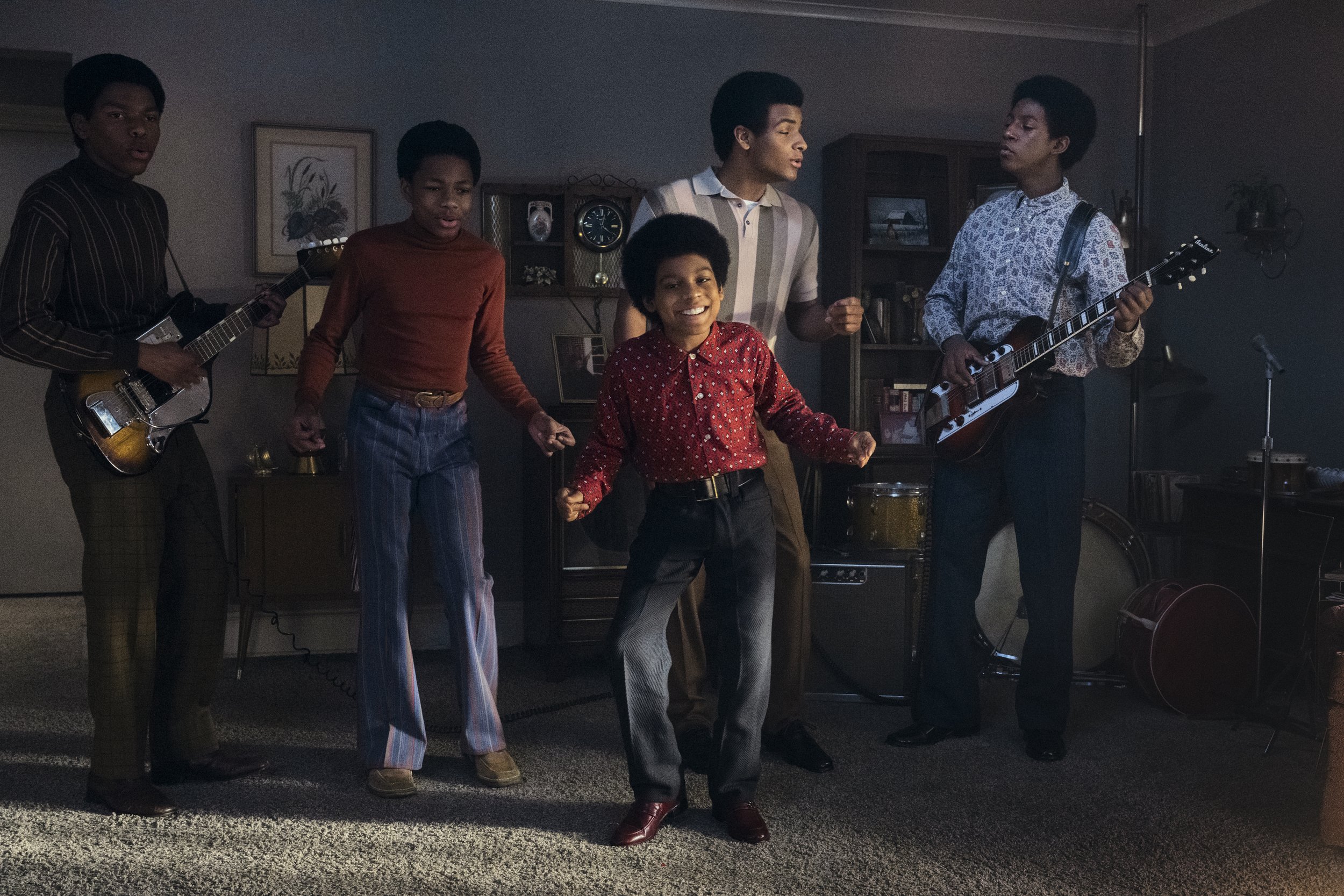
Judah Edwards as Young Tito, Jaylen Hunter as Young Marlon, Juliano Valdi as Young MJ, Nathaniel McIntyre as Young Jackie and Jayden Harville as Young Jermaine in Michael. Courtesy of Lionsgate.

Michael existed in a time of records, tapes, VHS tapes, of physical memory, of waiting, of anticipation. But he also existed under immense pressure. A level of scrutiny so intense, so relentless, that no social media figure today can fully relate to it. There was no separation between the person and the spectacle.

And still, he created.

We watched him the only way we could. Glued to our televisions, trying to understand something that felt larger than entertainment. It was beyond that. He became a compass. For movement. For care. For the belief that we could, in fact, heal the world.

I once got fired from a job for saying I loved Michael as a fan and supporter of his work.

Not for what I did. But for what I said, and what it represented. That moment revealed something deeper: the conversation around Michael Jackson has never just been about music. It has always carried tension, contradiction, and an unspoken discomfort around how we hold space for complex Black figures in public life.

And still the love remains. I remember a quote shared in a clip during the This Is It rehearsals shortly before his passing.

“You want to show people time like they’ve never seen before.” - Michael Jackson

That line stays with me. Not just as a reflection of his artistry, but as a reminder that true cultural impact isn’t about performance alone. It’s about creating moments people carry with them.
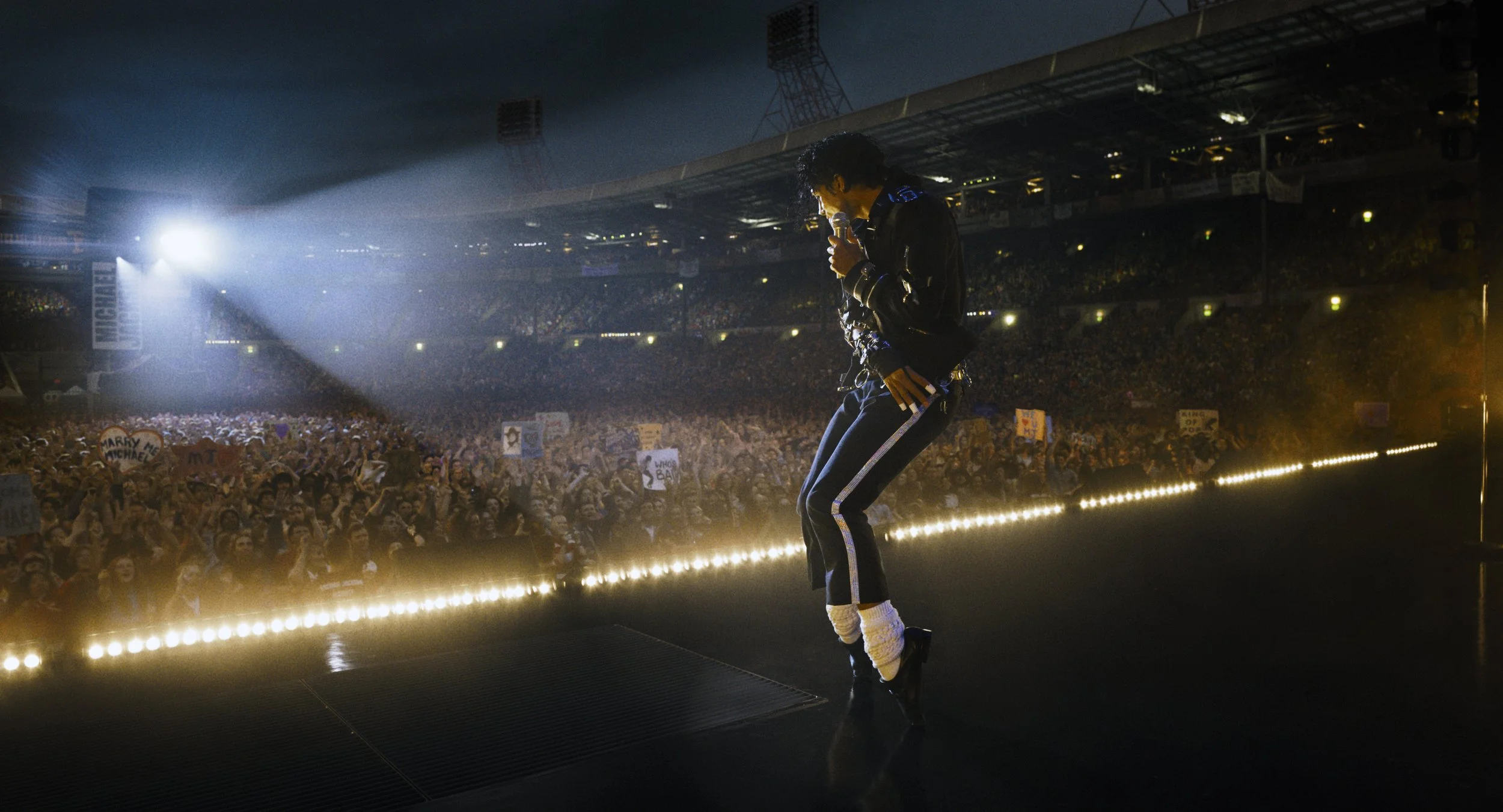
Jaafar Jackson as Michael Jackson in Michael. Courtesy of Lionsgate.

A Cultural Reflection

For Black audiences in particular, the conversation around Michael Jackson has always existed in layers.

He is at once:

  • a symbol of excellence

  • a product of an industry that both elevated and consumed him

  • a figure whose humanity has often been overshadowed by his myth

Michael has the potential to re-open that conversation. Not to resolve it, but to hold it more fully.

The Return

This film does not introduce Michael Jackson.

It reminds us.

Not just of who he was but of what he required of us as an audience.
To witness. To feel. To believe in something larger than ourselves.

Michael was never just an artist.

He was a moment.
A movement.
A measure of what felt possible.

And now, through Michael, that story moves again.

Not as nostalgia.
But as continuation.

Because legends are not sustained by visibility alone.
They are sustained by memory.

And memory, when held collectively, does not disappear.

It returns. It rises. It reminds. - Kimberley “Dooshima” Jev

Tags: MJ, Jafaar Jackson
Prev / Next
No results found

Stories
  • August 2026
  • July 2026
  • June 2026
  • May 2026
  • April 2026
  • March 2026
  • February 2026
  • January 2026
  • July 2024
  • June 2024
  • May 2024
  • April 2024
  • March 2024
  • February 2024
  • January 2024
  • December 2023
  • November 2023
  • October 2023
  • September 2023
  • August 2023
  • July 2023
  • June 2023
  • May 2023
  • March 2023
  • January 2023
  • December 2022
  • November 2022
  • October 2022
  • July 2022
  • June 2022
  • May 2022
  • April 2022
  • March 2022
  • February 2022
  • January 2022
  • December 2021
  • November 2021
  • October 2021
  • September 2021
  • August 2021
  • July 2021
  • June 2021
  • May 2021
  • April 2021
  • March 2021
  • February 2021
  • January 2021
  • November 2020
  • October 2020

AITC - August 2026

Featured
Afros in tha City - August 2026 - Adrian Younge
Identity, Music
Afros in tha City - August 2026 - Adrian Younge
Identity, Music

& Afro-Disco Makossa: The Dance Floor Record He’s Always Wanted to Spin & More.

Music never arrives without a history. It carries places, technologies, memories and the fingerprints of those who came before.

For our August cover story, Afros in tha City sits down with Adrian Younge to explore the sounds, relationships and creative philosophy behind Afro-Disco Makossa—a record born from his long-held desire to create music for the dance floor without surrendering the depth, musicianship or historical consciousness that defines his work.

Drawing from makossa, soul, funk and disco, the album does not treat these traditions as relics to be reproduced. Younge approaches them as living languages: sounds capable of holding their histories while continuing to move, transform and speak to the present. The result is music designed for movement, connection and deep listening—a record that looks backward only to understand where it might travel next.

But this conversation extends far beyond one album.

Younge reflects on the trust that can only be built through consistency, his enduring creative partnership with Ali Shaheed Muhammad, and the ecosystem they have created through Jazz Is Dead. Rather than positioning legendary musicians as figures frozen in the past, the platform invites living artists to continue creating, experimenting and adding new chapters to their own stories.

He also speaks about attending law school because he wanted to become what he calls “an educated artist”—someone equipped to understand contracts, intellectual property, ownership and the structures surrounding the work. His independence is not simply an aesthetic or an industry label. It is knowledge, preparation, discipline and the infrastructure required to protect a creative life.

That philosophy carries particular weight for an independent publication like ours. Building outside traditional systems requires more than vision. It requires learning how the machinery works, deciding what must remain yours and creating an ecosystem capable of supporting the work long after the excitement of an idea has passed.

Throughout the conversation, Younge retains the curiosity that first led him toward music. “We’re just bigger kids,” he says—a reminder that serious artistic practice does not require abandoning wonder. Growth can mean becoming more skilled, more informed and more intentional while remaining open enough to keep discovering.

This is a cover story about a dance-floor record, but it is also about something larger: how artists honour history without becoming trapped inside it, how independence is built rather than declared, and how curiosity keeps the conversation moving forward.

Adrian Younge covers the August issue of Afros in tha City.

Read “Afro-Disco Makossa: The Dance Floor Record He’s Always Wanted to Spin” at afrosinthacity.com and in our print publication.

Stories Shaping Culture.

Read more →
Identity, Music
Valerie June on the Practice of Joy
Music
Valerie June on the Practice of Joy
Music

A fifteen-minute festival interview with Valerie June begins with crossed schedules and a quiet moment of evaluation. Then the conversation finds its rhythm, becoming something much larger than an exchange about her latest album, Owls, Omens and Oracles.

In “The Practice of Joy,” Kimberley Dooshima Jev speaks with the Grammy-nominated artist about spirituality, independence and building a creative life that remains aligned with your values. June shares how meditation and affirmations become part of ordinary routines, why “small is powerful,” and how she measures the impact of her music through human connection rather than charts, algorithms or scale.

Their conversation also turns toward the ways Black women’s experiences are routinely flattened—and the freedom of creating new platforms instead of waiting for permission to belong. June’s declaration, “I’m keeping my joy because they would want me to,” transforms joy from a fleeting emotion into remembrance, responsibility and an inheritance carried forward.

What begins as an interview about music ultimately clarifies the values guiding Afros in tha City: community over scale, creation over permission and resonance over metrics. It is a reminder that joy is not escapism. It is a deliberate practice—and sometimes, an act of survival.

Read “The Practice of Joy” in full at Afros in tha City or in our print publication.

Read more →
Music
Lowkita - In Her Own Time
Music
Lowkita - In Her Own Time
Music

After nearly a decade between full-length projects, Lowkita returns with Why(Te) Tee—a deeply personal record shaped by motherhood, grief, burnout and the quiet confidence of an artist moving in her own time.

In “In Her Own Time,” Kimberley Dooshima Jev traces the Calgary-born, Vancouver-based artist’s years of rebuilding. Lowkita never stopped creating: she performed, produced, DJed, designed clothing and found new ways to sustain herself while raising her daughter and navigating profound personal loss.

The story also explores the meaning behind Why(Te) Tee. What began with the image of a white T-shirt as a symbol of starting over evolved into a larger meditation on purpose: the “Why” behind continuing, “TE” as a reminder that timing is everything, and the belief that every pause and setback has helped build the project’s foundation.

More than a comeback, Why(Te) Tee is an invitation to meet the person behind Lowkita’s bright, energetic presence. It captures an all-around artist who has learned that consistency does not require constant visibility—and that showing up, on your own terms, can be its own form of success.

Read “In Her Own Time” in full at Afros in tha City or in our print publication.

Read more →
Music
"There Has to Be a Festival"

For Calgary ReggaeFest founder and producer Leo Cripps, success has never been measured by crowd size, celebrity headliners or rapid expansion. It rests on one enduring belief: “There has to be a festival.”

This feature traces more than two decades of quiet resilience—from financial setbacks and pandemic uncertainty to the 2024 cancellation of Sunny Soul Jam. Through it all, Calgary ReggaeFest has built its reputation by growing responsibly, remaining debt-free and honouring its commitments to every artist, vendor and partner.

Cripps also reflects on the festival’s new home at The Rise on St. Patrick’s Island, the generations of families who return each summer and a lineup that carries reggae’s history forward through legends and emerging artists alike.

At its heart, Calgary ReggaeFest is a story of stewardship: choosing sustainability over spectacle and ensuring reggae music and Caribbean culture continue to have a home in Calgary. After more than twenty years, its greatest achievement may be beautifully simple—it kept its promise.

Read the full story at Afros in tha City or in our print publication.

Read more →
The Blueprint of Reggae  - Leroy Sibbles Looks Back on Six Decades of Rhythm
Identity, Music
The Blueprint of Reggae - Leroy Sibbles Looks Back on Six Decades of Rhythm
Identity, Music

Few musicians are as inseparable from reggae’s foundations as Leroy Sibbles. As a pioneering bassist and arranger at Studio One and the legendary lead vocalist of The Heptones, he helped create the rhythms, basslines and vocal sound that continue to reverberate through contemporary music.

In “The Blueprint of Reggae,” Cara Eyre speaks with Sibbles about six decades of innovation, from late-night rehearsals in Trench Town and groundbreaking recording sessions with Clement “Coxsone” Dodd to hearing new generations sample and reinterpret the music he helped build.

The conversation also traces the personal journey that brought Sibbles to Canada in the 1970s, where he helped cultivate Toronto’s reggae scene and established a lasting connection to his adopted second home. Looking back, he measures his legacy through the musicians he inspired, the careers he strengthened and the joy his work continues to create.

At the heart of it all is a message of unity. Sibbles’ music has crossed oceans, bridged generations and brought millions together—and after six decades, his invitation remains beautifully simple: “We all sing together.”

Read “The Blueprint of Reggae” in full at Afros in tha City or in our print publication.

Read more →
Identity, Music
Walking in Purpose and Royalty A Conversation with Jemere Morgan
Music
Walking in Purpose and Royalty A Conversation with Jemere Morgan
Music

Born into one of reggae’s most celebrated musical families, Jemere Morgan carries a powerful inheritance. But as the grandson of pioneer Denroy Morgan and the son of Gramps Morgan of Morgan Heritage, he is not simply preserving a legacy—he is building one of his own.

In “Walking in Purpose and Royalty,” Cara Eyre speaks with Morgan about spirituality, personal growth and the responsibility he feels each time he creates music. From the uplifting message of “Keep Blazing” to the relationship lessons behind “Know Better,” every song must carry intention and leave listeners with something meaningful.

Morgan also reflects on collaborating with Damian Marley on his third studio album, a more mature and vulnerable project exploring love, emotional growth and life’s difficult seasons. Throughout the conversation, he returns to a guiding belief: music should offer joy, connection and upliftment in a divided world.

For Morgan, legacy is not something fixed or protected. It is a living mission—shaped by experience, carried forward with purpose and strengthened each time the music reaches someone who needs it.

Read “Walking in Purpose and Royalty” in full at Afros in tha City or in our print publication.

Read more →
Music
Afros Picks - August 2026
Music
Afros Picks - August 2026
Music

From emotionally revealing R&B and modern jungle to fújì, Afro-Soul, reggae and global pop, this edition of Afros Picks brings together six releases shaping contemporary Black music across borders.

Masego turns inward on Fix Your Face, pairing his signature musicianship with vulnerability and self-reflection. Asake expands his global sound without losing his Nigerian foundations on M$NEY, while Nia Archives makes vulnerable songwriting feel at home alongside exhilarating breakbeats on Emotional Junglist.

Elsewhere, Nigerian Canadian newcomer Osé emerges as an Afro-Soul voice to watch with Feels Like Home. Seun Kuti and Egypt 80 join Kabaka Pyramid on “Problems,” reconnecting Afrobeat and reggae through a shared language of resilience and resistance. Tyla, meanwhile, embraces global pop on A*POP while remaining grounded in the South African identity that first introduced her to the world.

Together, these selections capture artists looking inward, reaching outward and carrying their musical foundations into new territory.

Discover all six Afros Picks at Afros in tha City or in our print publication.

Read more →
Music
Rooted & Radiant - Where Trust Begins
Beauty, Wellness
Rooted & Radiant - Where Trust Begins
Beauty, Wellness

Trust often begins long before professional care—in conversations with someone who has consistently made us feel safe.

In “Rooted & Radiant,” Kimberley Dooshima Jev explores the partnership between Nancy Nixon, founder of Neena’s Pink Room, and Tina Ashiofu, founder of Ilera Psychological Services. Together, they are creating the kinds of culturally grounded spaces they once needed themselves.

The story examines how salons can become trusted places for conversations about grief, relationships, migration and mental health—and how beauty professionals can serve as bridges to care without being expected to replace therapists. Drawing on Nancy’s relationships with her clients and Tina’s experience as a Nigerian Canadian psychologist, the feature considers representation, cultural understanding and why beginning therapy can feel more difficult than attending it.

At its heart, Rooted & Radiant is about expanding what community care can look like. It reminds us that healing does not always begin in a clinical space. Sometimes it begins exactly where trust already lives—with someone willing to listen, recognize when more support is needed and help another person take the first step.

Read “Rooted & Radiant” in full at Afros in tha City or in our print publication.

Read more →
Beauty, Wellness
Ahmed Moneka - Rooted Like a Tree
Music
Ahmed Moneka - Rooted Like a Tree
Music

In “Rooted Like a Tree,” Moneka shares how the Arabic Maqam traditions of southern Iraq coexist with jazz, funk, reggae, blues, soul and Afro-diasporic rhythms in his evolving musical language. For the Black Iraqi artist, music is more than performance. It is a sacred ritual connecting past, present and future—and a responsibility to the generations on either side of us.

Read more →
Music
That ’70s Shootout: How a Calgary Lunch Sparked a Retro Creative Playground
Photography
That ’70s Shootout: How a Calgary Lunch Sparked a Retro Creative Playground
Photography

Curiosity Refresh Workshops creates immersive photography experiences designed to inspire creativity, build community and elevate photographers at every skill level. Through thoughtfully styled shootouts, hands-on workshops and themed events, participants learn, collaborate and create portfolio-worthy images alongside talented models, stylists and industry professionals.

Read more →
Photography
Rooted in Nigeria, Rising in Calgary: Cris Kester Is Still Becoming
Music, Lifestyle
Rooted in Nigeria, Rising in Calgary: Cris Kester Is Still Becoming
Music, Lifestyle

Rooted in Nigeria and rebuilding in Calgary, Cris Kester makes music shaped by rhythm, faith, resilience and the determination to keep moving when life refuses to make things easy.

In “Rooted in Nigeria, Rising in Calgary: Cris Kester Is Still Becoming,” Kimberley Dooshima Jev traces how Kester’s upbringing in Cross River State and northern Nigeria continues to live in his storytelling. Through songs including “Can I Speak?,” “Las Las” and “Colourful,” he creates space for pain without surrendering hope, building an emotional bridge between listeners across cultures and borders.

The profile explores the immigrant experience of beginning again, the challenge of introducing yourself to a new city and the faith required to keep creating when life does not yet resemble what you imagined. Standing between the foundation he built in Nigeria and the life he is creating in Canada, Kester is not choosing between two worlds. He is building from both—and he believes his best is still ahead.

Read the full story at Afros in tha City or in our print publication.

Read more →
Music, Lifestyle
DOTUN POPOOLA  The Man Redefining Africa's Creative Future  One Piece of Scrap Metal at a Time
Art
DOTUN POPOOLA The Man Redefining Africa's Creative Future One Piece of Scrap Metal at a Time
Art

Dotun Popoola was four years old when he first started experimenting with colour and texture, and nine when his father, recognising the seriousness underneath what looked like a child's restlessness, enrolled him in a local art studio for an apprenticeship.

Read more →
Art
NO NATION (AYAKATA) Ginton & ODUMODUBLVCK
Music
NO NATION (AYAKATA) Ginton & ODUMODUBLVCK
Music

By Kimberley Dooshima Jev

Decades after Fela Kuti released “Beasts of No Nation,” its confrontation with power, corruption and political authority remains unfinished.

In “No Nation (Ayakata): Ginton and ODUMODUBLVCK Reach Across Generations to Rework Fela Kuti,” Afros in tha City explores how Amsterdam-based producer and guitarist Ginton and Nigerian rapper ODUMODUBLVCK approach an official contemporary reworking created with the involvement of the Fela Kuti Estate.

The story traces the political weight of Fela’s original recording, Ginton’s history of connecting electronic production with global musical traditions, and ODUMODUBLVCK’s continued commitment to his sound, community and principles. Together, they bring different eras of African music into conversation without attempting to replace the work that came before them.

Fela’s era. Ginton’s interpretation. ODUMODUBLVCK’s generation.

Read the full story at Afros in tha City or in our print publication.

Read more →
Music
SOUND BEFORE SIGHT - How Killer Mike &  The Mighty Midnight Revival brought Atl to tha Folk!
Music
SOUND BEFORE SIGHT - How Killer Mike & The Mighty Midnight Revival brought Atl to tha Folk!
Music

Long before Killer Mike stepped onto the Calgary Folk Music Festival stage, the voices of The Mighty Midnight Revival travelled across Prince’s Island Park.

In “Sound Before Sight,” Kimberley Dooshima Jev reflects on encountering an artist whose music has accompanied her life—from OutKast and ATL to Run the Jewels and Michael Render’s evolution as an artist, entrepreneur, community leader and public voice.

Blending personal history with reflections from Calgary artist TeaFannie, the story explores how hip hop, gospel, soul and testimony transformed one festival performance into something larger: a meeting place for memory, legacy and community. It is also a reflection on the stories, songs and cultural touchstones that travel across borders and generations until they meet us where we are.

Read “Sound Before Sight” in full at Afros in tha City or in our print publication.

Read more →
Music
ISLAND IN THE SUN
Photography
ISLAND IN THE SUN
Photography

Through Emma Ryan’s lens, the 2026 Calgary Folk Music Festival comes alive in colour, movement & connection. From intimate stage moments to the energy of the crowd, her photographs capture the artists, audiences and shared joy that filled Prince’s Island Park. Explore this visual celebration of live music, community and a summer festival weekend that brought the city together. Photos by Emma Ryan.

Read more →
Photography

July 2026 - The Omnibus - Print July 2026 - The Omnibus - Print
Sold Out
July 2026 - The Omnibus - Print
CA$50.00

The Summer Omnibus is our most ambitious issue yet. Bringing together seven months of journalism, photography, and storytelling, this special collector's edition celebrates Black arts, business, fashion, music, and community across Canada and the diaspora.

Featuring exclusive cover stories with Judith Demosthene, Funmi Osatuyi, Adrianne Williams, Nancy Nixon, Ayokunle Akinsebikan, Femi Jr., and more, this 70-page volume captures the people, ideas, and conversations shaping culture today.

Beautifully printed in limited quantities, the Summer Omnibus is designed to be collected, shared, and revisited long after publication.

Limited print copies available.


“It always seems impossible until it’s done.”
— Nelson Mandela


Promotional image of a woman suspended in the air with hand placed above a deluxe jar of DTouch quiet gravity mineral salts


© 2026 Afros in tha City