From the costumes of The Fifth Element to the conversations in a braider’s chair, the designer behind BRAID2BRAIN is building a world where Black hair shapes the future.
By Kimberley Dooshima Jev
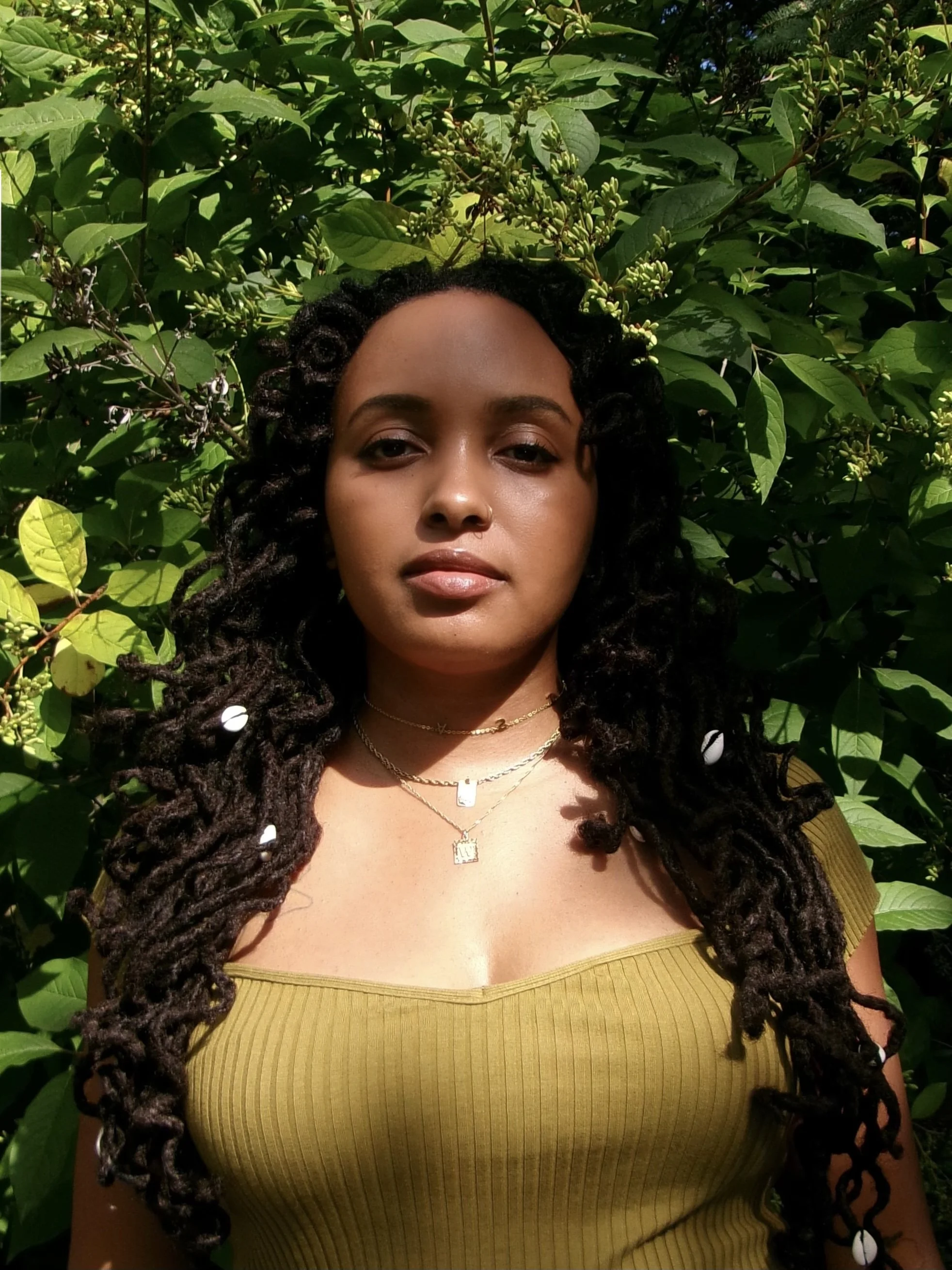
When I first got Asia Clarke on the phone, she thought someone had stolen her passport. She had just arrived in Canada from Ghana to prepare for a workshop in Ottawa. She had barely slept on the flight, her husband was waiting to collect her, and her passport was missing. As she told me about it, indignant and bewildered, her Toronto accent came through.
A couple of hours later, she had an update.
“Do you know it was inside my freaking hat?!”
Her passport. We laughed. She had tucked it away so successfully that she was wearing the document she thought she had lost.
The hat had become a place to carry something important. Later, as Clarke described hairstyles that could hold information and shape how people feel, I found myself thinking about that small, funny detail.
First, though, she needed a nap. She also had workshop emails to send. Even someone building a future world has an inbox.
“I’d like to say that I design worlds,” she told me.
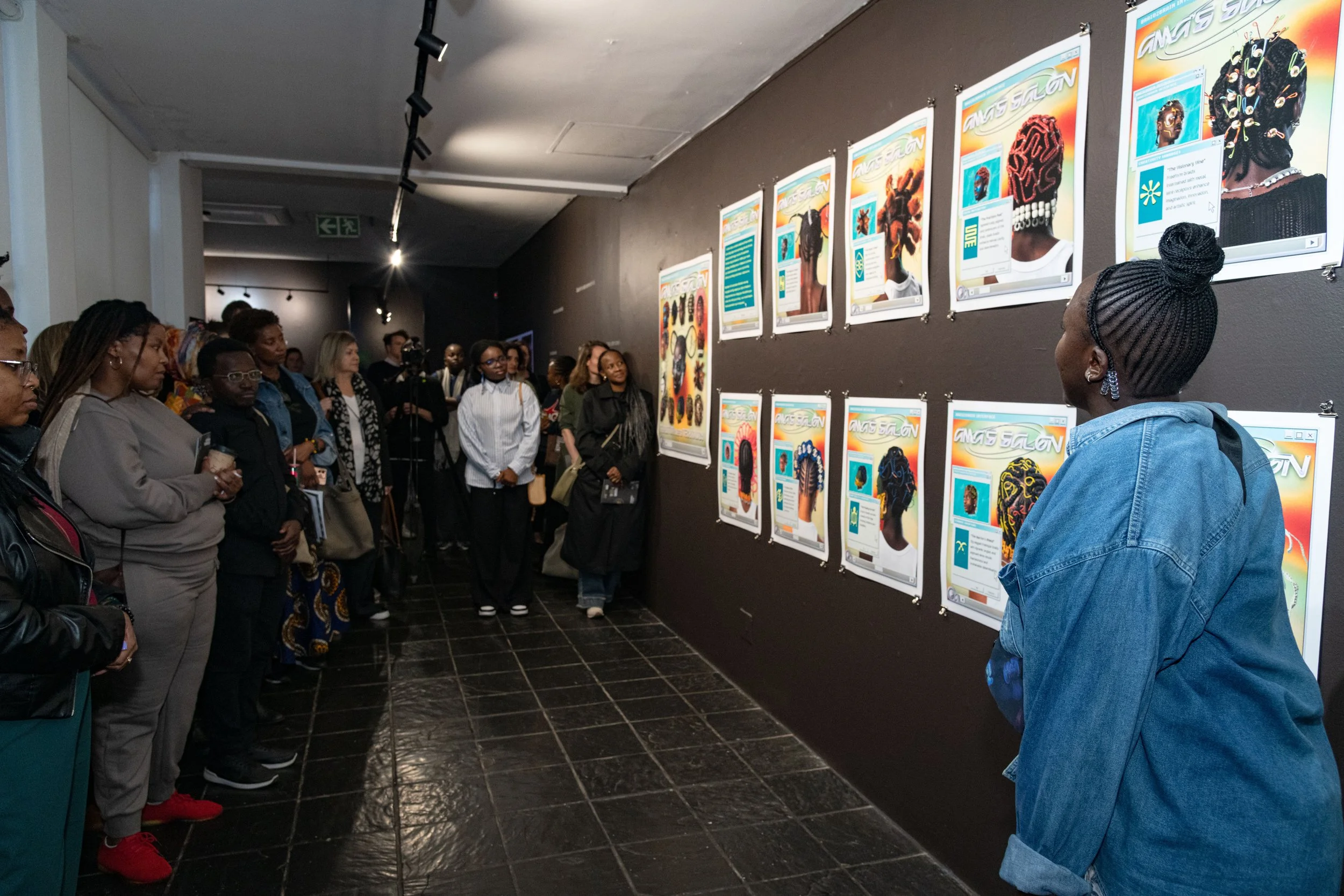
AMA’S SALON - Goethe Institute in Johannesburg, South Africa
The Fifth Element of it all
Clarke’s practice moves through hair, jewellery, sculpture and speculative design. Her imagination also draws from speculative fiction: stories that ask what life could look like beyond the world we know.
“One of my favourite movies,” she said, “is called The Fifth Element.” Immediately, we were both excited. I love that movie, too. The 1997 science fiction film imagines life in the 23rd century, with costumes designed by Jean Paul Gaultier. Clarke pointed to his influence on the world we see on screen. The clothes and hairstyles helped give that future its own identity.
“Through aesthetics, you can build a world,” she said.
Her master’s studies in Strategic Foresight and Innovation at OCAD University brought that approach into her practice. Once she had imagined a world, she could explore its people, objects and everyday experiences.
BRAID2BRAIN is one of those possibilities. It imagines a future where braid patterns can influence brain function and emotional states, and hair braiders develop the technology that makes it happen.
“It could be a short film,” Clarke said. “It could be a novel.” She could design an accessory someone wears in that world, write about the person wearing it or bring their story to the screen.
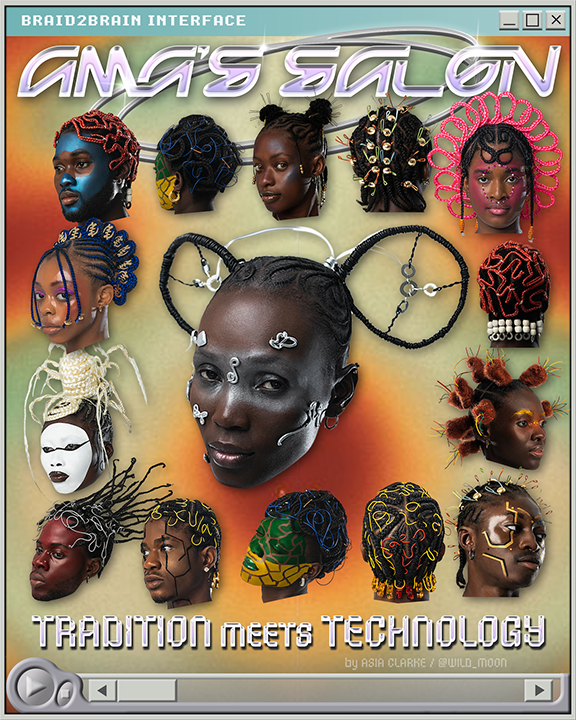
Welcome to Ama’s Salon
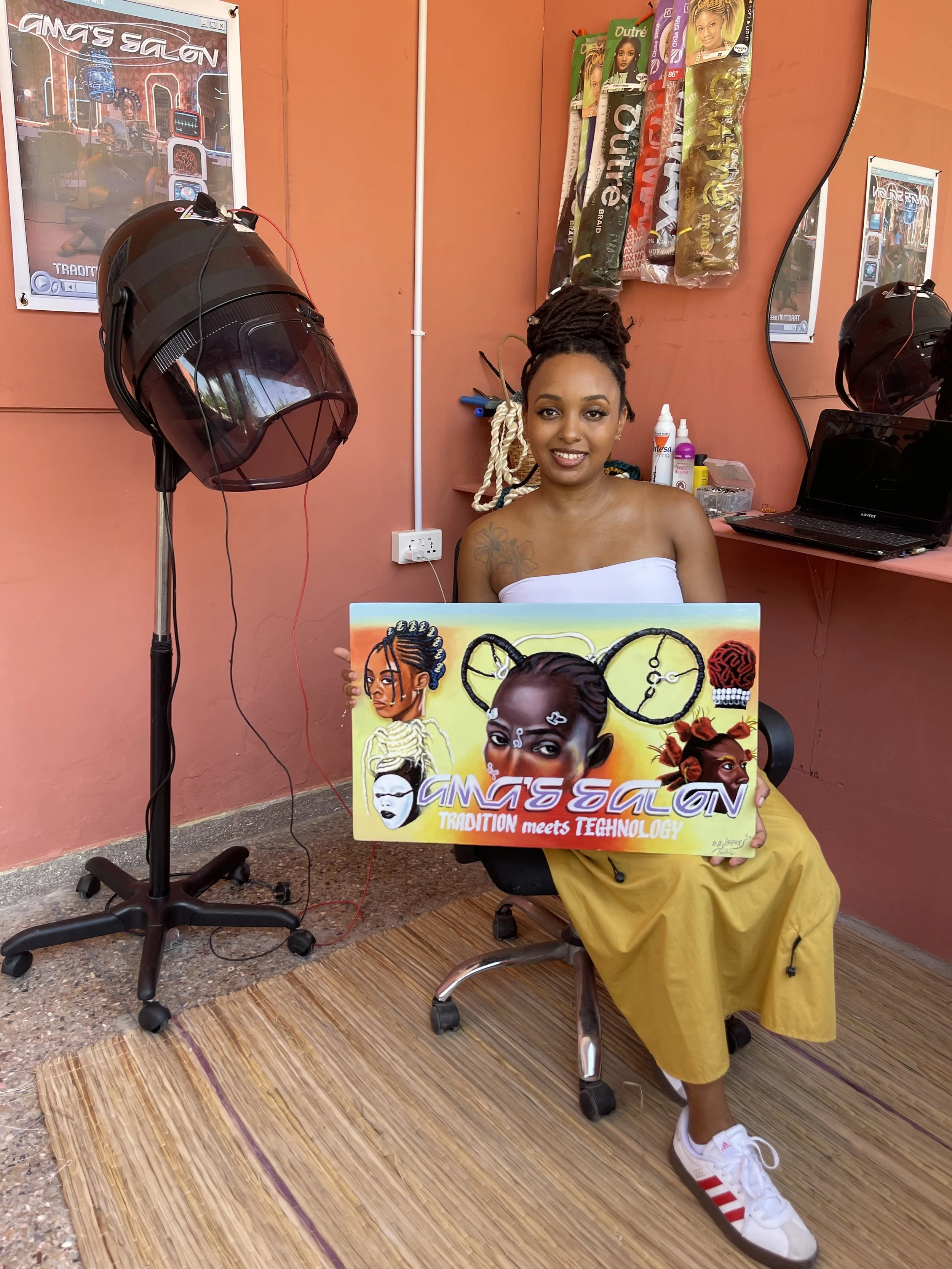
Clarke’s Ama’s Salon takes us to Ghana in 2056.
Ama is a hairstylist who has developed the BRAID2BRAIN interface. Within this fictional world, electrical feedback wires woven into intricate hairstyles allow clients to access and modify their brain activity.
The technology is speculative. Clarke gives it a setting people can recognize: a salon, a trusted stylist and a client choosing what they need. Her digital artworks borrow the format of hair shop posters. The familiar invitation to choose a style becomes a way to imagine choosing a change in memory, emotion or wellbeing.
The salon also holds its clients’ intimate neural data. Ama is trusted with thoughts, fears and desires. As surveillance threatens that privacy, protecting her community becomes part of her work.
Who gets access to that information? What does consent mean when technology can influence the mind? How does a place of care protect the people who depend on it?
Clarke places a Black woman at the centre of those questions. Ama has the knowledge to build something powerful and the responsibility of deciding how it should be used.
For me, the salon setting also brings back a familiar weekly rhythm: getting your hair done on Saturday, ready for church on Sunday and school on Monday. The patience, the sitting, the hands at work. A hairstyle could carry you into the week ahead.
That memory is my own way into Clarke’s imagined world. She begins with a place where care already happens and asks what its future could hold.
“I am invested, and I care deeply about Black communities,” she said. “And I also feel responsible and capable.”
The knowledge in her hands
Long before Clarke imagined Ama, she was braiding hair after school. “I used to braid hair in high school for money,” she said.
It was her first creative practice. It also taught her about the relationships that form when someone trusts you with their hair. People talked while she worked. Friendships grew. Conversations could leave people feeling changed.
“I am affecting people,” she said. “And I think that there’s something powerful in that.”
BRAID2BRAIN builds on her awareness of that experience. The braider has technical skill, cultural knowledge and a relationship with the person in her chair. Clarke wants to imagine what could happen if that combination received greater recognition.
Her own skills continued to expand. In 2010, she began making jewellery under the Wild Moon name. Her pieces have been stocked in stores across Toronto and in Accra. She once ran an online shop and now stocks one store in Accra.
Over the years, her work has also brought hair, makeup and jewellery design into publications, film and television. “I don’t have a very linear career path,” she said.
Those practices give her several ways to develop BRAID2BRAIN. Her experience designing adornment connects with the hair accessories she hopes to create, with functions she compared to fitness trackers. Her screen work offers another route as she considers a film about Ama.
She has built a world with room for the things she knows how to do and the things she wants to try.
We took our symbols with us
Clarke has spent much of the past decade in Ghana, where Adinkra symbols have become an important influence. She sees possibilities in their shapes and how they could be applied to braided designs. She is also interested in the ways African symbols travel with people and appear through different artistic practices across the diaspora.
“Anywhere that Black people and African people went, we took our symbols with us,” she said.
Pan-African unity guides that interest. When our conversation turned to slavery and the pressure to move past it, she was direct. “I’m never getting over that.” That history informs how she thinks about trauma, community and the futures she wants to build.
“I am invested, and I care deeply about Black communities,” she said. “And I also feel responsible and capable.”
The word capable stayed with me. Clarke spoke with conviction about her ability to contribute fresh ideas. She wants to keep developing them for the communities she cares about.
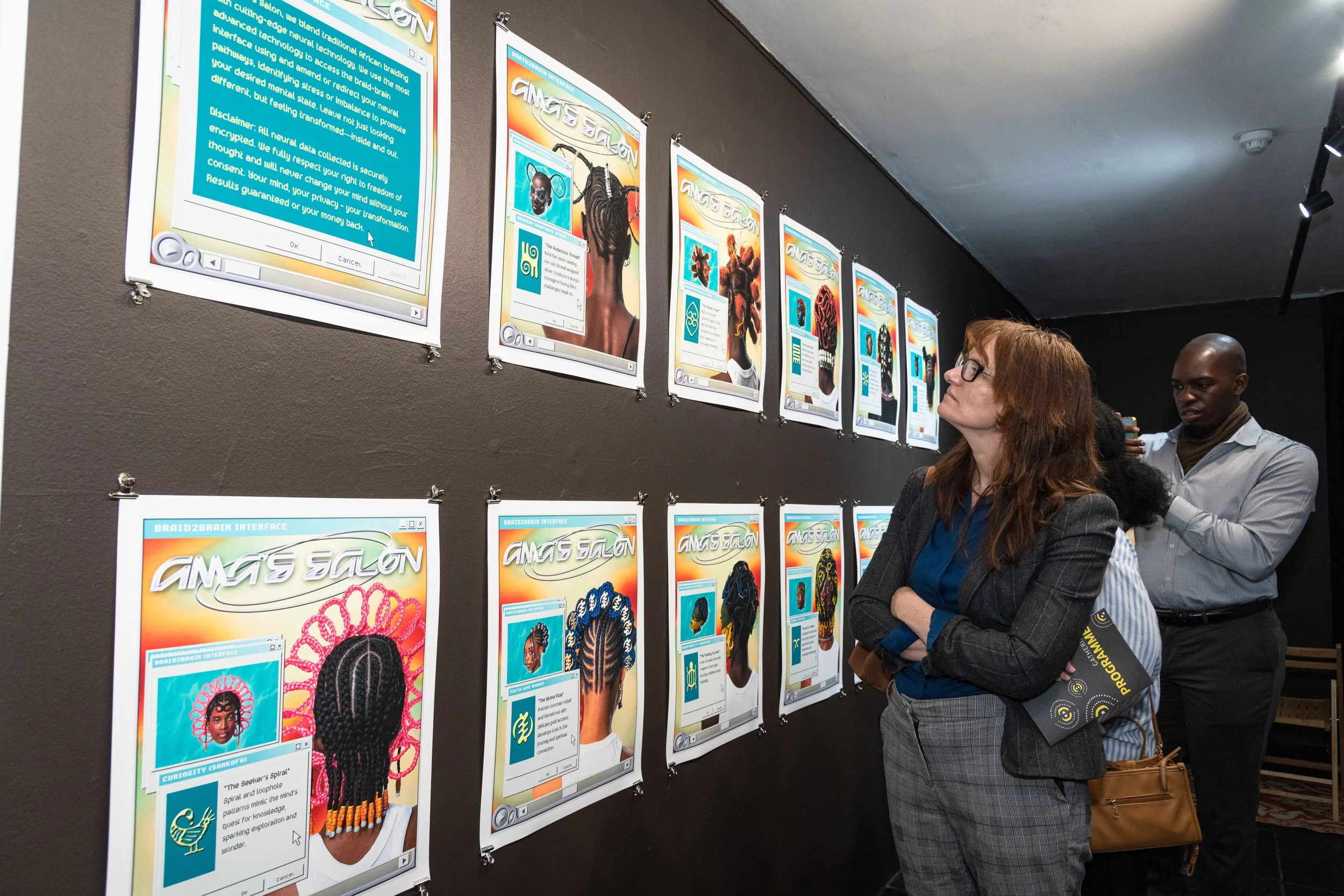
AMA’S SALON - Goethe Institute in Johannesburg, South Africa
A Saturday for imagining
On Saturday, October 10, 2026, Clarke will bring BRAID2BRAIN: Speculative Citizen Lab to the Canada Science and Technology Museum in Ottawa, part of Ingenium, for a one-day workshop and photoshoot.
The lab extends the world of Ama’s Salon, which has previously been presented at the Goethe-Institut in South Africa and EDAN Community Hub in Accra.
In Ottawa, participants will explore braiding traditions and create speculative hair sculptures. They will choose a mental health concern or brain-related illness, then imagine a hairstyle and explain how it could address that condition in a future where BRAID2BRAIN exists.
It is an exercise in shared world-building. Participants can draw on different techniques, experiences and ideas to help develop the possibilities.
“I love inviting people to part of that making-it-up process together,” Clarke said.
She is also testing the workshop as a creative research method. Can people come together to make hairstyles and build new ideas through that process?
Photographer Jorian Charlton will document the co-created styles through a portrait session. The project’s recruitment materials offered $150 stipends to participants and models.
The museum setting gives Clarke a place to ask whose knowledge is recognized as innovation.
“By bringing Ama’s Salon into a national science museum, I am insisting on something the work has always argued: that Black hair is already a technology,” she says in the project’s press release.
During our conversation, she returned to the value of skills passed between generations, including braiding taught by a mother to a daughter. She wants people to imagine those skills as powerful forces in community life.
She wants people to put “the weight on it that I think it deserves.”
“I’m trying to do it all”
After the workshop, Clarke hopes to write a report and submit it to journals focused on creative research methods. She is developing ideas for a short film and exploring the products, services and everyday experiences that could grow around BRAID2BRAIN.
Those ambitions unfold alongside paid hair work and raising two children. “I feel that I’m a creative person from deep within me, and my children are a testament to that,” she said. Motherhood has expanded her creative energy. Finding time to act on it is part of the daily balancing act.
By the end of our conversation, one possibility kept opening into another. Research. Film. Accessories. A business. Clarke could see several paths ahead, and she wanted to follow them.
She had arrived tired from Ghana, convinced her passport was gone. Now it was found, the workshop was ahead and she was ready to keep building. “If I get some investment, I’ll build a business, girl,” she said. “I’m trying to do it all.”
BRAID2BRAIN: Speculative Citizen Lab takes place October 10, 2026, at the Canada Science and Technology Museum, Ottawa. Follow the project at @braid2brain, and find more of Clarke’s work at asiaclarke.com and @wild_moon.