The Montreal artists bring Mōnad to Calgary’s Fluid Fest with a work rooted in hip-hop, grief, spirit, community and the freedom to show up whole. Alexandra “Spicey” Landé had one condition for returning to the stage.
“If I’m going on stage, I’m doing whatever the hell I want.”
It sounds like a declaration because it is one. After two decades of building choreography, teaching, mentoring and helping push street dance into spaces that did not always know what to do with it, Landé was not interested in returning to performance to satisfy somebody else’s idea of what a Black woman, a hip-hop artist or a contemporary dancer should look like. She wanted freedom.
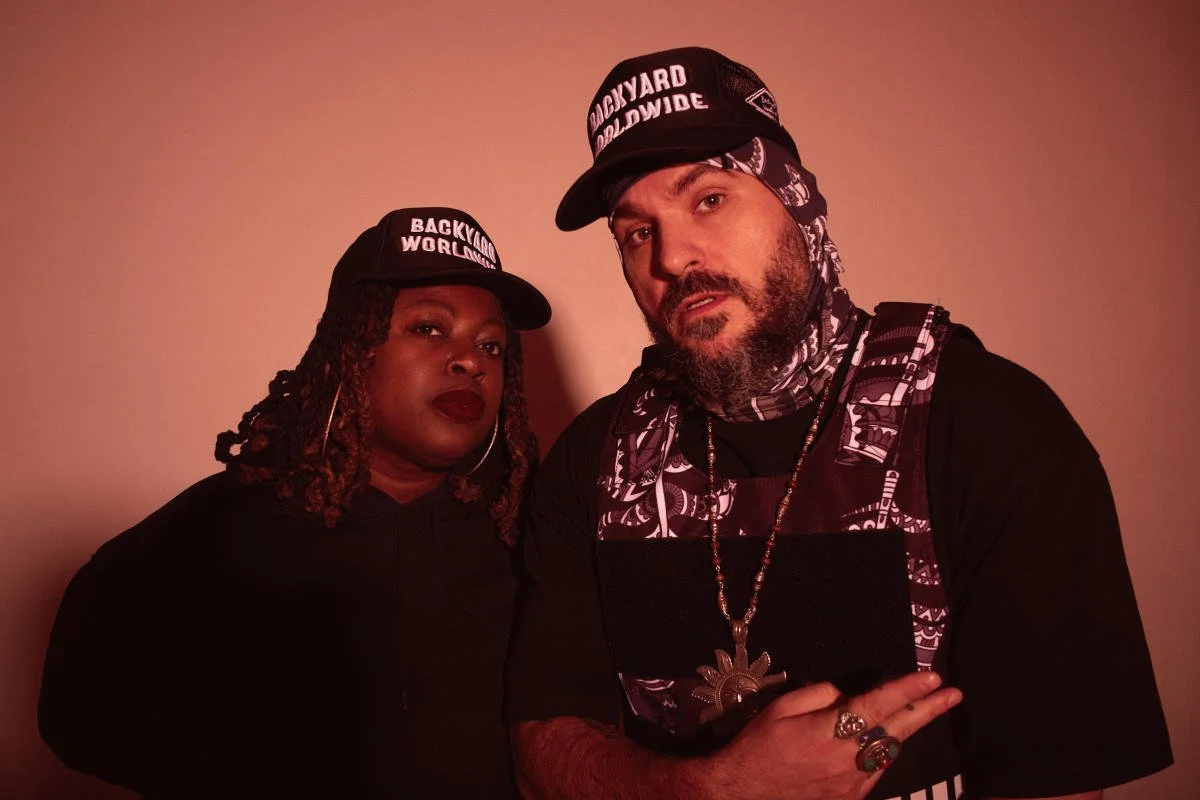
That desire became Mōnad, a work that places Landé alongside Montreal artist, producer and MC Jai Nitai Lotus. The piece moves through dance, live music, vocals, sound and performance while resisting an easy category.
Its title comes from the idea of a single unit containing many universes. For Landé, that image feels personal. “I’m just gonna show up as I feel I am today,” she says. “It’s many layers of myself.”
Those layers include hip-hop. They include her Haitian roots, her years in Montreal’s street dance community and her life as a choreographer. They also carry grief. Landé lost her mother nearly two decades ago. She also lost her younger brother. She says traces of both have continued to move through the work she has made since.
“Every show I do kind of either goes back to part of the story of my little brother passing or my mom and the impact on my life, or both sometimes.”
Mōnad gives her room to dig through those histories without arranging them into a neat explanation. She talks about finding “pockets of freedom” in the process. One feeling can lead to another. One movement can open another part of a life. Hip-hop can remain the foundation without becoming the border. “The goal through Mōnad is to break those boxes.” For Landé, contemporary dance eventually became useful for that exact reason.
Her first encounters with it were not necessarily comfortable. “I was like, what is going on? What is this person doing on stage?” Then something clicked.
She began to understand contemporary dance less as one specific movement language and more as permission to ask what an artist is today. That possibility mattered to someone who had spent years watching ideas about race, gender, body, genre and professionalism get attached to Black artists before they had even begun moving.
“We, as African descent Black women, even Black men, we are so complex,” Landé says. “We have so many layers to ourselves.”
Hip-hop remains inside her body. It does not need to account for every part of her. “I’m a hip-hop body, but I’m also a person.” That distinction sits at the heart of Mōnad.
A solo becomes a conversation
Jai Nitai Lotus was not originally supposed to occupy so much of the stage. Landé had worked with him for years and knew she wanted his music inside the piece. The first idea was simple. Perhaps he could be there but remain unseen. Then maybe the audience could see him sometimes. Then the possibilities kept expanding. “What if you’re with me on stage?”
Eventually, a solo became something closer to a duet. Lotus remembers trying, at first, to protect Landé’s space.
“I don’t want to take space,” he recalls thinking. “I want the space to be for Spicey.”
The work had other plans. She kept asking more of him. The creative team saw new possibilities. More light. More presence. More interaction. Lotus stopped resisting the evolution. “We’re gonna be fully immersed together and lock in.” The result is neither a dancer moving while a musician provides a soundtrack nor a concert with choreography wrapped around it. There is live music. There are live vocals. Lotus performs material created for the work. Their positions shift. The relationship changes from moment to moment.
“Things evolve,” he says. “We have to let them evolve.”
That process works because both artists are coming from hip-hop without needing to constantly announce hip-hop. The codes are there.
“If you’re a hip-hop enthusiast on some level, you’ll get the codes,” Lotus says. “You might not have seen them done in this way.”
For him, protecting those codes does not mean making the work inaccessible to everyone else. It means refusing to dilute himself in the hope of being understood. “I have to remain in authenticity, or I have no skill when I’m not in my authenticity.”
When the body becomes political anyway
Landé says Mōnad was not built as an explicitly political work. Her presence complicates that intention. “I don’t think that we want it to be political, but just me being on stage as a Black woman is highly political to this day.” Then there is her body. Landé remembers people calling her courageous for performing. At first, she did not understand what they meant. Getting on a stage takes courage for anyone, she thought.
Eventually she understood another message was being placed inside the compliment. She was a respected choreographer and community leader returning to performance as a Black, plus-sized woman in an industry where bodies like hers are still not commonly centred. “That’s political on its own.”
She has watched the dance world change over the last two decades. She also remembers when street dance was routinely treated as less professional, and when African and hip-hop influences had to fight to be taken seriously in contemporary spaces.
Progress has happened. The work is not finished.
Landé has also learned that gaining access does not magically make the work easier. The first decade of her career, she says, was largely about survival. “Lots of work, no money at all.”
Recognition eventually grew. Financial support improved. So did the opportunities. The workload grew with them.
“Way more work. Way more responsibility. Way more expectations.”
Now, another kind of freedom has entered Landé’s practice: the freedom to stop. She says she has become more willing to recognize when she has reached capacity. She does not need to attend every event. She cannot mentor everyone. Being useful to a community does not require sacrificing every part of herself to it. “I don’t feel obliged anymore to be everywhere, to be everything to everyone.”
Health, rest and the people closest to her have moved higher on the list. “I’m learning to really listen to my body and my spirit.”
Hip-hop as service
Lotus arrives at the same question of responsibility from another direction. He describes himself as an accumulation of everything he has done so far: rapper, producer, performer, creative director, mentor and father. He also sees art as something larger than an individual career. “I’m on a mission in that way as an artist to be fearless and free and be individual.”
Music entered his life early. His father was a musician, and Lotus remembers being a small child sitting on his mother’s lap in a temple surrounded by instruments, devotion and call-and-response. Later came drums. Then hip-hop.
As a teenager, he found a culture that could hold both style and substance. Discovering Black Star helped him understand that knowledge, identity and being “fly” did not need to exist in separate worlds. The lesson stayed with him.
Today, much of Lotus’s work also happens with young people. He directs NBS Studio in Montreal’s Côte-des-Neiges neighbourhood, where youth make music and develop their own voices. Fatherhood has sharpened that sense of responsibility.
Lotus says one of his hardest lessons has been learning not to measure another person’s pain against his own experience. If one of his daughters comes to him with a problem that seems small compared with what he sees in the wider community, he still has to respect its weight.
“Who am I to say?” That idea runs through his art too. People need room to become themselves.
“She’s not afraid to be herself,” Lotus says of Landé. “I just don’t want people moving and feeling like there’s not a place for them. There’s a place for everybody.” That may be the clearest description of what Landé and Lotus have built together.
Mōnad is a work about multiplicity without apology.
One body can carry hip-hop and contemporary dance. Grief and humour. Haiti and Montreal. Spirituality and experimentation. Leadership and exhaustion. An artist can be a teacher, parent, performer, mentor, producer and someone who simply needs to go home and rest. The work does not ask those pieces to resolve themselves into one tidy identity. It lets them exist. For Landé, that is freedom. For Lotus, it is authenticity. Inside Mōnad, they may be the same thing.
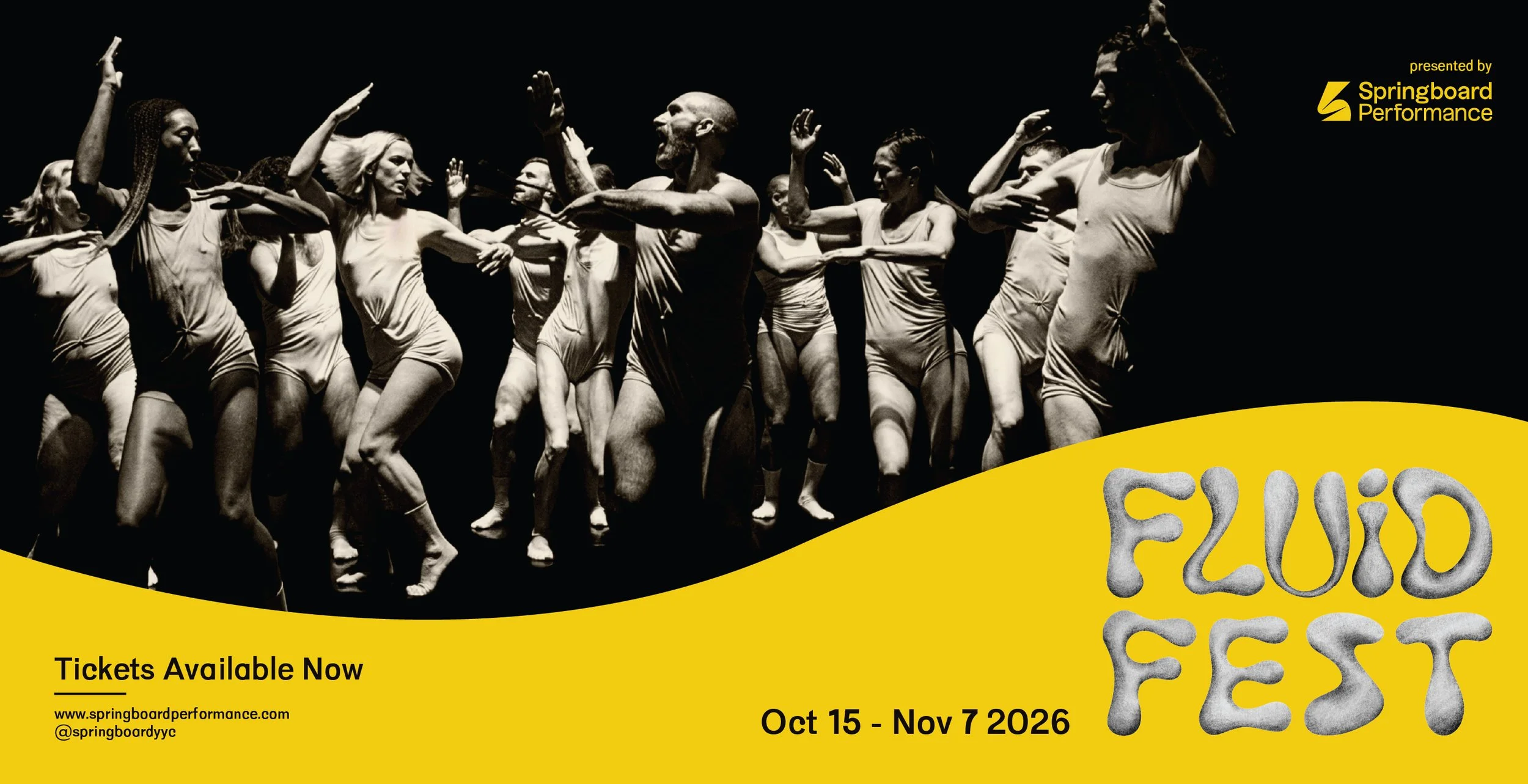
Mōnad is presented by Springboard Performance’s Fluid Fest at Contemporary Calgary on Friday, October 16 at 8 p.m.
The 70-minute performance features Landé as artistic director and performer, with Lotus on sound design and performance. Afros in tha City’s 360 DJ Party follows at 9:15 p.m. as part of the same Fluid Fest evening.