With a new production of Ola Rotimi’s Our Husband Has Gone Mad Again, the Nigerian director is creating space for African stories on Canadian stages.
By Kimberley Dooshima Jev | Afros in Tha City
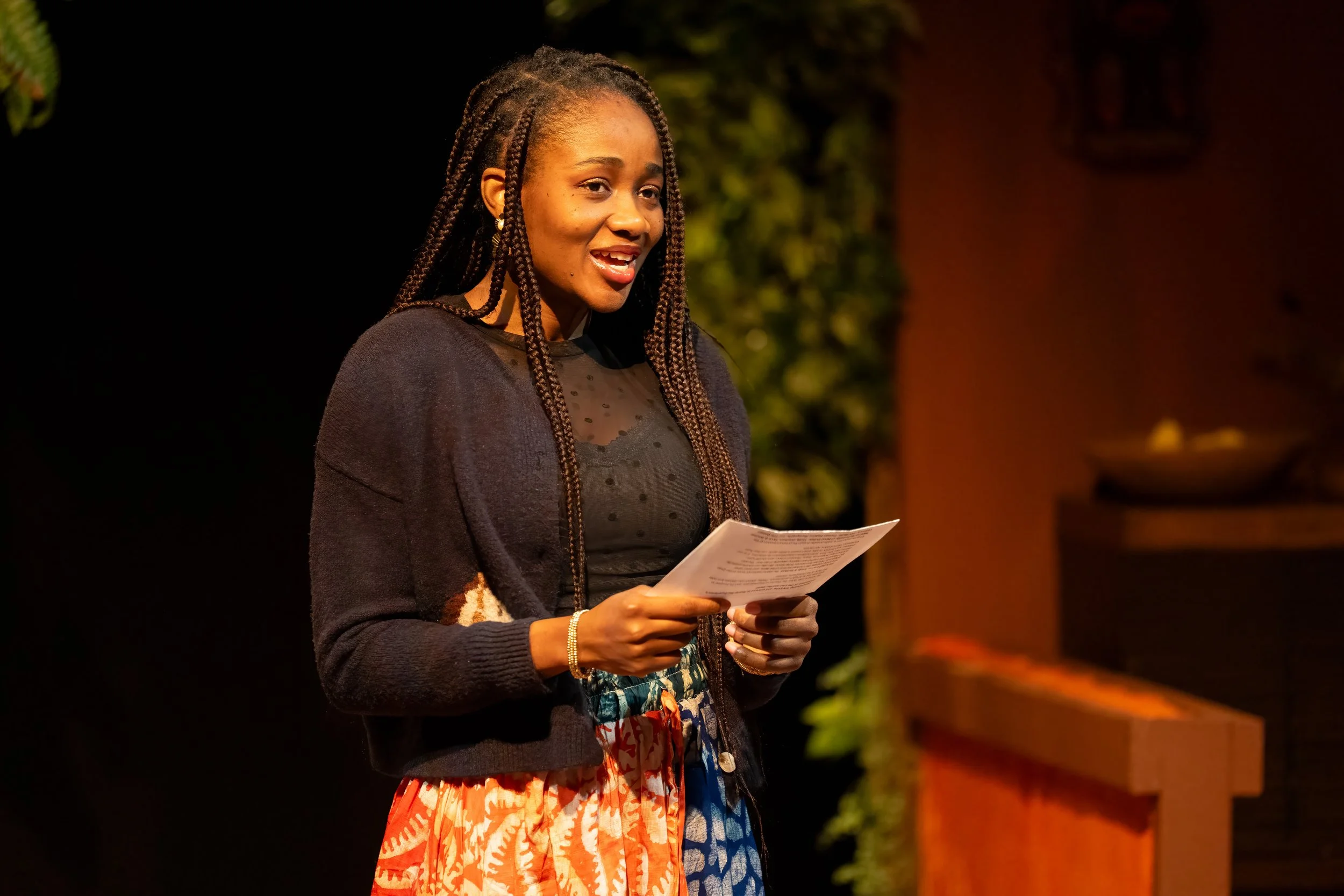
Four years ago, Lola Taiwo left Lagos, Nigeria, for Fort McMurray, Alberta, joining her husband, who works in the oil sands. At the time, directing theatre wasn't part of her professional experience.
Today, she's preparing to open her second production with Swamp Rat Experience, bringing Nigerian playwright Ola Rotimi's Our Husband Has Gone Mad Again to the stage November 5–7.
Her introduction to theatre in Fort McMurray began with an audition she didn't pass. Taiwo had responded to a casting call seeking a Black woman in her mid-thirties to forties. She didn't get the role, but the experience left her thinking about what else she could contribute. “How hard can theatre be?” she remembers asking herself.
The question brought her back to Lagos, where she had worked in advertising near the National Theatre. She remembers admiring the building and imagining herself attending a performance there one day.
Those memories eventually became something more ambitious: a proposal to bring African storytelling to a local stage.
“Where I'm coming from is quite beautiful. We have very rich culture and our storytelling is remarkable,” she tells Afros in Tha City.
She contacted the production manager who had arranged her audition and pitched the idea of staging an African play.
The answer was yes.
Earlier this year, Taiwo directed Wole Soyinka's The Lion and the Jewel with Swamp Rat Experience. Its reception encouraged the company to invite her back for another production. Taiwo is quick to acknowledge the support that made her first experience possible.
“They respected my choices and they provided me with everything I needed,” she says of Swamp Rat Experience.
A Nigerian comedy finds its audience in Fort McMurray
When the company approached Taiwo about directing another production, she began considering which Nigerian story to tell next. The suggestion that ultimately stuck came from her husband. “I do not want to give him this credit,” she jokes, recalling how he proposed Our Husband Has Gone Mad Again.
The comedy, written by Ola Rotimi in the 1960s, offered something Taiwo recognized immediately: relationship drama, competing expectations and the familiar conversations people have about men.
She thought about the women's group chats in Fort McMurray, where questions about dating and relationships regularly surface. “Do you know this man? Are we dating the same man?” she recalls.
For Taiwo, the similarities between those contemporary conversations and Rotimi's comedy made the choice particularly appealing.
“I could find the comedic similarities in both worlds.” –Lola Taiwo
Fort McMurray's multicultural population also informed her decision. Although the play is rooted in Nigerian culture, Taiwo believes its humour and relationship dynamics can connect with audiences from many backgrounds.
That accessibility matters to a director trying to build an audience for African theatre in a Canadian community.
Building a cast, building an audience
The production brings together 15 performers, including people making their first appearance in theatre and others with previous stage experience. Taiwo says casting was easier this time because word had spread about The Lion and the Jewel. People were interested in participating in another African production. But assembling the cast is only part of the work.
“As a director, people just think, well, it's about the vision, but you also need to know how to manage people,” she says.
Beyond directing the actors, Taiwo is learning to coordinate the artistic and production teams. She is also navigating differences between Nigerian and Canadian theatre practices, helping performers adjust while developing her own approach to directing.
The cultural questions are equally important.
Taiwo acknowledges the temptation to change parts of a Nigerian play to make them more immediately recognizable to Canadian audiences. “It's very tempting for me to switch up the play,” she explains. Her challenge is finding the balance between honouring the playwright's intentions and making the work accessible to a diverse audience.
It's a question that reaches beyond this production. As African artists build careers outside the continent, how much of their work should change to accommodate new audiences? And what deserves to remain exactly as it was written?
For Taiwo, the work involves making those decisions without losing sight of the story's origins.
The stories we carry
Taiwo speaks about African storytelling with the enthusiasm of someone who has discovered a new way to share something she has always valued.
“Theatre is changing, the world is changing, and storytelling is also changing,”
She remembers studying plays like Rotimi's in secondary school. Directing those same works years later, thousands of kilometres from Lagos, has given them a different significance.
“I have this crazy belief that we are great storytellers,” she says. “I want everyone to also believe it.”
She hopes her productions encourage younger African writers to create new plays, challenge established ideas and continue contributing to the literary traditions she grew up with.
Her ambitions extend beyond the existing canon. While she has begun her directing career with established Nigerian playwrights, she wants her next production to introduce audiences to a younger, contemporary African writer.
“I want to do it from people that are able to challenge status quo, not afraid to write, not afraid to express, not afraid to communicate and make their dreams a reality.”
For Taiwo, preserving these stories is also personal. Her daughter is three years old, growing up far from the Lagos her mother remembers.
“I want her to actually be transported to what life was like in my own time in Lagos, Nigeria,” she says. “I want her to have that privilege.”
It's a compelling reason to keep telling stories, and to keep finding places for them to be heard.
With Our Husband Has Gone Mad Again, Taiwo and Swamp Rat Experience are bringing another Nigerian work to an Alberta stage.
Our Husband Has Gone Mad Again
Presented by Swamp Rat Experience
November 5–7, 2026
Keyano Theatre, Fort McMurray, Alberta