• EXPLORE AITC
  • SHOP
  • About Us
  • Masthead
  • Work
  • Contact Us
  • Standards
    • Our Philosophy
    • Diversity & Representaion
    • Editorial Standards
    • Editorial & AI Standards
    • Ethics & Corrections
    • Partnerships & Sponsorships
  • Privacy Policy
  • Terms & Conditions
  • Menu

Afros in tha City

Stories Shaping Culture
  • EXPLORE AITC
  • SHOP
  • About Us
  • Masthead
  • Work
  • Contact Us
  • Standards
    • Our Philosophy
    • Diversity & Representaion
    • Editorial Standards
    • Editorial & AI Standards
    • Ethics & Corrections
    • Partnerships & Sponsorships
  • Privacy Policy
  • Terms & Conditions

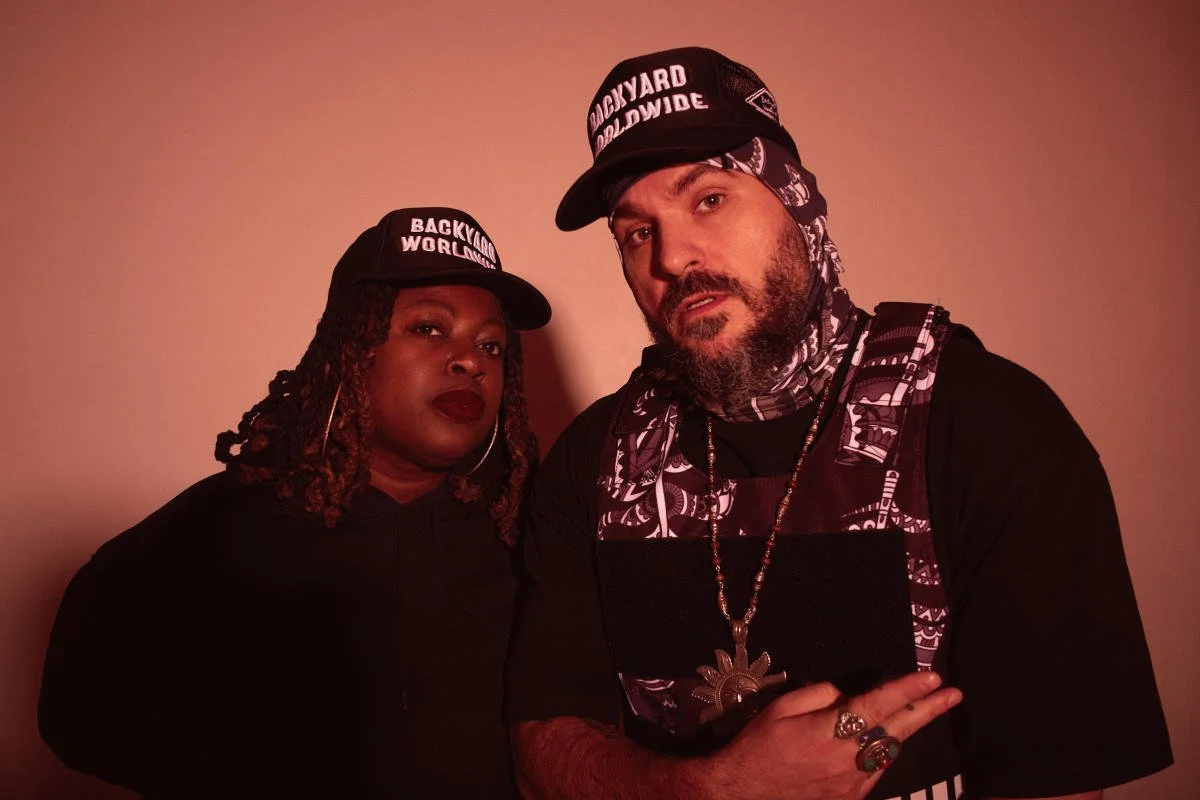
Photo Credit: Murielle-Truly-Bien-Aime

Freedom Is the Work: Spicey Landé and Jai Nitai Lotus Find A Way Through Mōnad

October 06, 2026 in Dance, Hip-Hop

The Montreal artists bring Mōnad to Calgary’s Fluid Fest with a work rooted in hip-hop, grief, spirit, community and the freedom to show up whole. Alexandra “Spicey” Landé had one condition for returning to the stage.

“If I’m going on stage, I’m doing whatever the hell I want.”

It sounds like a declaration because it is one. After two decades of building choreography, teaching, mentoring and helping push street dance into spaces that did not always know what to do with it, Landé was not interested in returning to performance to satisfy somebody else’s idea of what a Black woman, a hip-hop artist or a contemporary dancer should look like. She wanted freedom.

That desire became Mōnad, a work that places Landé alongside Montreal artist, producer and MC Jai Nitai Lotus. The piece moves through dance, live music, vocals, sound and performance while resisting an easy category.

Its title comes from the idea of a single unit containing many universes. For Landé, that image feels personal. “I’m just gonna show up as I feel I am today,” she says. “It’s many layers of myself.”

Those layers include hip-hop. They include her Haitian roots, her years in Montreal’s street dance community and her life as a choreographer. They also carry grief. Landé lost her mother nearly two decades ago. She also lost her younger brother. She says traces of both have continued to move through the work she has made since.

“Every show I do kind of either goes back to part of the story of my little brother passing or my mom and the impact on my life, or both sometimes.”

Mōnad gives her room to dig through those histories without arranging them into a neat explanation. She talks about finding “pockets of freedom” in the process. One feeling can lead to another. One movement can open another part of a life. Hip-hop can remain the foundation without becoming the border. “The goal through Mōnad is to break those boxes.” For Landé, contemporary dance eventually became useful for that exact reason.

Her first encounters with it were not necessarily comfortable. “I was like, what is going on? What is this person doing on stage?” Then something clicked.

She began to understand contemporary dance less as one specific movement language and more as permission to ask what an artist is today. That possibility mattered to someone who had spent years watching ideas about race, gender, body, genre and professionalism get attached to Black artists before they had even begun moving.

“We, as African descent Black women, even Black men, we are so complex,” Landé says. “We have so many layers to ourselves.”

Hip-hop remains inside her body. It does not need to account for every part of her. “I’m a hip-hop body, but I’m also a person.” That distinction sits at the heart of Mōnad.


A solo becomes a conversation

Jai Nitai Lotus was not originally supposed to occupy so much of the stage. Landé had worked with him for years and knew she wanted his music inside the piece. The first idea was simple. Perhaps he could be there but remain unseen. Then maybe the audience could see him sometimes. Then the possibilities kept expanding. “What if you’re with me on stage?”

Eventually, a solo became something closer to a duet. Lotus remembers trying, at first, to protect Landé’s space.

“I don’t want to take space,” he recalls thinking. “I want the space to be for Spicey.”

The work had other plans. She kept asking more of him. The creative team saw new possibilities. More light. More presence. More interaction. Lotus stopped resisting the evolution. “We’re gonna be fully immersed together and lock in.” The result is neither a dancer moving while a musician provides a soundtrack nor a concert with choreography wrapped around it. There is live music. There are live vocals. Lotus performs material created for the work. Their positions shift. The relationship changes from moment to moment.

“Things evolve,” he says. “We have to let them evolve.”

That process works because both artists are coming from hip-hop without needing to constantly announce hip-hop. The codes are there.

“If you’re a hip-hop enthusiast on some level, you’ll get the codes,” Lotus says. “You might not have seen them done in this way.”

For him, protecting those codes does not mean making the work inaccessible to everyone else. It means refusing to dilute himself in the hope of being understood. “I have to remain in authenticity, or I have no skill when I’m not in my authenticity.”

When the body becomes political anyway

Landé says Mōnad was not built as an explicitly political work. Her presence complicates that intention. “I don’t think that we want it to be political, but just me being on stage as a Black woman is highly political to this day.” Then there is her body. Landé remembers people calling her courageous for performing. At first, she did not understand what they meant. Getting on a stage takes courage for anyone, she thought.

Eventually she understood another message was being placed inside the compliment. She was a respected choreographer and community leader returning to performance as a Black, plus-sized woman in an industry where bodies like hers are still not commonly centred. “That’s political on its own.”

She has watched the dance world change over the last two decades. She also remembers when street dance was routinely treated as less professional, and when African and hip-hop influences had to fight to be taken seriously in contemporary spaces.

Progress has happened. The work is not finished.

Landé has also learned that gaining access does not magically make the work easier. The first decade of her career, she says, was largely about survival. “Lots of work, no money at all.”

Recognition eventually grew. Financial support improved. So did the opportunities. The workload grew with them.

“Way more work. Way more responsibility. Way more expectations.”

Now, another kind of freedom has entered Landé’s practice: the freedom to stop. She says she has become more willing to recognize when she has reached capacity. She does not need to attend every event. She cannot mentor everyone. Being useful to a community does not require sacrificing every part of herself to it. “I don’t feel obliged anymore to be everywhere, to be everything to everyone.”

Health, rest and the people closest to her have moved higher on the list. “I’m learning to really listen to my body and my spirit.”

Hip-hop as service

Lotus arrives at the same question of responsibility from another direction. He describes himself as an accumulation of everything he has done so far: rapper, producer, performer, creative director, mentor and father. He also sees art as something larger than an individual career. “I’m on a mission in that way as an artist to be fearless and free and be individual.”

Music entered his life early. His father was a musician, and Lotus remembers being a small child sitting on his mother’s lap in a temple surrounded by instruments, devotion and call-and-response. Later came drums. Then hip-hop.

As a teenager, he found a culture that could hold both style and substance. Discovering Black Star helped him understand that knowledge, identity and being “fly” did not need to exist in separate worlds. The lesson stayed with him.

Today, much of Lotus’s work also happens with young people. He directs NBS Studio in Montreal’s Côte-des-Neiges neighbourhood, where youth make music and develop their own voices. Fatherhood has sharpened that sense of responsibility.

Lotus says one of his hardest lessons has been learning not to measure another person’s pain against his own experience. If one of his daughters comes to him with a problem that seems small compared with what he sees in the wider community, he still has to respect its weight.

“Who am I to say?” That idea runs through his art too. People need room to become themselves.

“She’s not afraid to be herself,” Lotus says of Landé. “I just don’t want people moving and feeling like there’s not a place for them. There’s a place for everybody.” That may be the clearest description of what Landé and Lotus have built together.

Mōnad is a work about multiplicity without apology.

One body can carry hip-hop and contemporary dance. Grief and humour. Haiti and Montreal. Spirituality and experimentation. Leadership and exhaustion. An artist can be a teacher, parent, performer, mentor, producer and someone who simply needs to go home and rest. The work does not ask those pieces to resolve themselves into one tidy identity. It lets them exist. For Landé, that is freedom. For Lotus, it is authenticity. Inside Mōnad, they may be the same thing.

Mōnad is presented by Springboard Performance’s Fluid Fest at Contemporary Calgary on Friday, October 16 at 8 p.m.

The 70-minute performance features Landé as artistic director and performer, with Lotus on sound design and performance. Afros in tha City’s 360 DJ Party follows at 9:15 p.m. as part of the same Fluid Fest evening.

Tags: Fluid Fest, Spicey Landé, Jai Nitai Lotus
Prev / Next
No results found


Stories
  • October 2026
  • September 2026
  • August 2026
  • July 2026
  • June 2026
  • May 2026
  • April 2026
  • March 2026
  • February 2026
  • January 2026
  • July 2024
  • June 2024
  • May 2024
  • April 2024
  • March 2024
  • February 2024
  • January 2024
  • December 2023
  • November 2023
  • October 2023
  • September 2023
  • August 2023
  • July 2023
  • June 2023
  • May 2023
  • March 2023
  • January 2023
  • December 2022
  • November 2022
  • October 2022
  • July 2022
  • June 2022
  • May 2022
  • April 2022
  • March 2022
  • February 2022
  • January 2022
  • December 2021
  • November 2021
  • October 2021
  • September 2021
  • August 2021
  • July 2021
  • June 2021
  • May 2021
  • April 2021
  • March 2021
  • February 2021
  • January 2021
  • November 2020
  • October 2020

AITC - October 2026

Featured
Cover.png
AITC October 2026 - The Currency of Time - Kardinal Offishall
Read more →
Freedom Is the Work: Spicey Landé and Jai Nitai Lotus Find A Way Through Mōnad
Dance, Hip-Hop
Freedom Is the Work: Spicey Landé and Jai Nitai Lotus Find A Way Through Mōnad
Dance, Hip-Hop
Read more →
Dance, Hip-Hop
Movie Stars Linda Ejiofor-Suleiman & Ibrahim Suleiman are headed to Calgary!
Podcast
Movie Stars Linda Ejiofor-Suleiman & Ibrahim Suleiman are headed to Calgary!
Podcast

Calgary-based producers Ejiro Onobrakpor and Nenritji Suwa are bringing the acclaimed Due Parenting Podcast Live to the stage.

Read more →
Podcast
Beyoncé Is Coming to the Symphony. Do You Understand What Is Happening Here?
Music
Beyoncé Is Coming to the Symphony. Do You Understand What Is Happening Here?
Music

Composer and conductor Steve Hackman brings Beethoven X Beyoncé to Calgary, weaving Beyoncé’s music through Beethoven’s Seventh Symphony.

Kimberley Dooshima Jev talks with Hackman about “Halo,” Beyoncé’s musical intelligence, classical music’s boundaries and what happens when two musical worlds are allowed to meet.

Read more →
Music
Cover (1).png
AITC September 2026 - What Will It Take For Us To Feed One Another - Aquakultre

COVER STORY PREVIEW

Through 1783 and Matriarchs, Aquakultre is transforming family memory into a living archive while asking Black Nova Scotian communities to remember how deeply they belong to one another.

By Kimberley Dooshima Jev

Lance Sampson was standing in front of a video kiosk at the Africville Museum when a familiar name appeared on the screen. The woman speaking was his great-great-grandmother. Sampson had stumbled onto what he understands to be the only surviving recording of her voice.

His first instinct was reverence. His second was hip-hop.

“I immediately went into hip-hop mode,” he remembers. “Let me sample this right quick.”

That impulse sits at the centre of Sampson’s work as Aquakultre: find what remains, listen closely, then give it somewhere new to live.

Read the full cover story

Aquakultre covers the September 2026 issue of Afros in tha City. The complete story explores 1783, Matriarchs, the family histories behind the work and the moment Lance Sampson found his voice.

The full feature and photo story will be released with the September digital issue and limited print edition.

Join the Afros in tha City newsletter to be the first to know when both editions become available.

Read more →
How Springboard Is Building Calgary’s Cultural Ecosystem
Art, Contemporary Dance
How Springboard Is Building Calgary’s Cultural Ecosystem
Art, Contemporary Dance

Dance, public space, galleries and live performance become part of the same conversation when Springboard Performance asks what a cultural ecosystem can look like.

Through Fluid Fest and its wider programming, artistic director Nicole Mion is building connections between artists, audiences and ideas in Calgary while placing the city within national and international conversations about contemporary performance.

In How Springboard Is Building Calgary’s Cultural Ecosystem, Afros in tha City looks at the systems behind the art, the importance of circulation and the artists using movement, theatre, music and visual art to create new ways into performance.

The full feature and photo story will be released with the September digital issue and limited print edition.

Join the Afros in tha City newsletter to be the first to know when both editions become available.

Read more →
Art, Contemporary Dance
What Sugar and Indigo Remember

Sugar, indigo, family photographs and the Atlantic carry histories that are easy to overlook until someone asks us to look again.

At Dalhousie Art Gallery, curator francesca ekwuyasi brings together Stina Baudin, Adama Delphine Fawundu, Bushra Junaid and Christina Leslie for Burnt Sugar Blue, an exhibition examining colonialism, Black diasporic memory, family, spirituality and the histories embedded in everyday materials.

In What Sugar and Indigo Remember, Afros in tha City looks at how these artists turn materials and archives into something living, while Roger Mooking’s SoundBites continues the conversation from across the gallery.

The full feature and photo story will be released with the September digital issue and limited print edition.

Join the Afros in tha City newsletter to be the first to know when both editions become available.

Read more →
Roger Mooking Is Building Beyond the Algorithm

Roger Mooking is thinking beyond the algorithm.

With SoundBites, the Canadian multidisciplinary artist is responding to streaming culture, shrinking attention spans and the rise of AI by asking a different question: what happens when technology distributes the work, but does not define its value?

In conversation with Afros in tha City, Mooking talks about the state of the music industry, the value of slow creative practice and why the future of music may look a lot more like a campfire than a platform.

The full feature and photo story will be released with the September digital issue and limited print edition.

Join the Afros in tha City newsletter to be the first to know when both editions become available.

Read more →
Alberta Doesn’t Have a Talent Problem. It Has an Access Problem.
Film
Alberta Doesn’t Have a Talent Problem. It Has an Access Problem.
Film

Talent, ambition and strong ideas are not always enough when the people with the power to finance, develop and distribute them are somewhere else.

At the inaugural TIFF: The Market, Creatives Empowered brings Alberta creators Sandra Bueckert, Tobit Luyeye Lemba and Flordeliza Dayrit into conversations with producers, buyers, distributors and other industry decision-makers from around the world.

In Alberta Doesn’t Have a Talent Problem. It Has an Access Problem., Afros in tha City looks at what meaningful industry access can mean for creators working outside Canada’s largest production centres, and why visibility only matters if the conversation continues after the festival.

The full web exclusive is available now on Afros in tha City.

Read more →
Film
Prismatic Is Thinking Beyond Representation

Prismatic Arts Festival has spent nearly two decades creating space for Indigenous, Black and racialized artists. For Executive and Artistic Director Raeesa Lalani, the conversation now goes beyond visibility to sustainability, power and what artists need to build lasting careers.

In our September 2026 issue, Afros in tha City looks at the festival’s history, its place in Canada’s arts ecosystem and the artists shaping Prismatic 2026, including Walter Borden, Tara Taylor, Bageshree Vaze, Tania El Khoury and Dee Hernandez.

The full feature and photo story will be released with the September digital issue and limited print edition.

Join the Afros in tha City newsletter to be the first to know when both editions become available.

Read more →
Timeless: 100 Years of Oscar Peterson Extended at Studio Bell

The National Music Centre’s Timeless: 100 Years of Oscar Peterson has been extended at Studio Bell through January 3, 2027. Originally opened in July 2025 to commemorate the centenary of Peterson’s birth, the exhibition brings together instruments, archival materials, awards, personal artifacts, interviews and multimedia installations to tell the story of one of Canada’s most important musicians.

Read more →
Saul Williams Still Believes Art Has a Job to Do

With Leap Life and Songs My Mother Taught Me arriving eleven days apart, Saul Williams turns sound and page into one argument about art, memory and responsibility.

There is something almost unreasonable about the amount Saul Williams still expects from art. Nearly three decades into a career spanning poetry, music, theatre, film and literature, Williams has not arrived at the comfortable conclusion that art should simply entertain us. Within the span of eleven days this summer, he released two projects arguing that culture does much more than that.

His album Leap Life, released August 28 on Big Dada, moves through spoken word, hip-hop, jazz, ambient composition, African rhythmic traditions and improvisation.

On September 8, Haymarket Books published Songs My Mother Taught Me: Why the Artist Must Take Sides, a political memoir tracing the people and experiences that shaped Williams’ understanding of art as power.

The full feature and photo story will be released with the September digital issue and limited print edition.

Join the Afros in tha City newsletter to be the first to know when both editions become available.

Read more →
Afros Picks: Three DJs Setting the Tone at MUSE N°001

Vancouver’s MUSE N°001 brings together four DJs with distinctly different approaches to the dance floor. RAEDIAMENDZ, SAANZ, DJ DES and DJ BOMBAE move through hip-hop, R&B, African electronic music, Afro House and open-format sounds, each bringing her own relationship to culture, rhythm and the room.

Created by creative director Drew Ragiste, MUSE is built around a bigger question: what happens when women are considered in the design of nightlife from the beginning?

In this month’s Afropicks, Afros in tha City meets the four selectors setting the tone for MUSE’s first night.

The full feature and photo story will be released with the September digital issue and limited print edition.

Join the Afros in tha City newsletter to be the first to know when both editions become available.

Read more →
This Is What Calgary Sounds Like Now
Award Shows, Music
This Is What Calgary Sounds Like Now
Award Shows, Music

Bijaan and Jaiden Riley arrive at the 2026 YYC Music Awards from very different corners of Calgary’s music community. Bijaan’s path runs from childhood rap sessions in northwest Calgary to two nominations for “Jungle,” while Riley enters with three nominations after a year shaped by rapid career growth, community and profound personal loss.

In conversation with Afros in tha City, both artists look beyond the awards to the friendships, mentors, family histories and years of work that made the nominations possible.

From Bijaan’s third-culture story and long relationship with Calgary hip-hop to Riley’s rise through the city’s country and folk community, the feature offers a deeper look at what it actually takes to build a music career from here.

The full feature and photo story will be released with the September digital issue and limited print edition.

Join the Afros in tha City newsletter to be the first to know when both editions become available.

Read more →
Award Shows, Music
Recovery Was Never Meant to Be Hidden
Fashion, Wellness
Recovery Was Never Meant to Be Hidden
Fashion, Wellness

Sober Runway is bigger than a fashion show. Built from lived experience, work in addiction and mental-health services, and belief in recovery through community, the organization uses fashion to challenge the idea that surviving addiction should remain hidden.

In the September issue, Sober Runway founder Suzzy, opens up about stigma, culture, family, recovery and the community she is working to build beyond the runway.

The full feature and photo story will be released with the September digital issue and limited print edition.

Join the Afros in tha City newsletter to be the first to know when both editions become available.

Read more →
Fashion, Wellness

July 2026 - The Omnibus - Print July 2026 - The Omnibus - Print
Sold Out
July 2026 - The Omnibus - Print
CA$50.00

The Summer Omnibus is our most ambitious issue yet. Bringing together seven months of journalism, photography, and storytelling, this special collector's edition celebrates Black arts, business, fashion, music, and community across Canada and the diaspora.

Featuring exclusive cover stories with Judith Demosthene, Funmi Osatuyi, Adrianne Williams, Nancy Nixon, Ayokunle Akinsebikan, Femi Jr., and more, this 70-page volume captures the people, ideas, and conversations shaping culture today.

Beautifully printed in limited quantities, the Summer Omnibus is designed to be collected, shared, and revisited long after publication.

Limited print copies available.


“It always seems impossible until it’s done.”
— Nelson Mandela


Promotional image of a woman suspended in the air with hand placed above a deluxe jar of DTouch quiet gravity mineral salts


© 2026 Afros in tha City