• EXPLORE AITC
  • SHOP
  • About Us
  • Masthead
  • Work
  • Contact Us
  • Standards
    • Our Philosophy
    • Diversity & Representaion
    • Editorial Standards
    • Editorial & AI Standards
    • Ethics & Corrections
    • Partnerships & Sponsorships
  • Privacy Policy
  • Terms & Conditions
  • Menu

Afros in tha City

Stories Shaping Culture
  • EXPLORE AITC
  • SHOP
  • About Us
  • Masthead
  • Work
  • Contact Us
  • Standards
    • Our Philosophy
    • Diversity & Representaion
    • Editorial Standards
    • Editorial & AI Standards
    • Ethics & Corrections
    • Partnerships & Sponsorships
  • Privacy Policy
  • Terms & Conditions

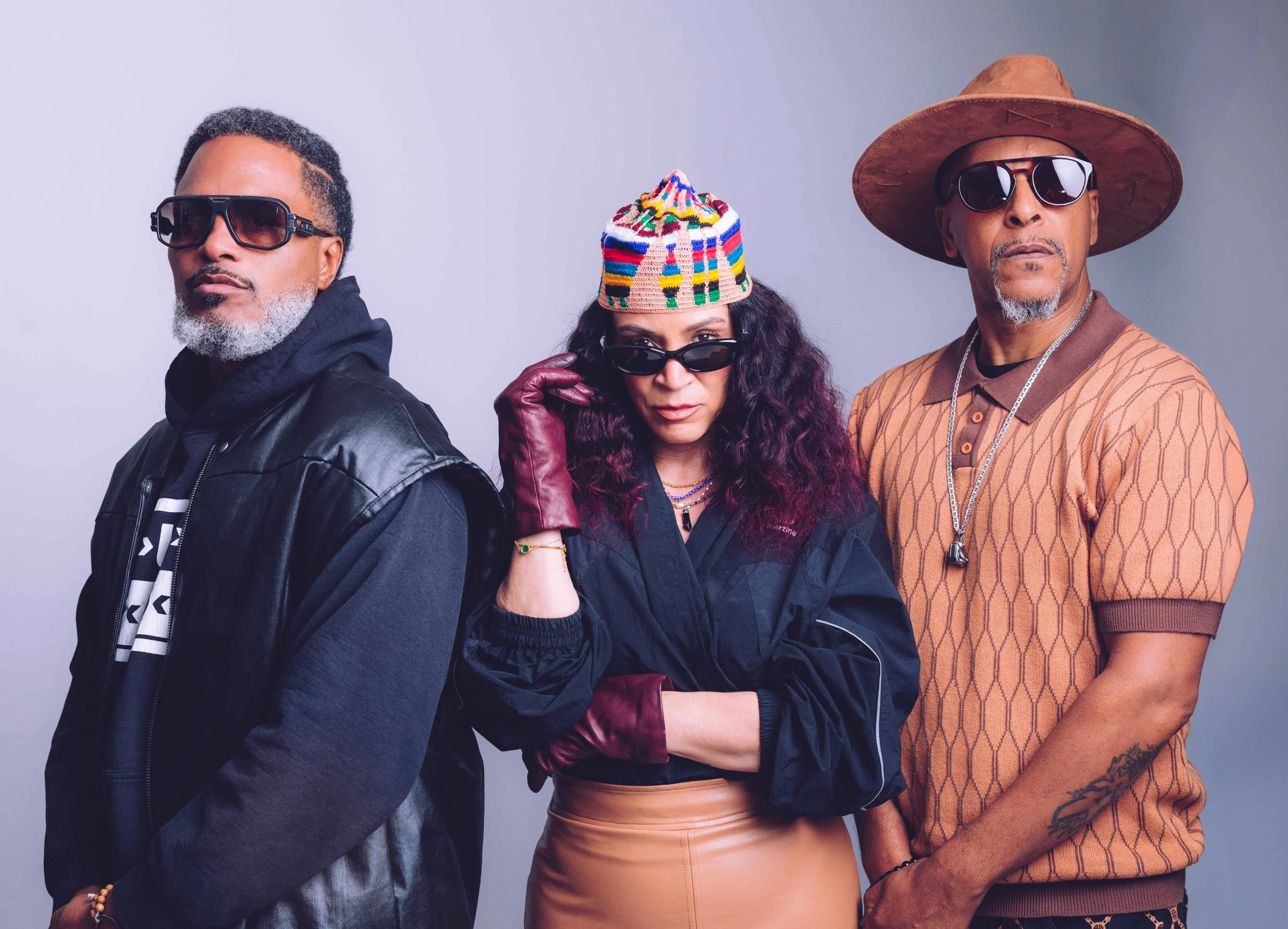
Photo Credit: Emilio Herce

Echoes in the Green Room: The Resilience, Royalty, and Quiet Anchors of Digable Planets

October 28, 2026 in Music

BEYOND THE STAGE

Beyond the Stage is Afros in tha City's editorial series exploring the world surrounding the performance. Through candid encounters and first-person-informed music journalism, it captures the atmosphere, unexpected exchanges, human details, and cultural significance that conventional reviews can miss. From intimate backstage conversations to the energy of a live audience, the series documents the people behind the music and the moments that shape its legacy.


Echoes in the Green Room: The Resilience, Royalty, and Quiet Anchors of Digable Planets

By Cara Eyre

The Palace Theatre in Calgary has a life of its own behind the main stage. Winding staircases lead toward private perches and descend into subterranean corridors, while layers of artist signatures stretch across the plaster walls. In the green room, vintage wood, drifting smoke, and the unmistakable atmosphere of a working hip-hop tour set the scene for a group whose music has travelled far beyond its original moment.

In the middle of this sensory archive, Digable Planets is preparing to play.

Backstage, there is no generic rock-and-roll pacing, but the equilibrium carries a subtle, crackling friction. Digable Planets arrived in the early nineties during an explosion of bohemian Black expression, armed with bebop horns, insect metaphors, and radical socialist undercurrents. Decades later, they sit in Western Canada looking not like artifacts of a vanished golden age, but like three distinct elders of an enduring diaspora aesthetic, carrying decades of shared history, grief, and survival.

Ladybug Mecca commands the green room with an unmistakable, guarded royalty. She wears a faded vintage Black movie poster graphic tee, its cinematic defiance mirroring the sharp, unyielding boundary she draws around her presence. That affinity for cinema and scholarship is no passing fashion statement; as a Nasir Jones Hip Hop Fellow at Harvard University's Hutchins Center, her creative vision has expanded into her experimental sonic documentary and book project, Sounding Black Brazil: Rhythm, Language, and the Politics of Hip Hop. Toward a visiting journalist covering the evening, her demeanor is deeply protective and fiercely reserved. Her instructions to crew and her glances across the room create an intentional, protective perimeter erected to safeguard her space and her narrative.

Yet this protective stance is not casual arrogance; it is steeped in the anatomy of trauma and survival. In the mid-nineties, during the release and creative summit of their masterwork Blowout Comb, Mecca suffered the devastating blow of losing both of her parents in rapid succession. Being forced to navigate the predatory machinery of the music industry and relentless tour schedules while engulfed in raw grief fractured her world, ultimately contributing to the group's original disbandment. Her sharp boundaries and careful skepticism are hard-won armor, built to safeguard her legacy, space, and identity from an industry and an outside world that demanded too much while offering little protection.

Nearby, the two men of the collective provide the steady architecture that makes that royalty feel entirely protected.

Ishmael Butler, known originally as Butterfly, immediately senses the room's cautious atmosphere and steps into the breach with disarming grace and protective hospitality. Dressed in relaxed tailoring, he cuts through the dense plumes of cannabis smoke with a magnetic warmth, pouring Hennessy into a plastic cup for the visiting journalist as an immediate offering of comfort.

At one point, with a wry, self-deprecating grin, Butterfly gestures toward a tired, sad old sandwich wrapped in crinkled cling film sitting on a backstage table, pointing out the absurdity of his assigned dinner. It is a dismal, unglamorous backstage meal, a quiet reminder that even legends of their cultural stature still contend with the unceremonious realities of tour hospitality.

Yet rather than dwell on the letdown, Butterfly uses the moment to disarm the tension, contrasting the venue's meager offering with his own boundless generosity. Recognizing the protective friction directed at an outside interviewer doing the work of cultural documentation, Butterfly bridges the divide with calm attentiveness and visible, unspoken care for how guests are received. He checks in gently, asks thoughtful questions, and uses his effortless charm and diplomacy to smooth over the room, ensuring the guest feels welcomed, valued, and respected without undermining the sanctum they keep around their collective history.

Beside him sits Craig Irving, the beloved Doodlebug, providing the steady foundation that anchors the entire collective. Wearing a fresh knit cap and workwear jacket, he speaks with the rhythmic warmth of a seasoned neighborhood statesman, laughing easily and leaning in to trade quips about the crisp Alberta air. Together, Butterfly and Doodlebug act as balancing counterweights. They do not challenge Mecca's protective posture; instead, they build a supportive sanctum around her, holding the center through every personal break, reunion, and backstage boundary that has tested their bond over thirty years.

This delicate balance is precisely what makes their longevity so remarkable. The music business craves tidy legends of unbroken brotherhood or bitter rivalries, but Digable Planets operates on human terms. Over three decades, they have navigated extended hiatuses, walked away across different continents, and allowed the group to go quiet when individual survival took precedence. Their endurance is not built on pretending the scars do not exist, but on holding a chemistry strong enough to withstand both external industry noise and internal strain.

Because they allowed themselves the freedom to step back, their returns have remained pure. There is no desperate nostalgia tour routine here, no pantomime of nineteen-ninety-three bravado. When they walk up the stairs of The Palace Theatre and take the stage together, the sound that rolls through the hall is living tissue. The groove of “Rebirth of Slick (Cool Like Dat)” sounds less like a radio souvenir and more like a jazz standard reinterpreted by master musicians who now understand every drop of its rhythm on a cellular level.

From the stage, that cellular connection extends directly into the crowd, where the group takes quiet pride in witnessing an extraordinary generational shift. Looking past the stage monitors, they see original fans who bought their cassettes thirty years ago now standing alongside their adolescent children, and in some instances, even holding the hands of young grandchildren. For a group that resisted commercial homogenization, seeing three generations swaying to the same horn loops and basslines provides the ultimate validation. It proves that their art was never a fleeting youth trend, but a durable cultural inheritance passed down through family bloodlines.

Out in the wings, before the house lights cut to black, you can see the three of them exchange a glance. It is the language of artists who survived the commercial meat grinder of nineties hip-hop, endured genuine personal tragedy, built their own families, and still genuinely love the music they made when they were kids.

What began in the early nineties as bohemian youth culture and a whirlwind commercial explosion has matured into something far more sacred: a living, multigenerational family affair anchored in enduring community. Ladybug Mecca adjusts her tee, Doodlebug leans in with a final nod of encouragement, and Butterfly steps forward into the dim light. The winding stairways of The Palace fade into shadow, leaving only the bassline, the bond, and three travelers who never lost their way home.

Tags: Cara Eyre, Digable Planets
Prev / Next
No results found


Stories
  • October 2026
  • September 2026
  • August 2026
  • July 2026
  • June 2026
  • May 2026
  • April 2026
  • March 2026
  • February 2026
  • January 2026
  • July 2024
  • June 2024
  • May 2024
  • April 2024
  • March 2024
  • February 2024
  • January 2024
  • December 2023
  • November 2023
  • October 2023
  • September 2023
  • August 2023
  • July 2023
  • June 2023
  • May 2023
  • March 2023
  • January 2023
  • December 2022
  • November 2022
  • October 2022
  • July 2022
  • June 2022
  • May 2022
  • April 2022
  • March 2022
  • February 2022
  • January 2022
  • December 2021
  • November 2021
  • October 2021
  • September 2021
  • August 2021
  • July 2021
  • June 2021
  • May 2021
  • April 2021
  • March 2021
  • February 2021
  • January 2021
  • November 2020
  • October 2020

AITC - October 2026

Featured
Echoes in the Green Room: The Resilience, Royalty, and Quiet Anchors of Digable Planets
Music
Echoes in the Green Room: The Resilience, Royalty, and Quiet Anchors of Digable Planets
Music

Beyond the Stage is Afros in tha City's editorial series exploring the world surrounding the performance. Through candid encounters and first-person-informed music journalism, it captures the atmosphere, unexpected exchanges, human details, and cultural significance that conventional reviews can miss. From intimate backstage conversations to the energy of a live audience, the series documents the people behind the music and the moments that shape its legacy.

Read more →
Music
AITC October  2026 - The Currency of Time - Kardinal Offishall
Music
AITC October 2026 - The Currency of Time - Kardinal Offishall
Music

Kardinal Offishall fronts the October issue of Afros in tha City.

In The Currency of Time, Kardi goes beyond the highlight reel to talk about independence, attention, longevity, family, the business of music and what it takes to keep creating after more than three decades in the industry.

“We’re not fighting for their money. We are fighting for attention.”

The October issue is here. 

Read more →
Music
Afros Picks: October 2026

Seven artists, seven distinct sounds. The October 2026 edition of Afros Picks highlights musicians connecting heritage, experimentation and creative independence across generations and borders.

Read more →
THE WOUNDS WE CANNOT SEE
Wellness
THE WOUNDS WE CANNOT SEE
Wellness

What lies beneath the way we react? Calgary counsellor Ekene Balogun explores how past experiences shape our behaviour, relationships and sense of safety. The author of Internal Bleed speaks with Afros in Tha City about compassion, healing and creating space for culturally sensitive support.

Read the feature in our October issue. Sign up for the Afros in Tha City newsletter to hear when the print issue is released.

Read more →
Wellness
The Joy of Being Human: Alana Fairchild, Sobriety and the Power of Being Present
Wellness
The Joy of Being Human: Alana Fairchild, Sobriety and the Power of Being Present
Wellness

An unexpected encounter with spiritual teacher Alana Fairchild opens a conversation about sobriety, music and finding joy through change. Kimberley Dooshima Jev reflects on her longtime connection to Fairchild’s oracle cards and explores the ideas behind her upcoming sober Halloween ritual rave in Calgary.

Read more →
Wellness
Rapsody Questions the Future of Hip-Hop Journalism as God Gotta Afro & Gold Hoops Challenges the Attention Economy
Entertainment, Hip-Hop, Music
Rapsody Questions the Future of Hip-Hop Journalism as God Gotta Afro & Gold Hoops Challenges the Attention Economy
Entertainment, Hip-Hop, Music

Grammy-winning rapper Rapsody is raising questions about the future of hip-hop journalism and the shrinking space for artists whose work demands more than a viral headline.

In a 14-slide Instagram post, the North Carolina artist questioned why meaningful music often struggles to receive serious coverage, even when it connects deeply with listeners.

Her concerns extend beyond artists seeking publicity. Rapsody pointed to declining newsroom resources, fewer music writers, reduced print coverage and fewer opportunities for journalists to spend time exploring albums in depth.

Read more →
Entertainment, Hip-Hop, Music
Inside Asia Clarke’s Braided Future

Step inside Asia Clarke’s braided future, where Black hair, community care and science fiction meet. Inspired by African symbols and the bold styling of The Fifth Element, the multidisciplinary designer imagines a world where hair braiders shape new technologies through BRAID2BRAIN and Ama’s Salon.

Read the feature online now. Sign up for the Afros in Tha City newsletter to be notified when our October print issue is released.

Read more →
Freedom Is the Work: Spicey Landé and Jai Nitai Lotus Find A Way Through Mōnad
Dance, Hip-Hop
Freedom Is the Work: Spicey Landé and Jai Nitai Lotus Find A Way Through Mōnad
Dance, Hip-Hop

The Montreal artists bring Mōnad to Calgary’s Fluid Fest with a work rooted in hip-hop, grief, spirit, community and the freedom to show up whole. Alexandra “Spicey” Landé had one condition for returning to the stage.

“If I’m going on stage, I’m doing whatever the hell I want.”

It sounds like a declaration because it is one. After two decades of building choreography, teaching, mentoring and helping push street dance into spaces that did not always know what to do with it, Landé was not interested in returning to performance to satisfy somebody else’s idea of what a Black woman, a hip-hop artist or a contemporary dancer should look like. She wanted freedom.

Read more →
Dance, Hip-Hop
A Century of Faust: Silent Cinema Meets Live Music in Calgary
Film
A Century of Faust: Silent Cinema Meets Live Music in Calgary
Film

Released in 1926, Faust is among the defining works of German Expressionist cinema. Directed by F. W. Murnau, the film draws on centuries of European folklore and literature to tell the story of a man who makes a bargain with the devil in exchange for knowledge, power and youth.

The film stars Swedish actor Gösta Ekman in the title role alongside Emil Jannings as Mephistopheles. Through elaborate sets, visual effects and dramatic contrasts between light and shadow, Murnau created a world where the boundaries between good and evil, faith and temptation, become increasingly difficult to separate.

Read more →
Film
Movie Stars Linda Ejiofor-Suleiman & Ibrahim Suleiman are headed to Calgary!
Podcast
Movie Stars Linda Ejiofor-Suleiman & Ibrahim Suleiman are headed to Calgary!
Podcast

Calgary-based producers Ejiro Onobrakpor and Nenritji Suwa are bringing the acclaimed Due Parenting Podcast Live to the stage.

Read more →
Podcast
Beyoncé Is Coming to the Symphony. Do You Understand What Is Happening Here?
Music
Beyoncé Is Coming to the Symphony. Do You Understand What Is Happening Here?
Music

Composer and conductor Steve Hackman brings Beethoven X Beyoncé to Calgary, weaving Beyoncé’s music through Beethoven’s Seventh Symphony.

Kimberley Dooshima Jev talks with Hackman about “Halo,” Beyoncé’s musical intelligence, classical music’s boundaries and what happens when two musical worlds are allowed to meet.

Read more →
Music
Cover (1).png
AITC September 2026 - What Will It Take For Us To Feed One Another - Aquakultre

COVER STORY PREVIEW

Through 1783 and Matriarchs, Aquakultre is transforming family memory into a living archive while asking Black Nova Scotian communities to remember how deeply they belong to one another.

By Kimberley Dooshima Jev

Lance Sampson was standing in front of a video kiosk at the Africville Museum when a familiar name appeared on the screen. The woman speaking was his great-great-grandmother. Sampson had stumbled onto what he understands to be the only surviving recording of her voice.

His first instinct was reverence. His second was hip-hop.

“I immediately went into hip-hop mode,” he remembers. “Let me sample this right quick.”

That impulse sits at the centre of Sampson’s work as Aquakultre: find what remains, listen closely, then give it somewhere new to live.

Read the full cover story

Aquakultre covers the September 2026 issue of Afros in tha City. The complete story explores 1783, Matriarchs, the family histories behind the work and the moment Lance Sampson found his voice.

The full feature and photo story will be released with the September digital issue and limited print edition.

Join the Afros in tha City newsletter to be the first to know when both editions become available.

Read more →
How Springboard Is Building Calgary’s Cultural Ecosystem
Art, Contemporary Dance
How Springboard Is Building Calgary’s Cultural Ecosystem
Art, Contemporary Dance

Dance, public space, galleries and live performance become part of the same conversation when Springboard Performance asks what a cultural ecosystem can look like.

Through Fluid Fest and its wider programming, artistic director Nicole Mion is building connections between artists, audiences and ideas in Calgary while placing the city within national and international conversations about contemporary performance.

In How Springboard Is Building Calgary’s Cultural Ecosystem, Afros in tha City looks at the systems behind the art, the importance of circulation and the artists using movement, theatre, music and visual art to create new ways into performance.

The full feature and photo story will be released with the September digital issue and limited print edition.

Join the Afros in tha City newsletter to be the first to know when both editions become available.

Read more →
Art, Contemporary Dance
What Sugar and Indigo Remember

Sugar, indigo, family photographs and the Atlantic carry histories that are easy to overlook until someone asks us to look again.

At Dalhousie Art Gallery, curator francesca ekwuyasi brings together Stina Baudin, Adama Delphine Fawundu, Bushra Junaid and Christina Leslie for Burnt Sugar Blue, an exhibition examining colonialism, Black diasporic memory, family, spirituality and the histories embedded in everyday materials.

In What Sugar and Indigo Remember, Afros in tha City looks at how these artists turn materials and archives into something living, while Roger Mooking’s SoundBites continues the conversation from across the gallery.

The full feature and photo story will be released with the September digital issue and limited print edition.

Join the Afros in tha City newsletter to be the first to know when both editions become available.

Read more →
Roger Mooking Is Building Beyond the Algorithm

Roger Mooking is thinking beyond the algorithm.

With SoundBites, the Canadian multidisciplinary artist is responding to streaming culture, shrinking attention spans and the rise of AI by asking a different question: what happens when technology distributes the work, but does not define its value?

In conversation with Afros in tha City, Mooking talks about the state of the music industry, the value of slow creative practice and why the future of music may look a lot more like a campfire than a platform.

The full feature and photo story will be released with the September digital issue and limited print edition.

Join the Afros in tha City newsletter to be the first to know when both editions become available.

Read more →

July 2026 - The Omnibus - Print July 2026 - The Omnibus - Print
Sold Out
July 2026 - The Omnibus - Print
CA$50.00

The Summer Omnibus is our most ambitious issue yet. Bringing together seven months of journalism, photography, and storytelling, this special collector's edition celebrates Black arts, business, fashion, music, and community across Canada and the diaspora.

Featuring exclusive cover stories with Judith Demosthene, Funmi Osatuyi, Adrianne Williams, Nancy Nixon, Ayokunle Akinsebikan, Femi Jr., and more, this 70-page volume captures the people, ideas, and conversations shaping culture today.

Beautifully printed in limited quantities, the Summer Omnibus is designed to be collected, shared, and revisited long after publication.

Limited print copies available.


“It always seems impossible until it’s done.”
— Nelson Mandela


Promotional image of a woman suspended in the air with hand placed above a deluxe jar of DTouch quiet gravity mineral salts


© 2026 Afros in tha City