• EXPLORE AITC
  • SHOP
  • About Us
  • Masthead
  • Work
  • Contact Us
  • Standards
    • Our Philosophy
    • Diversity & Representaion
    • Editorial Standards
    • Editorial & AI Standards
    • Ethics & Corrections
    • Partnerships & Sponsorships
  • Privacy Policy
  • Terms & Conditions
  • Menu

Afros in tha City

Stories Shaping Culture
  • EXPLORE AITC
  • SHOP
  • About Us
  • Masthead
  • Work
  • Contact Us
  • Standards
    • Our Philosophy
    • Diversity & Representaion
    • Editorial Standards
    • Editorial & AI Standards
    • Ethics & Corrections
    • Partnerships & Sponsorships
  • Privacy Policy
  • Terms & Conditions

Writer, artist & curator francesca ekwuyasi

What Sugar and Indigo Remember

September 11, 2026
Christina Leslie, Hope and Present Chapter: Free, 2021.
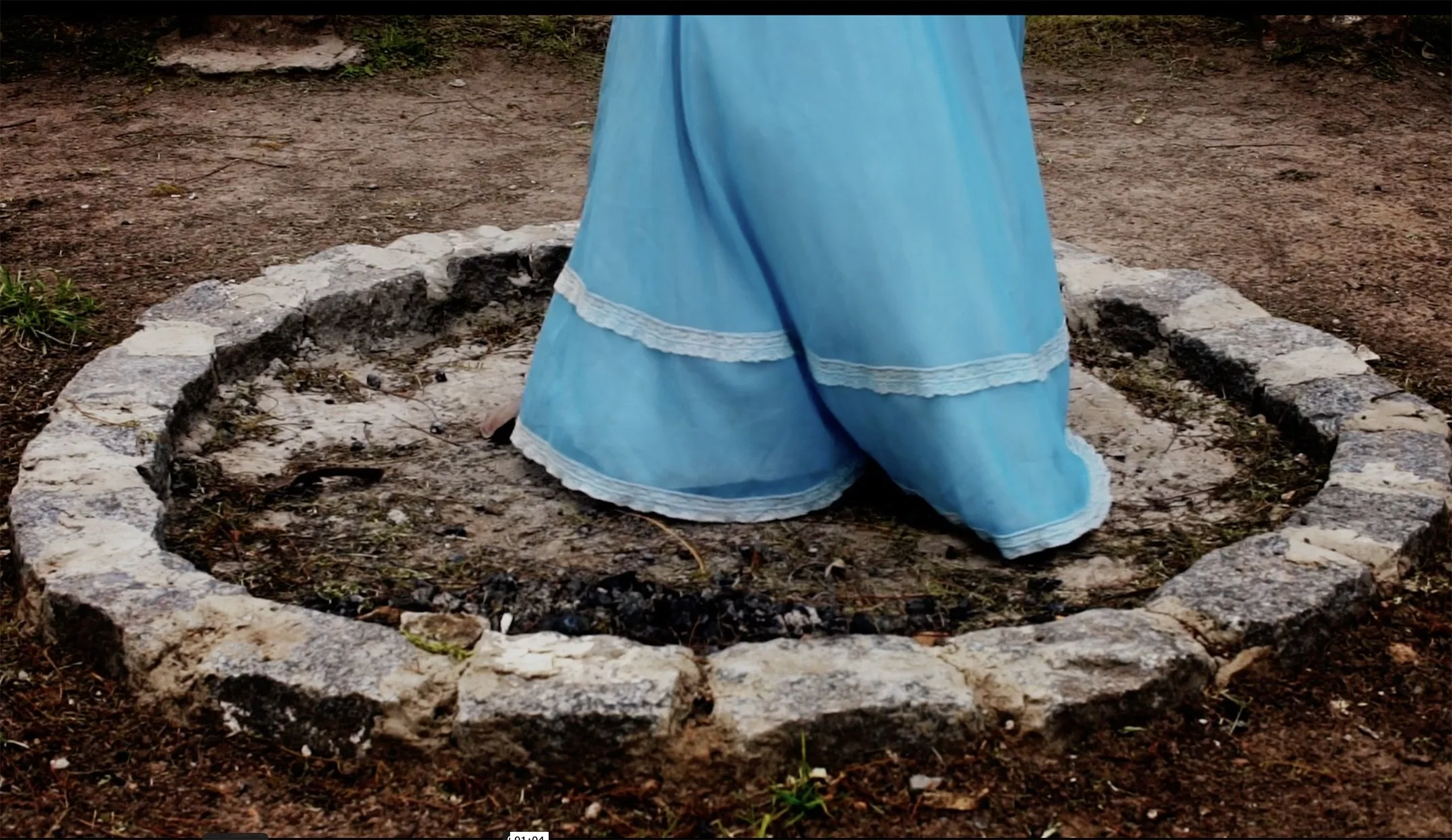
Adama Delphine Fawundu. Deep Inside I’m Blue, 2019.
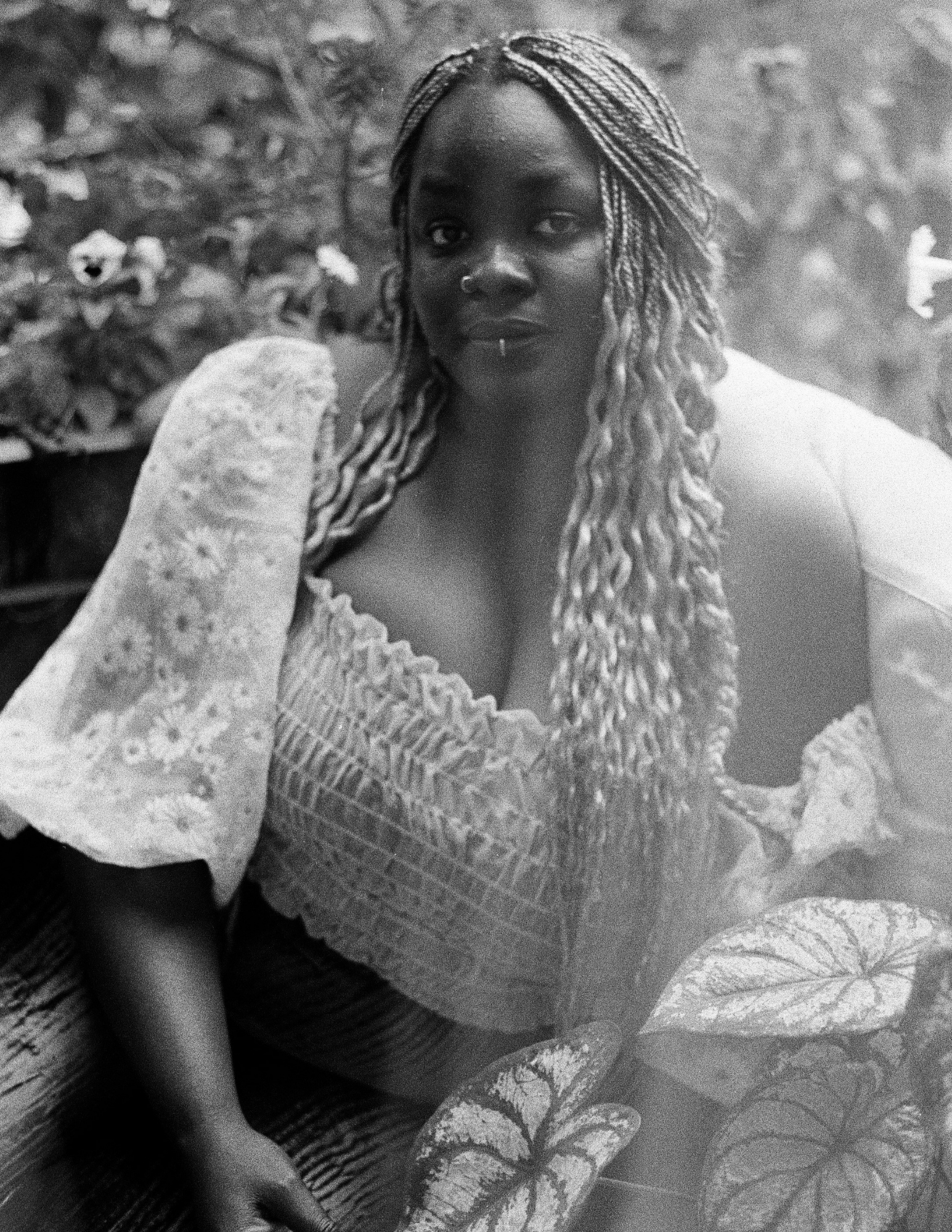
Bushra Junaid, Portrait in Time II, 2025.
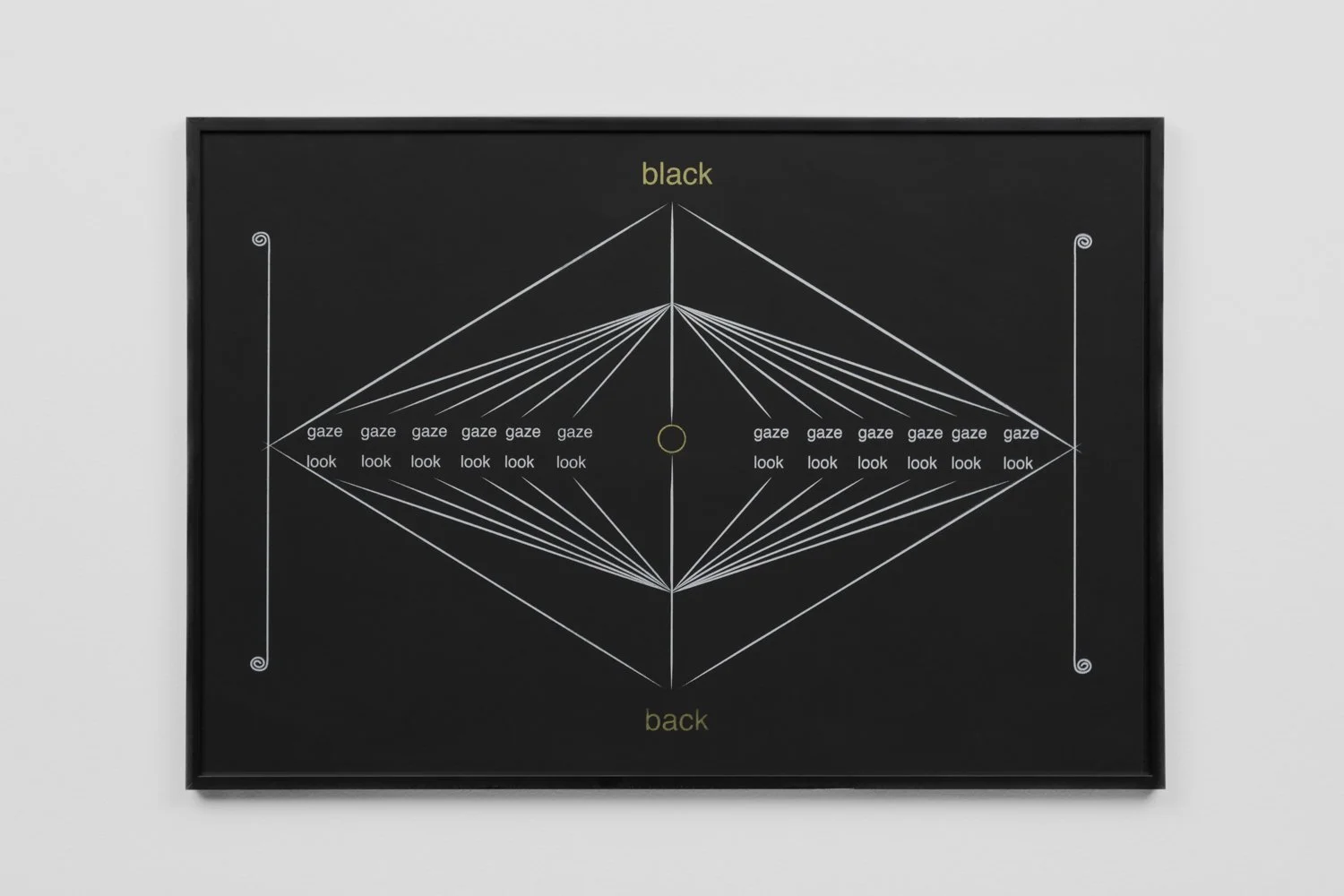
Stina Baudin. Black Gaze, 2025-ongoing.

At Dalhousie Art Gallery, Burnt Sugar Blue and Roger Mooking’s SoundBites ask what happens when artists treat materials, images, music and memory not as evidence of a finished past, but as living archives.

By Kimberley Dooshima Jev

Sugar does not look like history when looking at it. It sits in bowls. It disappears into coffee. It is folded into recipes, packaged into snacks and stocked on grocery store shelves. Its presence is so ordinary that it is easy to forget the extraordinary systems that made it ordinary in the first place.

But sugar remembers.

For writer, artist and curator francesca ekwuyasi, following that memory means confronting a history in which sweetness was built through violence.

Her exhibition Burnt Sugar Blue, opening at Dalhousie Art Gallery in Halifax, begins from the relationship between sugar production, colonial economies and the enslavement of African people. It asks what happens when contemporary Black artists take materials with enormous historical weight and refuse to let that history remain invisible.

The exhibition brings together Stina Baudin, Adama Delphine Fawundu, Bushra Junaid and Christina Leslie across photography, textiles, installation, print and mixed media. It runs from September 11 through November 8 alongside Roger Mooking’s SoundBites.

For ekwuyasi, material is not decoration. It can be evidence. It can hold labour, migration, violence, knowledge, spirituality, survival and memory long after the people who first touched it are gone. Sugar is one such material.Indigo is another. Together, they give Burnt Sugar Blue its name.

SUGAR

The connection between sugar and the transatlantic slave trade is foundational to ekwuyasi’s curatorial research. European demand for sugar helped fuel plantation economies across the Caribbean. The production of sugar and other commodities including coffee and indigo depended on the forced labour of enslaved African people.

Over centuries, however, sugar’s violence became increasingly detached from sugar itself. The commodity survived.Its history became easier to overlook.

“Built on a global system of enslavement and labour exploitation, sugar has become a foodstuff that is ubiquitous in our daily lives,” ekwuyasi writes in her curatorial essay.

The distance between what we consume and what made that consumption possible is part of what interests her. Burnt Sugar Blue is not the first stage of the investigation.

With an earlier iteration, Burnt Sugar, opened at Critical Distance Centre for Curators in Toronto in 2024. It grew from the Ways of Attuning Curatorial Study Group and included work by Oluseye, Shaya Ishaq, Kosisochukwu Nnebe, Bushra Junaid and Adama Delphine Fawundu.

Material was already central. Sugar. Indigo. Cassava. Hair. Soil. Cotton. Objects associated with Black life, commerce and cultural practice appeared not simply as things, but as entry points.

In Halifax, that conversation has continued to evolve. Christina Leslie’s Sugar Coat series makes the exhibition’s relationship to sugar particularly literal.

Leslie works with personal archives from Jamaica alongside contemporary and historical sugar advertisements, constructed photographs and appropriated pro-slavery texts. The series attempts to collapse the comfortable distance between the commodity and the conditions that produced it.

One of the works presented by Dalhousie, Hope and Present Chapter: Free, a pigment print made on sugar cane paper.

The material underneath the image therefore matters as much as the image. Sugar does not simply appear as a subject. Sugar is what holds the picture. There is something unsettling about that.

A material once tied to exploitation becomes the surface on which a contemporary Black artist can examine the stories that exploitation tried to obscure. The archive is no longer sitting behind glass. It is under the photograph.

Blue

Then the exhibition turns blue.

For this iteration of her curatorial research, ekwuyasi followed indigo. And indigo has led somewhere familiar. The intense blue pigment became a highly valuable commodity within global trade. West African communities already possessed deep knowledge of cultivating indigo plants and producing dye, knowledge that existed long before European colonial economies attempted to control and profit from it. As demand grew, enslaved African people were forced to labour within indigo production as the crop became another source of colonial wealth.

The deeper ekwuyasi went into that history, the harder the colour became to ignore. Its beauty and its violence began occupying the same space.

The curatorial essay ends with a deceptively simple admission:

“I see blue everywhere.”

Once history has been made visible, it at times becomes a problem you cannot unsee. You cannot easily make it invisible again. You cannot forget. 

Stina Baudin’s Black Cartographies pushes that question beyond colour and into space. Baudin, a Haitian-Canadian artist and scholar, works across textiles, archival materials, data, sound and oral history. In Black Cartographies, she takes the graph, a tool we often associate with objective measurement and turns it into a way of thinking about Black history, objects, geography and selfhood.

Graphs are supposed to organize information. Baudin asks what else they might organize. What happens when mapping is not simply about locating a body on land, but locating a Black diasporic self within histories that cross oceans, borders and generations?

The answer is not necessarily a neat map.

That is part of the point.

The Black Atlantic is not one journey.

Neither is its archive.

Family enters the archive

Bushra Junaid’s Portraits in Time makes those distances intimate. Junaid is a Toronto-based artist, writer and curator of Jamaican and Nigerian heritage who was raised in Newfoundland and Labrador. Her work frequently uses archival fragments and family histories to restore complexity to Black lives that formal histories have left partial or obscured.

In Portraits in Time, she uses the format of the stereoview, placing images beside one another so that different moments begin to speak across time.

Archival photographs of Caribbean children working in cane fields meet a faded family photograph of children playing beside the ocean.

Images of Caribbean women and children among piles of cane are placed in conversation with archival photographs of people drying fish in Newfoundland.

Work.

Family.

Children.

Ocean.

Caribbean.

Atlantic Canada.

Past.

Present.

Placed together, those categories begin losing their clean borders.

ekwuyasi describes the viewer as being positioned between temporal, cultural and familial dimensions. That may be one of the most important ideas running through the exhibition.

An archive does not have to belong only to an institution. Sometimes it is a photograph somebody has kept. Sometimes it is knowledge carried through a family. Sometimes it is an image whose meaning changes because of the image placed beside it. Sometimes the archive has been speaking all along. We simply inherited a way of looking that taught us not to hear it.

The ocean does not belong only to trauma

Adama Delphine Fawundu’s work pushes the exhibition into another important territory. The Brooklyn-born artist, who is of Sierra Leonean and Equatorial Guinean heritage, works across photography, print, video and mixed media. Her practice is deeply interested in African diasporic history, spiritual knowledge and cultural continuity.

In ekwuyasi’s writing about Fawundu, the sea becomes particularly important. There is an understandable tendency, when discussing the Atlantic within Black diasporic history, to arrive at the Middle Passage and stop there.

Fawundu refuses that limitation.

In work engaging Mami Wata, the water spirit found across African and diasporic cultures, the sea is not allowed to exist only as the location of historical catastrophe.

The sea existed before colonialism.

It sustains life.

It moves people.

It carries spiritual meaning.

It can be dangerous and beautiful at once.

For Fawundu, reclaiming the ocean also means reclaiming the possibility of understanding Black life beyond the boundaries colonial history tried to impose upon it.

That thinking continues in Burnt Sugar Blue through The Remix and She Don’t Stop, a layered mixed-media work using processes and materials including cyanotypes, block prints, raffia, hair, film and photographic imagery, as well as the video triptych Deep Inside I’m Blue, which follows the travels of a Mende spirit through Africa and its diaspora.

This is where Burnt Sugar Blue avoids becoming an exhibition exclusively about what was done to Black people.

The history of exploitation is there.

It cannot not be there.

But so are dignity, refusal, spirituality, knowledge, family, imagination and survival.

Dalhousie describes the exhibition as moving from histories of extraction toward possibilities for connection, care, repair and liberation. Its archive is intentionally presented not as fixed history but as something living, something artists continue to remake.

That distinction matters.

Because remembering violence is not the same as allowing violence to become the only thing remembered.

Two exhibitions, one conversation

Across the Dalhousie Art Gallery, Roger Mooking is asking another version of the same question.

SoundBites, his first solo exhibition in Atlantic Canada, moves through visual art, moving image, text and music. Inspired by the sampling traditions of Hip-Hop, Mooking takes pieces of his own creative life and places them into new relationships.

The exhibition is structured through three movements: The Learning, The Living and The Leaving.

A life becomes material.

Memory gets sampled.

The self becomes an archive.

Burnt Sugar Blue and SoundBites are being presented concurrently, but their relationship is not accidental. Dalhousie positions the exhibitions as investigations into forms of cultural memory that stretch beyond conventional archives.

For Mooking, the archive begins close to the body. Near the end of a conversation with Afros in tha City, he was asked whether self-archiving today might be understood as an act of freedom or survival.

His answer moved somewhere slightly different. “I think it’s trying to understand ourselves and how we maneuver in the world,” he said.

Historical context, he continued, gives us meaning and purpose while offering a framework for how we might move forward.

That idea travels easily across the gallery because the archive inside Burnt Sugar Blue is also trying to understand how we arrived here.

It lives inside a family photograph.

Inside sugar cane paper.

Inside raffia and hair.

Inside a graph.

Inside the ocean.

Inside a colour.

Inside things that appear ordinary until someone teaches us how to look again.

There may be something resonant about asking these questions in Kjipuktuk/Halifax.

Dalhousie Art Gallery sits in Mi’kma’ki, the ancestral and unceded territory of the Mi’kmaq, in a province where African Nova Scotian communities have histories stretching back more than four centuries.

Here, the Atlantic is not an abstract curatorial idea.

It is outside.

It is geography.

It is movement.

It is arrival and removal, trade and migration, memory and home.

Burnt Sugar Blue does not offer one clean history of that world.

It would be strange if it did.

Instead, its artists pull at different threads and allow the connections, ruptures and contradictions to remain visible.

Perhaps that is what a living archive requires.

Not simply preserving what happened, but returning to it.

Questioning it.

Putting one image beside another.

Turning an old material over in our hands.

Asking who made it.

Asking who profited.

Asking what knowledge survived anyway.

And recognizing that history does not disappear simply because we stop noticing it.

Sometimes it is sitting on the table.

Sometimes it is in the family album.

And sometimes, after looking closely enough, you begin to see blue everywhere.

Exhibition Information

Burnt Sugar Blue, curated by francesca ekwuyasi, and Roger Mooking: SoundBites are on view at Dalhousie Art Gallery in Halifax from September 11 to November 8, 2026. Admission is free. The gallery is located on the lower level of the Dalhousie Arts Centre at 6101 University Avenue, Halifax, Nova Scotia.

Gallery hours are Wednesday and Friday from 11 a.m. to 5 p.m., Thursday from 11 a.m. to 8 p.m., and Saturday and Sunday from noon to 5 p.m.

For exhibition details, programming, accessibility and visitor information, visit artgallery.dal.ca.

Prev / Next
No results found


Stories
  • September 2026
  • August 2026
  • July 2026
  • June 2026
  • May 2026
  • April 2026
  • March 2026
  • February 2026
  • January 2026
  • July 2024
  • June 2024
  • May 2024
  • April 2024
  • March 2024
  • February 2024
  • January 2024
  • December 2023
  • November 2023
  • October 2023
  • September 2023
  • August 2023
  • July 2023
  • June 2023
  • May 2023
  • March 2023
  • January 2023
  • December 2022
  • November 2022
  • October 2022
  • July 2022
  • June 2022
  • May 2022
  • April 2022
  • March 2022
  • February 2022
  • January 2022
  • December 2021
  • November 2021
  • October 2021
  • September 2021
  • August 2021
  • July 2021
  • June 2021
  • May 2021
  • April 2021
  • March 2021
  • February 2021
  • January 2021
  • November 2020
  • October 2020

AITC - September 2026

Featured
Cover (1).png
AITC September 2026 - What Will It Take For Us To Feed One Another - Aquakultre
Read more →
What Sugar and Indigo Remember

Sugar, indigo, family photographs and the Atlantic carry histories that are easy to overlook until someone asks us to look again.

At Dalhousie Art Gallery, curator francesca ekwuyasi brings together Stina Baudin, Adama Delphine Fawundu, Bushra Junaid and Christina Leslie for Burnt Sugar Blue, an exhibition examining colonialism, Black diasporic memory, family, spirituality and the histories embedded in everyday materials.

In What Sugar and Indigo Remember, Afros in tha City looks at how these artists turn materials and archives into something living, while Roger Mooking’s SoundBites continues the conversation from across the gallery.

Read the full story and explore the September 2026 issue of Afros in tha City.

Read more →
Roger Mooking Is Building Beyond the Algorithm

Roger Mooking is thinking beyond the algorithm.

With SoundBites, the Canadian multidisciplinary artist is responding to streaming culture, shrinking attention spans and the rise of AI by asking a different question: what happens when technology distributes the work, but does not define its value?

In conversation with Afros in tha City, Mooking talks about the state of the music industry, the value of slow creative practice and why the future of music may look a lot more like a campfire than a platform.

Read the full story and explore the September 2026 issue of Afros in tha City.

Read more →
Prismatic Is Thinking Beyond Representation

Prismatic Arts Festival has spent nearly two decades creating space for Indigenous, Black and racialized artists. For Executive and Artistic Director Raeesa Lalani, the conversation now goes beyond visibility to sustainability, power and what artists need to build lasting careers.

In our September 2026 issue, Afros in tha City looks at the festival’s history, its place in Canada’s arts ecosystem and the artists shaping Prismatic 2026, including Walter Borden, Tara Taylor, Bageshree Vaze, Tania El Khoury and Dee Hernandez.

Read the full feature in the September issue of Afros in tha City, available digitally and in a limited print edition.

Read more →
Timeless: 100 Years of Oscar Peterson Extended at Studio Bell

The National Music Centre’s Timeless: 100 Years of Oscar Peterson has been extended at Studio Bell through January 3, 2027. Originally opened in July 2025 to commemorate the centenary of Peterson’s birth, the exhibition brings together instruments, archival materials, awards, personal artifacts, interviews and multimedia installations to tell the story of one of Canada’s most important musicians.

Read more →
Saul Williams Still Believes Art Has a Job to Do

With Leap Life and Songs My Mother Taught Me arriving eleven days apart, Saul Williams turns sound and page into one argument about art, memory and responsibility.

There is something almost unreasonable about the amount Saul Williams still expects from art. Nearly three decades into a career spanning poetry, music, theatre, film and literature, Williams has not arrived at the comfortable conclusion that art should simply entertain us. Within the span of eleven days this summer, he released two projects arguing that culture does much more than that.

His album Leap Life, released August 28 on Big Dada, moves through spoken word, hip-hop, jazz, ambient composition, African rhythmic traditions and improvisation. On September 8, Haymarket Books published Songs My Mother Taught Me: Why the Artist Must Take Sides, a political memoir tracing the people and experiences that shaped Williams’ understanding of art as power.

Read more →
Afros Picks: Three DJs Setting the Tone at MUSE N°001

Vancouver’s MUSE N°001 brings together four DJs with distinctly different approaches to the dance floor. RAEDIAMENDZ, SAANZ, DJ BOMBAE and DJ CHIP$ move through hip-hop, R&B, African electronic music, Afro House and open-format sounds, each bringing her own relationship to culture, rhythm and the room.

Created by creative director Drew Ragiste, MUSE is built around a bigger question: what happens when women are considered in the design of nightlife from the beginning?

In this month’s Afropicks, Afros in tha City meets the four selectors setting the tone for MUSE’s first night.

Read the full feature, see more from the artists and explore the September issue in the digital edition or limited print magazine.

Read more →
This Is What Calgary Sounds Like Now

Bijaan and Jaiden Riley arrive at the 2026 YYC Music Awards from very different corners of Calgary’s music community. Bijaan’s path runs from childhood rap sessions in northwest Calgary to two nominations for “Jungle,” while Riley enters with three nominations after a year shaped by rapid career growth, community and profound personal loss.

In conversation with Afros in tha City, both artists look beyond the awards to the friendships, mentors, family histories and years of work that made the nominations possible. From Bijaan’s third-culture story and long relationship with Calgary hip-hop to Riley’s rise through the city’s country and folk community, the feature offers a deeper look at what it actually takes to build a music career from here.

Read the full feature, with expanded interviews and photography, in the September 2026 issue of Afros in tha City.

Buy the digital edition or order a limited print copy at afrosinthacity.com.

Read more →
Recovery Was Never Meant to Be Hidden
Fashion, Wellness
Recovery Was Never Meant to Be Hidden
Fashion, Wellness

For Suzzy Anibueze, Sober Runway is bigger than a fashion show. Built from her lived experience, work in addiction and mental-health services, and belief in recovery through community, the organization uses fashion to challenge the idea that surviving addiction should remain hidden.

In the September issue, Anibueze opens up about stigma, culture, family, recovery and the community she is working to build beyond the runway.

The complete story is available in the September 2026 issue of Afros in tha City, available now in digital and limited print editions.

Read more →
Fashion, Wellness
The Road They Built and the Stars Who Found Their Way Home
Music
The Road They Built and the Stars Who Found Their Way Home
Music

There was a time when Kreesha Turner’s voice was everywhere. Her music filled Canadian radio, reached international audiences and made her one of the most recognizable artists to emerge from Western Canada. Then she stepped away.

Her return to Edmonton leads back to Music for Mavericks, the grassroots collective that helped prepare Kreesha, Mouraine and a generation of Alberta artists for the world. Twenty years later, they reflect on the music, sacrifice and community behind the movement, as well as the work Alberta still has left to do.

Read the complete feature and see the photographs documenting this history in the September 2026 issue of Afros in tha City. Purchase the digital edition or one of our limited print copies at afrosinthacity.com.

Read more →
Music
Afros in tha City - August 2026 - Adrian Younge
Identity, Music
Afros in tha City - August 2026 - Adrian Younge
Identity, Music

& Afro-Disco Makossa: The Dance Floor Record He’s Always Wanted to Spin & More.

Music never arrives without a history. It carries places, technologies, memories and the fingerprints of those who came before.

For our August cover story, Afros in tha City sits down with Adrian Younge to explore the sounds, relationships and creative philosophy behind Afro-Disco Makossa—a record born from his long-held desire to create music for the dance floor without surrendering the depth, musicianship or historical consciousness that defines his work.

Drawing from makossa, soul, funk and disco, the album does not treat these traditions as relics to be reproduced. Younge approaches them as living languages: sounds capable of holding their histories while continuing to move, transform and speak to the present. The result is music designed for movement, connection and deep listening—a record that looks backward only to understand where it might travel next.

But this conversation extends far beyond one album.

Younge reflects on the trust that can only be built through consistency, his enduring creative partnership with Ali Shaheed Muhammad, and the ecosystem they have created through Jazz Is Dead. Rather than positioning legendary musicians as figures frozen in the past, the platform invites living artists to continue creating, experimenting and adding new chapters to their own stories.

He also speaks about attending law school because he wanted to become what he calls “an educated artist”—someone equipped to understand contracts, intellectual property, ownership and the structures surrounding the work. His independence is not simply an aesthetic or an industry label. It is knowledge, preparation, discipline and the infrastructure required to protect a creative life.

That philosophy carries particular weight for an independent publication like ours. Building outside traditional systems requires more than vision. It requires learning how the machinery works, deciding what must remain yours and creating an ecosystem capable of supporting the work long after the excitement of an idea has passed.

Throughout the conversation, Younge retains the curiosity that first led him toward music. “We’re just bigger kids,” he says—a reminder that serious artistic practice does not require abandoning wonder. Growth can mean becoming more skilled, more informed and more intentional while remaining open enough to keep discovering.

This is a cover story about a dance-floor record, but it is also about something larger: how artists honour history without becoming trapped inside it, how independence is built rather than declared, and how curiosity keeps the conversation moving forward.

Adrian Younge covers the August issue of Afros in tha City.

Read “Afro-Disco Makossa: The Dance Floor Record He’s Always Wanted to Spin” at afrosinthacity.com and in our print publication.

Stories Shaping Culture.

Read more →
Identity, Music
Valerie June on the Practice of Joy
Music
Valerie June on the Practice of Joy
Music

A fifteen-minute festival interview with Valerie June begins with crossed schedules and a quiet moment of evaluation. Then the conversation finds its rhythm, becoming something much larger than an exchange about her latest album, Owls, Omens and Oracles.

In “The Practice of Joy,” Kimberley Dooshima Jev speaks with the Grammy-nominated artist about spirituality, independence and building a creative life that remains aligned with your values. June shares how meditation and affirmations become part of ordinary routines, why “small is powerful,” and how she measures the impact of her music through human connection rather than charts, algorithms or scale.

Their conversation also turns toward the ways Black women’s experiences are routinely flattened—and the freedom of creating new platforms instead of waiting for permission to belong. June’s declaration, “I’m keeping my joy because they would want me to,” transforms joy from a fleeting emotion into remembrance, responsibility and an inheritance carried forward.

What begins as an interview about music ultimately clarifies the values guiding Afros in tha City: community over scale, creation over permission and resonance over metrics. It is a reminder that joy is not escapism. It is a deliberate practice—and sometimes, an act of survival.

Read “The Practice of Joy” in full at Afros in tha City or in our print publication.

Read more →
Music
Lowkita - In Her Own Time
Music
Lowkita - In Her Own Time
Music

After nearly a decade between full-length projects, Lowkita returns with Why(Te) Tee—a deeply personal record shaped by motherhood, grief, burnout and the quiet confidence of an artist moving in her own time.

In “In Her Own Time,” Kimberley Dooshima Jev traces the Calgary-born, Vancouver-based artist’s years of rebuilding. Lowkita never stopped creating: she performed, produced, DJed, designed clothing and found new ways to sustain herself while raising her daughter and navigating profound personal loss.

The story also explores the meaning behind Why(Te) Tee. What began with the image of a white T-shirt as a symbol of starting over evolved into a larger meditation on purpose: the “Why” behind continuing, “TE” as a reminder that timing is everything, and the belief that every pause and setback has helped build the project’s foundation.

More than a comeback, Why(Te) Tee is an invitation to meet the person behind Lowkita’s bright, energetic presence. It captures an all-around artist who has learned that consistency does not require constant visibility—and that showing up, on your own terms, can be its own form of success.

Read “In Her Own Time” in full at Afros in tha City or in our print publication.

Read more →
Music
"There Has to Be a Festival"

For Calgary ReggaeFest founder and producer Leo Cripps, success has never been measured by crowd size, celebrity headliners or rapid expansion. It rests on one enduring belief: “There has to be a festival.”

This feature traces more than two decades of quiet resilience—from financial setbacks and pandemic uncertainty to the 2024 cancellation of Sunny Soul Jam. Through it all, Calgary ReggaeFest has built its reputation by growing responsibly, remaining debt-free and honouring its commitments to every artist, vendor and partner.

Cripps also reflects on the festival’s new home at The Rise on St. Patrick’s Island, the generations of families who return each summer and a lineup that carries reggae’s history forward through legends and emerging artists alike.

At its heart, Calgary ReggaeFest is a story of stewardship: choosing sustainability over spectacle and ensuring reggae music and Caribbean culture continue to have a home in Calgary. After more than twenty years, its greatest achievement may be beautifully simple—it kept its promise.

Read the full story at Afros in tha City or in our print publication.

Read more →
The Blueprint of Reggae  - Leroy Sibbles Looks Back on Six Decades of Rhythm
Identity, Music
The Blueprint of Reggae - Leroy Sibbles Looks Back on Six Decades of Rhythm
Identity, Music

Few musicians are as inseparable from reggae’s foundations as Leroy Sibbles. As a pioneering bassist and arranger at Studio One and the legendary lead vocalist of The Heptones, he helped create the rhythms, basslines and vocal sound that continue to reverberate through contemporary music.

In “The Blueprint of Reggae,” Cara Eyre speaks with Sibbles about six decades of innovation, from late-night rehearsals in Trench Town and groundbreaking recording sessions with Clement “Coxsone” Dodd to hearing new generations sample and reinterpret the music he helped build.

The conversation also traces the personal journey that brought Sibbles to Canada in the 1970s, where he helped cultivate Toronto’s reggae scene and established a lasting connection to his adopted second home. Looking back, he measures his legacy through the musicians he inspired, the careers he strengthened and the joy his work continues to create.

At the heart of it all is a message of unity. Sibbles’ music has crossed oceans, bridged generations and brought millions together—and after six decades, his invitation remains beautifully simple: “We all sing together.”

Read “The Blueprint of Reggae” in full at Afros in tha City or in our print publication.

Read more →
Identity, Music

July 2026 - The Omnibus - Print July 2026 - The Omnibus - Print
Sold Out
July 2026 - The Omnibus - Print
CA$50.00

The Summer Omnibus is our most ambitious issue yet. Bringing together seven months of journalism, photography, and storytelling, this special collector's edition celebrates Black arts, business, fashion, music, and community across Canada and the diaspora.

Featuring exclusive cover stories with Judith Demosthene, Funmi Osatuyi, Adrianne Williams, Nancy Nixon, Ayokunle Akinsebikan, Femi Jr., and more, this 70-page volume captures the people, ideas, and conversations shaping culture today.

Beautifully printed in limited quantities, the Summer Omnibus is designed to be collected, shared, and revisited long after publication.

Limited print copies available.


“It always seems impossible until it’s done.”
— Nelson Mandela


Promotional image of a woman suspended in the air with hand placed above a deluxe jar of DTouch quiet gravity mineral salts


© 2026 Afros in tha City