In conversation with Ahmed Moneka about music, migration and belonging
By Kimberley Dooshima Jev
There are interviews you prepare for and then there are conversations that roll into existence.
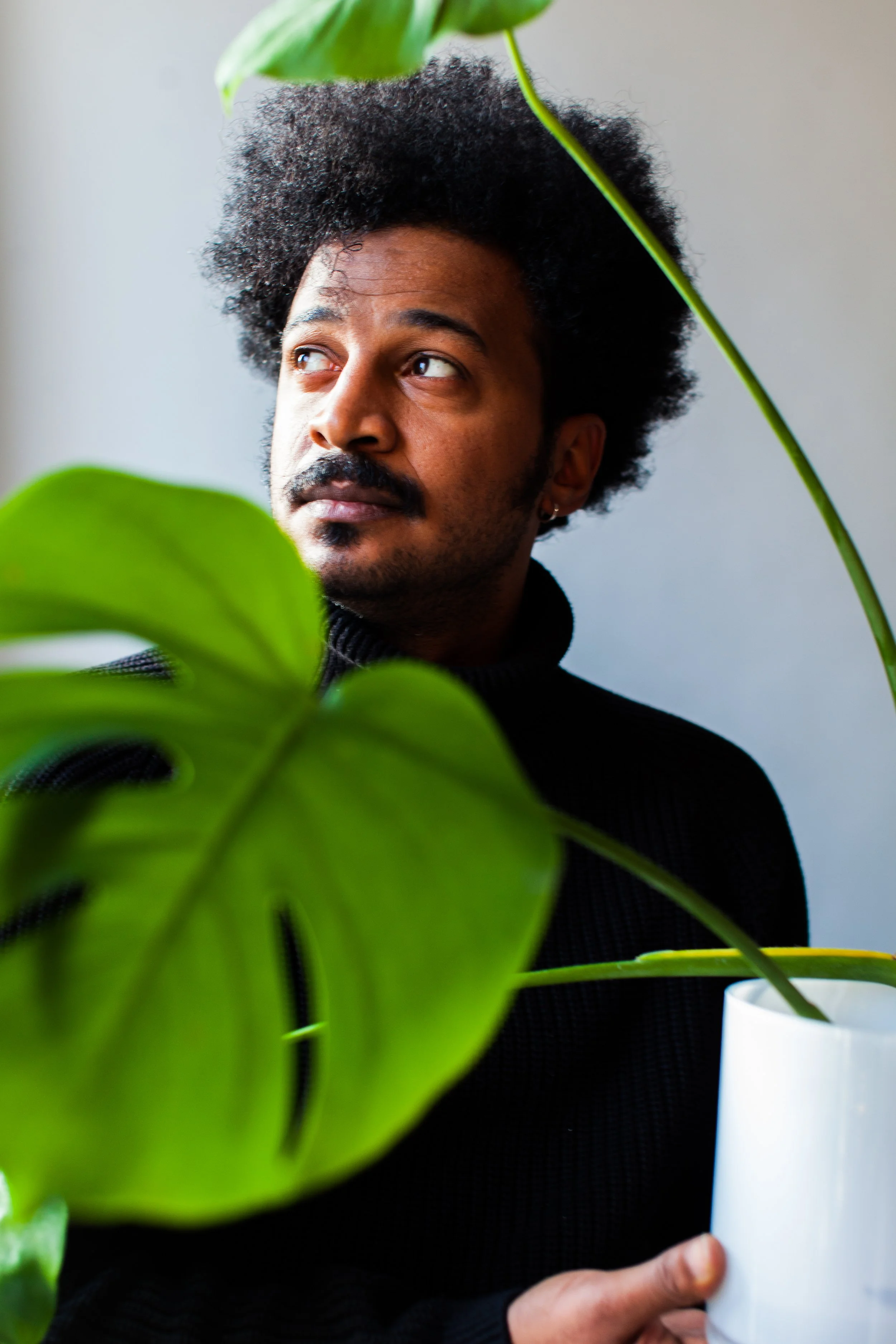
When I met Ahmed Moneka at the Calgary Folk Music Festival, we didn't head for a media tent or a backstage trailer. Instead, we wandered toward the Bow River and settled beneath a tree on Prince's Island. It felt instinctive. The noise of the festival softened behind us, the river continued its steady rhythm, and for a while the interview became something closer to a conversation between two people thinking aloud about home.
Looking back now, I don't think there could have been a better place to speak with him.
Trees, after all, became one of the first things we talked about. Ahmed Moneka laughs easily, there is a calmness in his presence. He carries the kind of warmth that immediately dissolves the invisible barrier between artist and journalist. Before long, we weren't speaking about albums or career milestones. We were speaking about identity, memory and the strange ways people carry home with them after they've left it.
"We're still small," he said with a smile when I jokingly told him I like to pretend I know nothing about the artists I interview. "The dream is to be bigger and bigger." That dream had brought him to Calgary.
Playing at the Calgary Folk Music Festival had been something he had hoped for. "I'd heard about Kerry Clarke," he told me, speaking warmly of the festival's longtime Artistic Director. Friends in Toronto had long described Calgary Folk Music Festival as one of Canada's defining stages for artists who value musicianship, storytelling and collaboration.
Now he was finally here.
For Ahmed, folk festivals offer something increasingly rare. Not simply audiences. Community.
The workshop format, where artists from vastly different traditions create music together with little preparation, remains one of his favourite parts of festivals. "It's active listening," he explained.
Growing up with Arabic musical traditions taught him that music begins by listening to someone else's voice before adding your own. It is respect. It is a conversation. It is trust.
During the workshops he found himself surrounded by artists whose music carried influences from across the African diaspora, jazz, hip hop and folk traditions. Rather than competing, those sounds met one another.
They became a bridge. Listening to him describe those moments, I realized he wasn't talking about genre. He was talking about relationships.
Then he said something I have carried with me ever since.
"When you connect to your roots, you become like a tree."
Simple. Quiet. Profound. These are the moments I live for during interviews.
For Ahmed, roots are not nostalgia. They are responsibility. They connect us to our elders, to our children and to the generations yet to come. Music, he told me, is part of that responsibility.
"It is a ritual." A sacred act.
One that connects him to his ancestors, to his family and to the musical traditions of southern Iraq, where Arabic Maqam has been passed from one generation to the next.
But here is what we know, rituals evolve. Since moving to Toronto more than a decade ago, new musical languages have entered his life.
Jazz.
Funk.
Reggae.
Blues.
Soul.
Afro-diasporic rhythms.
Rather than replacing one another, they have become part of the same conversation.
"The history, the past, the present and the future," he said. That, ultimately, is the music he is trying to make.
As our conversation continued, it became clear that Ahmed's work cannot be separated from identity. Not because he wants to explain himself. Because the world keeps asking him to.
As a Black Iraqi artist, he regularly encounters people surprised that Black communities exist in Iraq at all. Rather than meeting those questions with frustration, he answers them with history.
He spoke about the deep connections between East Africa, Iraq and the Indian Ocean trade routes. He spoke about Nubian communities. Took us back centuries of migration. Brought to light cultures that have always been more interconnected than many people realize.
"You can't monolith it," he said. Iraq, he reminded me, contains multiple religions, ethnicities, tribes and histories. Like many places, it resists simplification. His answer wasn't defensive.
It was generous. An invitation to learn.
There was something quietly significant about having that conversation in Calgary.
Alberta, like much of Canada, continues to wrestle with questions of identity, migration and belonging. Against that backdrop, Ahmed wasn't arguing for inclusion through slogans.
He was telling stories. Patiently. Humanly.
He spoke about learning from Black liberation movements, Indigenous movements, women's movements and LGBTQ+ movements—not as separate struggles competing for attention, but as communities drawing lines around one another so that everyone might live more freely and more safely.
There was no performance in the way he spoke. Only conviction.
Toward the end of our conversation, I asked him what mattered most now.
His answer surprised me. Earlier in life, he said, he wanted to be loud. Now he wanted something different. To be calmer. More grounded. To stop trying to impress people.
"I want to share how I feel."
It sounded less like a career strategy than a life philosophy.
When our conversation ended, we stood beneath the same tree where we had begun.
The festival carried on around us. People hurried between stages. Music drifted across Prince's Island. For a moment, it struck me that the setting had quietly mirrored everything we had been talking about.
Roots beneath the ground. Branches reaching outward. Different lives sharing the same space.
Ahmed had told me that when we connect to our roots, we become like a tree.
I know this is why this conversation has stayed with me. Not because it gave me answers.
But because it reminded me that identity is not something we leave behind when we move.
Like roots beneath the soil, it continues to nourish us long after others can no longer see it.