By Afros in Tha City
What does a DJ have to do with justice? Quite a bit, we’ll have you know.
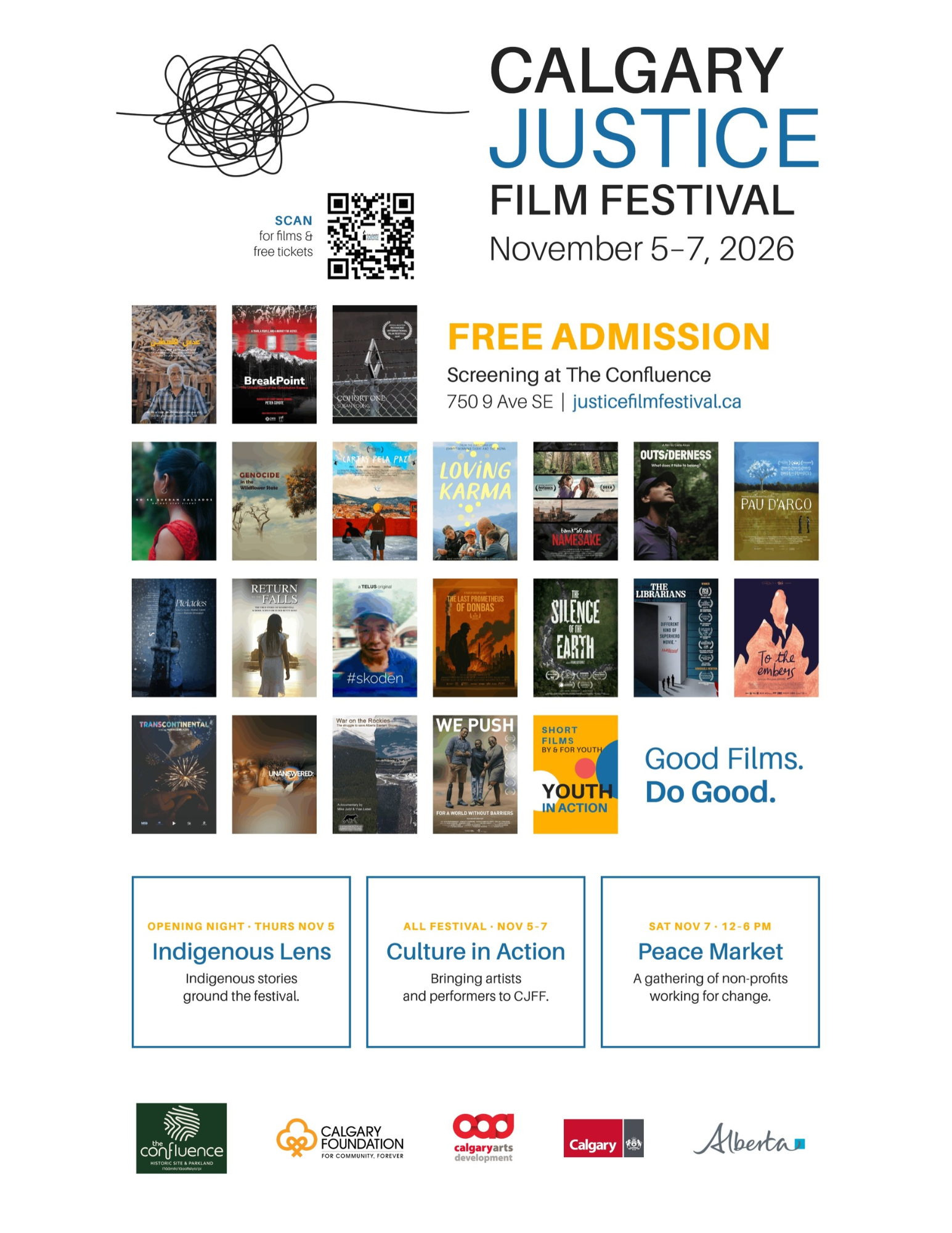
For 21 years, the Calgary Justice Film Festival has brought documentaries exploring human rights, inequality, migration and social justice to audiences in Calgary. The films are free, the conversations are open, and the intention has always been to encourage people to do something with what they've learned.
This year, the festival is expanding that conversation through music, poetry, dance, storytelling and visual art.
Running November 5–7 at The Confluence Historic Site & Parkland, the festival introduces Culture in Action, an expanded arts program designed to connect creative expression with conversations about justice.
Twenty-one years, and still growing
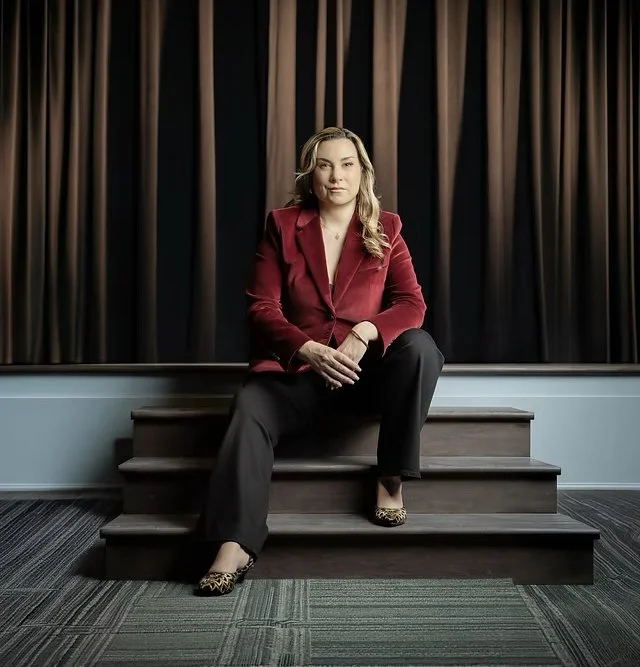
When Executive Director Rowan Fisher joined the festival's board three years ago, she encountered an organization with a long history but limited visibility beyond its established audience.
“We're always like preaching to the converted,” Fisher told Afros in Tha City during a September 10 interview.
The festival traditionally attracts approximately 2,000 attendees annually, but Fisher wants to reach communities that may not know it exists.
“There are so many other groups and people and interest groups and communities that really would love being a part of this festival,” she explained.
The festival's foundations remain unchanged. Documentaries are selected through a 23-person programming committee, guided by the United Nations' 17 Sustainable Development Goals. Each screening is followed by a discussion featuring people whose lived experiences or professional work connect to the film's subject.
The Peace Market brings nonprofit organizations and community groups together with festival attendees.
“The festival is about moving us towards care. Towards moving us towards community action.” –Rowan Fisher
Enter the artists
The idea for Culture in Action grew from the festival's previous experiences incorporating artistic performances into its programming.
Rather than expanding the number of screenings, Fisher wanted to create more opportunities for audiences to engage with the subjects explored through documentary film.
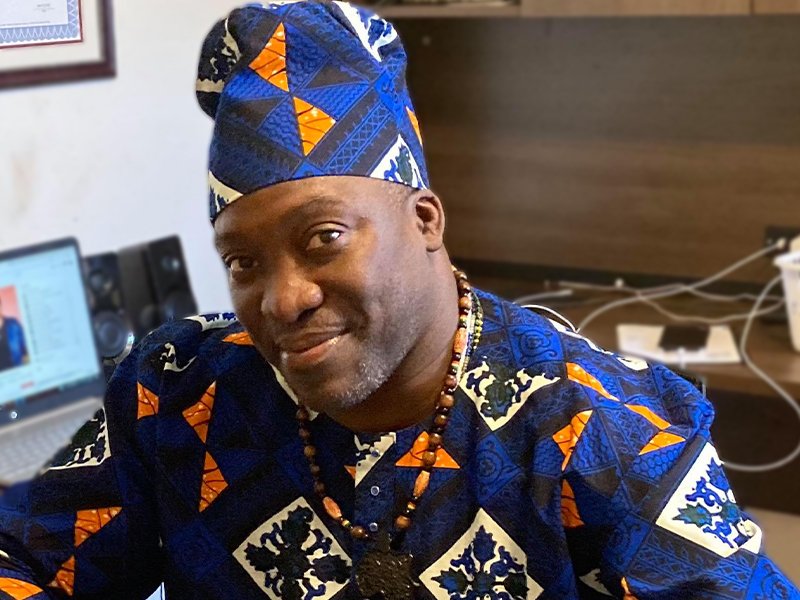
To lead the initiative, CJFF appointed Cuban artist, poet, playwright and storyteller Hebert Poll Gutiérrez as Arts Curator.
Gutiérrez, who moved to Calgary in 2020, brings more than two decades of experience in storytelling and multidisciplinary arts.
During a September 14 interview with Afros in Tha City, he explained that people connect with social issues in different ways. Someone who might not be drawn to a documentary could find themselves engaged through poetry, music or storytelling.
For Gutiérrez, the festival also presents an opportunity to reconsider what inclusion means within Canada's cultural institutions.
“Inclusion is not a number,” he said.
His argument is that meaningful inclusion requires people to participate in creating the spaces they occupy, rather than simply being invited into existing structures.
That philosophy informs Culture in Action, where artists contribute their own creative practices and perspectives to the festival experience.
The people bringing Culture in Action to life
The inaugural program features artists working across music, poetry, visual art, dance and multidisciplinary performance.
Nyok Peter, known as DJNK, brings music into the festival through a DJ set, while composer BJ Sam presents Sonic Bridge, drawing on musical influences from around the world.
Poet and spoken-word artist Wakefield Brewster returns to the festival, alongside poet and professor Ademola Adesola, who will read from Dancing with My Tongue. Poet and author Zuleiha Yusuf shares work from Owners of My Skin.
Palestinian oud player Ryyan brings another musical tradition into the program, while hip-hop artist and filmmaker Redfoot connects music with visual storytelling.
Visual artists Asma Senouci, Flora Johnson and Kwesi Sackey will exhibit their work, while Muslim Voices for Palestine contributes visual storytelling.
Indigenous dancers Kerri Crowchild and Kyle Young Pine are also part of the festival's cultural programming.
Together, these artists demonstrate the range of creative expression that can contribute to conversations about justice, identity and community.
From watching to participating
The Calgary Justice Film Festival has always emphasized community engagement beyond its screenings. “It's not just to sit and talk. It's not just to watch a film,” Fisher explained.
On November 7, the Peace Market will connect attendees with nonprofit organizations and local artisans, offering opportunities to learn about community initiatives, volunteering and advocacy.
For Gutiérrez, the distinction between change and transformation is important. He sees transformation as something people create together through shared experiences, conversations and participation.
Culture in Action is being introduced as a pilot, with organizers hoping it will become a lasting part of the festival.
At 21, the Calgary Justice Film Festival is building on its established model while inviting audiences to experience justice through different forms of artistic expression.
A documentary can introduce an issue. A conversation can deepen understanding. Music, poetry and art can bring more people into that exchange. Sometimes, that begins with a DJ.
Calgary Justice Film Festival 2026
November 5–7, 2026
The Confluence Historic Site & Parkland
750 9 Avenue SE, Calgary
Admission is free. Individual screening tickets are required.