In Her Own Time
After a decade between full-length projects, Lowkita returns with Why(Te) Tee—a deeply personal hip-hop record shaped by motherhood, grief, burnout and the quiet confidence that timing is everything.
By Kimberley Dooshima Jev
For nearly a decade, Lowkita has been quietly rebuilding.
Not disappearing. Not waiting. Rebuilding.
The Calgary-born, Vancouver-based artist has continued to perform, collaborate, produce and create through seasons that never seemed to arrive in a straight line. There were moments when momentum appeared ready to carry her forward, only for life to intervene. Motherhood reshaped her priorities. Grief altered her perspective. Burnout forced her to reconsider what a sustainable creative life could actually look like.
Now, ten years after releasing her last full-length project, she is preparing to return with Why(Te) Tee, a record that feels less like a comeback than a reflection of everything it took to remain standing.
"A lot of life has happened," she says with a laugh that carries equal parts honesty and relief.
"I haven't dropped a full-length project in 10 years. This one is going to be right around that same time."
For Lowkita, born Camille Brereton, those ten years were never empty.
She continued performing. She experimented with production. She built relationships throughout Vancouver's music community while quietly becoming one of Western Canada's most respected independent artists. Alongside music, she learned to sew, design clothing, make hats, DJ and produce her own work. Every new skill became another way of sustaining both herself and her creativity.
But the greatest transformation happened away from the stage.
"When I first started, I wasn't really rapping about anything," she says. "I was just rapping about how I looked."
Life gave her something deeper to write about.
Having a daughter fundamentally changed how she viewed both music and herself.
"Having a daughter was probably the major change," she says. "Trying to balance that and figure that out, but then also dealing with my emotions."
Those emotions became increasingly difficult to separate from everyday life.
Within a relatively short period, she lost her father, an aunt and a former partner. Although she and her ex were no longer together when he died, his passing left a different kind of absence.
"It wasn't even so much the loss of a partner," she says. "It was more like the loss of a friend that I can't even call anymore."
Her relationship with grief is remarkably matter-of-fact.
"I don't want to say I became numb to it, but I'm a realist," she explains. "I'll cry for maybe one or two days, but I have a daughter to feed. I have bills to pay. You have to keep moving."
That quiet resilience sits at the heart of Why(Te) Tee.
Originally, the project was simply called White Tee, inspired by the most basic item in almost everyone's wardrobe.
"I chose a T-shirt because it's a fundamental kind of thing that you wear," she says. "You're going to start with your T-shirt and then build your outfit from there."
The symbolism reflected exactly where she found herself.
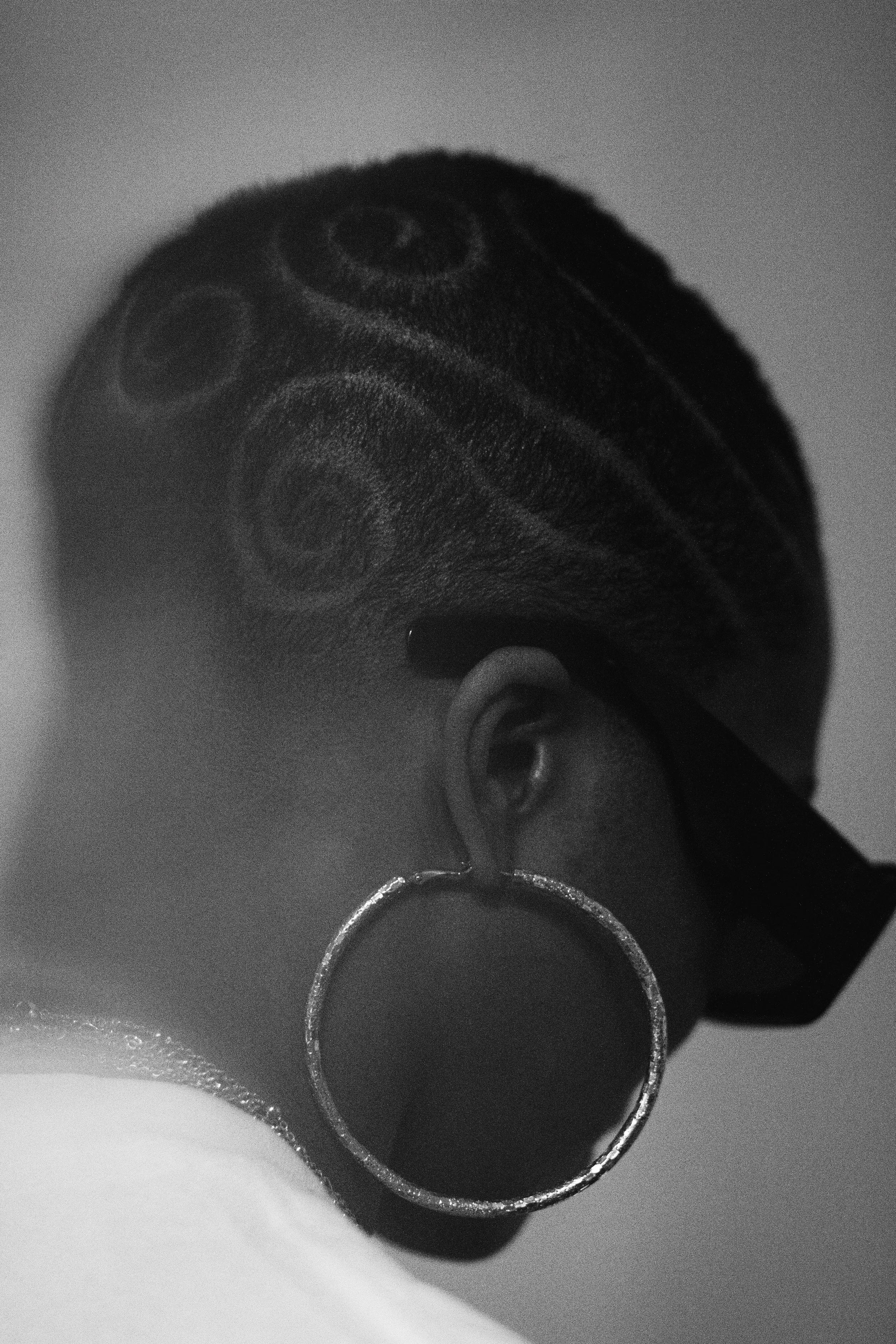
"I'm just starting over. Starting over my life. Starting over everything. I even shaved my head."
The title evolved while participating in an RBC music program. Conversations with mentors and friends kept returning to a single question.
Why?
Why continue making music?
Why keep creating after so many years?
Why keep choosing this path when so many people around her had stopped?
"I was having a lot of discussions with friends," she says. "They were like, 'What is your why?'"
That question transformed the project.
The "Why" became the purpose.
The letters "TE," enclosed in brackets, became a reminder that timing is everything.
The T-shirt remained the symbol of beginning again.
"You're constantly asking yourself why you want to embark on this journey," she says. "What is your purpose? What is your reason? Then I did the 'TE' in brackets for 'timing is everything,' because I feel like now is the perfect time for me to release everything."
Ironically, one of the biggest moments leading into this new chapter arrived from a scene she knew almost nothing about.
After opening for British rapper Lady Leshurr in Vancouver, Lowkita accepted an invitation to attend a drum and bass show.
She had never been to one before.
"I didn't know anything," she laughs.
What began as simple curiosity turned into a three-hour immersion in a completely different musical world.
Later that night, she followed the artists to a studio session.
"I was like, 'I'm not going to get this chance again.'"
That decision eventually led to a collaboration connected to the influential bass label Deep, Dark & Dangerous, introducing her voice to an entirely new audience and reminding her that sometimes careers change not through careful planning, but through saying yes.
It's a fitting metaphor for the season she finds herself in today.
The momentum surrounding Lowkita no longer feels frantic.
It feels intentional.
She speaks openly about experiencing severe burnout after the pandemic. During COVID-19, she spent her days making music and DJing online. When live events returned, the bookings came quickly.
"I don't think there was one week where I wasn't performing for a year straight."
Eventually, her body told her what her mind refused to admit.
She needed rest.
Today, she has deliberately reshaped her life.
She works fewer days each week, creates multiple streams of income through music and handmade goods, and leaves room for creativity instead of constantly chasing it.
"I've found ways with my music now to make money," she says. "I perform enough, and I figure things out. I make hats now."
It is perhaps the healthiest she has ever sounded.
While many artists measure success through relentless visibility, Lowkita has discovered that consistency doesn't always mean constant output.
"A lot of people release way more music than me," she says. "People are releasing things every week."
Yet opportunities continue to find her.
"I just go up there and show up."
That simple philosophy has carried her farther than algorithms ever could.
When asked who she is today, she doesn't begin with music.
"First and foremost, child of God," she says. "I am a mother."
She hesitates when calling herself a producer, despite spending years making beats and shaping her own records.
"I struggle with that word."
Eventually, she smiles.
"I would just say I'm an all-around artist."
It's an honest description.
She paints. She sews. She designs. She produces. She DJs. She performs.
She creates.
Above all, she continues.
What she hopes listeners discover through Why(Te) Tee isn't simply a new collection of songs.
She hopes they finally see the person behind them.
"I hope people get to know me a little bit more," she says.
"People think, 'Oh my gosh, she's so fun and bubbly.' But if you actually listen to the lyrics... you'll realize I went through some things."
That may be the greatest achievement of Why(Te) Tee.
It isn't a record trying to erase the past.
It's a record that understands every setback, every pause, every loss and every hard-earned lesson has become part of its foundation.
Like the white T-shirt that inspired its name, the project begins with something deceptively simple.
Everything else is built from there.