
• EXPLORE AITC
  • SHOP
  • About Us
  • Masthead
  • Work
  • Contact Us
  • Standards
    • Our Philosophy
    • Diversity & Representaion
    • Editorial Standards
    • Editorial & AI Standards
    • Ethics & Corrections
    • Partnerships & Sponsorships
  • Privacy Policy
  • Terms & Conditions
  • Menu

Afros in tha City

Stories Shaping Culture
  • EXPLORE AITC
  • SHOP
  • About Us
  • Masthead
  • Work
  • Contact Us
  • Standards
    • Our Philosophy
    • Diversity & Representaion
    • Editorial Standards
    • Editorial & AI Standards
    • Ethics & Corrections
    • Partnerships & Sponsorships
  • Privacy Policy
  • Terms & Conditions

Calgary artist Bijaan is nominated for two 2026 YYC Music Awards for “Jungle,” including Rap Recording and Music Video. The track reflects his third-culture experience and the layered family histories that connect him to India, East Africa and Canada.

Photographed by Kirk Lisaj (@largecrewneck), with creative direction by What I Like Studio (@whatilike.studio) and styling by Bobby Bowen (@bobbybowen).

This Is What Calgary Sounds Like Now

September 11, 2026

At the 2026 YYC Music Awards, Bijaan and Jaiden Riley arrived from different corners of Calgary’s music community. In conversation with Afros in tha City, both artists traced the years of relationships, losses and deliberate choices behind their nominations.

Before Bijaan was playing South by Southwest or standing on the Coca-Cola Stage at the Calgary Stampede, he and his friends were making rap songs in northwest Calgary with software from Staples.

He remembers it clearly: eJay Hip Hop 5, inexpensive computer headsets and three kids recording in their bedrooms.

“We each went and got our parents to go buy us the program from Staples. It was like 50 bucks, and then we got these cheap little computer headsets and started making songs in our bedrooms,” he says.

One of those kids was Graydon Welbourn, now Bijaan’s manager. Another was their friend Jonas. Years later, Jonas’s younger brother Allih would become the subject of one of Bijaan’s most personal songs.

That early history gives some perspective to what otherwise looks like a remarkably quick arrival. “Jungle”, Bijaan’s first major introduction as an artist, is nominated for Rap Recording and Music Video at this year’s YYC Music Awards.

When Bijaan talks about his career, he does not sound like somebody who thinks any of this happened quickly. After high school, he left Calgary for university in Edmonton and later completed graduate school in Toronto. He spent roughly seven years in post-secondary education and became a chiropractor. Music remained part of his life, but the idea of building a career around it moved further into the background.

COVID changed that.

His family had given him a record player as a graduation gift and, during the pandemic, he began collecting the hip-hop albums he had loved growing up. Returning to those records forced him to confront something about the life he had built.

“I had this career that was now sustaining me financially,” he says, “but it wasn’t really sustaining me creatively or spiritually.”

Eventually, he decided he could not live with never seriously trying. What followed has been methodical rather than impulsive. Bijaan describes his approach to the industry as “being extremely patient while at the same time not wasting time.”

There were festivals across Canada before the first major release. There was NXNE in Toronto. This year brought South by Southwest, an experience Bijaan says helped him understand the scale of the music industry beyond Canada. It also gave him confirmation.

Surrounded by artists and industry professionals working at an international level, “we belonged,” he says. “It didn’t really feel like we were out of our depth.”

That confidence runs through “Jungle”.

Bijaan was born and raised in Calgary. His family is Indian by heritage, but several generations of his family lived in East Africa before Canada. His father’s family came through Kenya and his mother’s through Uganda. His parents were born in East Africa, immigrated to Canada and eventually met here.

Bijaan is the first generation of his immediate family born in Canada.

“You’re from all these places and you kind of fit into all these places, but you don’t really have one home,” he says.

For him, “Jungle” is partly about the third-culture experience. The feeling of being connected to several cultural histories without fitting neatly into any one of them. The song refuses the idea that he has to choose.

“Being in all these places kind of makes me uniquely who I am.”

The music video was built from that same sense of shared history. Directors Bhaveek Makan and Jashan Makan are longtime friends. Bijaan remembers making videos with them in junior high. His working relationship with producer Junia-T also grew from an older connection through Graydon.

The current nominations may be new, but very little underneath them is. “What I love most about hip-hop is the storytelling and our ability to tell stories in music,” Bijaan says.
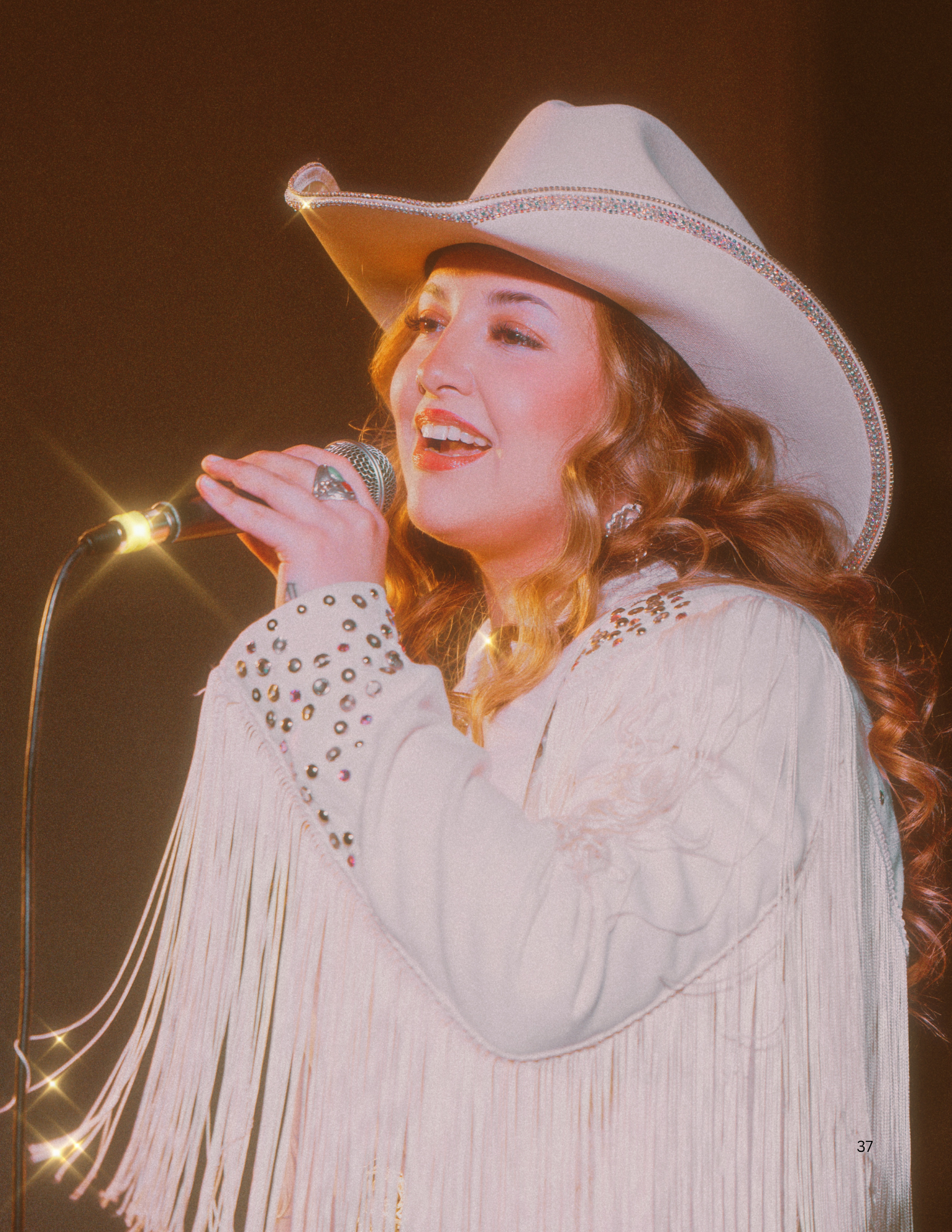
Across Calgary’s musical landscape, Jaiden Riley is telling a very different kind of story. Riley is nominated this year for Indigenous Artist, Solo Artist and Emerging Artist. Her music moves between country, folk and bluegrass, but when she talks about the work, she consistently returns to storytelling before genre.

“I really just like to connect with people, and I like to tell stories,” she says. She describes that impulse as an inherently Indigenous way for her to approach being a musician.

Her musical foundation began at home. Riley’s grandfather introduced her to older country artists including Hank Williams and Patsy Cline. Her mother loved the country music of the 1980s and 1990s. The Calgary and Canmore folk festivals were part of her life from childhood and eventually became markers of the career she hoped to build.

Calgary singer-songwriter Jaiden Riley is nominated for three 2026 YYC Music Awards, including Indigenous Artist, Solo Artist and Emerging Artist.

Drawing from country, folk and bluegrass, Riley centres storytelling, community and her Indigenous identity in a career that has grown rapidly following her Ranchman’s Country 105 Rising Star win.

Her first real doorway into Calgary’s professional music community arrived somewhere…somewhat glamorous to the West: The Keg.

Riley was working there when musician Matt Blais walked in carrying a Taylor guitar. She recognized the instrument and struck up a conversation.

A few weeks later, Blais invited her to split a show with him at Hayden Block.

Riley laughs now at how little she knew. She arrived with two guitars in one key and no cables.

Blais became an early mentor, teaching her some of the things musicians are rarely taught formally: how to show up professionally, what works onstage, what does not and how to build a stronger live show. Last year, he brought Riley to the YYC Music Awards as his guest. It was her first time attending.

This year, Riley has three nominations of her own. Her win at Ranchman’s Country 105 Rising Star became another dividing line. Riley talks about a “pre-Rising Star” and “post-Rising Star” version of her career. Not because she believes she became a different artist, but because opportunities accelerated after the win.

“I still love her, and I still am her,” she says of the artist she was before.

The growth of the Jaiden Riley project also meant the growth of The Crybabies, the musicians who surround her onstage. Riley has a fairly straightforward hiring philosophy.

“You gotta be a nice, good person,” she says.

Then there is the musical requirement. “You gotta be better than me.” She laughs, but she means it.

“Everyone in the band is better than me, and that’s how it should be.”

The Crybabies emerged through relationships rather than auditions. Banjo player Brett Cassidy was one of the earliest musicians Riley performed with regularly. Guitarist Tory Rosso came into her orbit socially. Fiddle player Talia Aleksiuk approached her at a show and introduced herself.

“We all really just love each other, and we love music, and we love spending time together,” Riley says. That community has mattered particularly over the past year.

Riley’s mother died shortly after seeing her win Rising Star. She had been one of the most consistent people in Riley’s musical life. Front row at shows, knowing the songs and believing in the career before much of the industry knew who Riley was. Riley remembers calling her after the Rising Star win. Her mother told her, “I didn’t doubt it for a moment.”

The YYC Music Awards nominations came after her death. “It was a lot of joy and so much gratitude,” Riley says. “But also, I really wanted to phone her and tell her, and I couldn’t.”

The loss has existed alongside one of the busiest stretches of Riley’s career. She estimates she played roughly 45 shows between mid-June and mid-August. Music has helped, as have her partner, friends, bandmates, prayer, smudging and Indigenous ceremony.

One of those performances was the Canmore Folk Music Festival warm-up, a stage connected to a dream Riley had identified years earlier. It was also only her second performance after her mother died. Her first had been difficult enough that Riley wondered whether she could continue performing.

Canmore helped answer that question. Now she is looking toward recording. Despite the scale of some of her opportunities, Riley currently has one officially released single, “Chickens in the Trailer Park”, while sitting on enough original material for what she estimates could be two albums.

She does not want to make an EP simply because it is convenient. She wants a record, on vinyl. Despite the nominations, Riley is clear that an award show does not change the reason she does this. “If I’m performing at the YYC Music Awards, or if I’m performing in the corner of a bar,” she says, “my why remains.”

Bijaan and Riley sound nothing alike. Their careers have travelled very different roads. What connects them is what sits underneath the recognition: childhood friendships, mentors, collaborators, family histories, small stages, grief and years spent building before the wider industry had a reason to notice.

The 2026 YYC Music Awards take place September 20 at the Event Centre at Grey Eagle Resort & Casino.

Prev / Next
No results found


Stories
  • September 2026
  • August 2026
  • July 2026
  • June 2026
  • May 2026
  • April 2026
  • March 2026
  • February 2026
  • January 2026
  • July 2024
  • June 2024
  • May 2024
  • April 2024
  • March 2024
  • February 2024
  • January 2024
  • December 2023
  • November 2023
  • October 2023
  • September 2023
  • August 2023
  • July 2023
  • June 2023
  • May 2023
  • March 2023
  • January 2023
  • December 2022
  • November 2022
  • October 2022
  • July 2022
  • June 2022
  • May 2022
  • April 2022
  • March 2022
  • February 2022
  • January 2022
  • December 2021
  • November 2021
  • October 2021
  • September 2021
  • August 2021
  • July 2021
  • June 2021
  • May 2021
  • April 2021
  • March 2021
  • February 2021
  • January 2021
  • November 2020
  • October 2020

AITC - September 2026

Featured
Cover (1).png
AITC September 2026 - What Will It Take For Us To Feed One Another - Aquakultre
Read more →
What Sugar and Indigo Remember

Sugar, indigo, family photographs and the Atlantic carry histories that are easy to overlook until someone asks us to look again.

At Dalhousie Art Gallery, curator francesca ekwuyasi brings together Stina Baudin, Adama Delphine Fawundu, Bushra Junaid and Christina Leslie for Burnt Sugar Blue, an exhibition examining colonialism, Black diasporic memory, family, spirituality and the histories embedded in everyday materials.

In What Sugar and Indigo Remember, Afros in tha City looks at how these artists turn materials and archives into something living, while Roger Mooking’s SoundBites continues the conversation from across the gallery.

Read the full story and explore the September 2026 issue of Afros in tha City.

Read more →
Roger Mooking Is Building Beyond the Algorithm

Roger Mooking is thinking beyond the algorithm.

With SoundBites, the Canadian multidisciplinary artist is responding to streaming culture, shrinking attention spans and the rise of AI by asking a different question: what happens when technology distributes the work, but does not define its value?

In conversation with Afros in tha City, Mooking talks about the state of the music industry, the value of slow creative practice and why the future of music may look a lot more like a campfire than a platform.

Read the full story and explore the September 2026 issue of Afros in tha City.

Read more →
Prismatic Is Thinking Beyond Representation

Prismatic Arts Festival has spent nearly two decades creating space for Indigenous, Black and racialized artists. For Executive and Artistic Director Raeesa Lalani, the conversation now goes beyond visibility to sustainability, power and what artists need to build lasting careers.

In our September 2026 issue, Afros in tha City looks at the festival’s history, its place in Canada’s arts ecosystem and the artists shaping Prismatic 2026, including Walter Borden, Tara Taylor, Bageshree Vaze, Tania El Khoury and Dee Hernandez.

Read the full feature in the September issue of Afros in tha City, available digitally and in a limited print edition.

Read more →
Timeless: 100 Years of Oscar Peterson Extended at Studio Bell

The National Music Centre’s Timeless: 100 Years of Oscar Peterson has been extended at Studio Bell through January 3, 2027. Originally opened in July 2025 to commemorate the centenary of Peterson’s birth, the exhibition brings together instruments, archival materials, awards, personal artifacts, interviews and multimedia installations to tell the story of one of Canada’s most important musicians.

Read more →
Saul Williams Still Believes Art Has a Job to Do

With Leap Life and Songs My Mother Taught Me arriving eleven days apart, Saul Williams turns sound and page into one argument about art, memory and responsibility.

There is something almost unreasonable about the amount Saul Williams still expects from art. Nearly three decades into a career spanning poetry, music, theatre, film and literature, Williams has not arrived at the comfortable conclusion that art should simply entertain us. Within the span of eleven days this summer, he released two projects arguing that culture does much more than that.

His album Leap Life, released August 28 on Big Dada, moves through spoken word, hip-hop, jazz, ambient composition, African rhythmic traditions and improvisation. On September 8, Haymarket Books published Songs My Mother Taught Me: Why the Artist Must Take Sides, a political memoir tracing the people and experiences that shaped Williams’ understanding of art as power.

Read more →
Afros Picks: Three DJs Setting the Tone at MUSE N°001

Vancouver’s MUSE N°001 brings together four DJs with distinctly different approaches to the dance floor. RAEDIAMENDZ, SAANZ, DJ BOMBAE and DJ CHIP$ move through hip-hop, R&B, African electronic music, Afro House and open-format sounds, each bringing her own relationship to culture, rhythm and the room.

Created by creative director Drew Ragiste, MUSE is built around a bigger question: what happens when women are considered in the design of nightlife from the beginning?

In this month’s Afropicks, Afros in tha City meets the four selectors setting the tone for MUSE’s first night.

Read the full feature, see more from the artists and explore the September issue in the digital edition or limited print magazine.

Read more →
This Is What Calgary Sounds Like Now

Bijaan and Jaiden Riley arrive at the 2026 YYC Music Awards from very different corners of Calgary’s music community. Bijaan’s path runs from childhood rap sessions in northwest Calgary to two nominations for “Jungle,” while Riley enters with three nominations after a year shaped by rapid career growth, community and profound personal loss.

In conversation with Afros in tha City, both artists look beyond the awards to the friendships, mentors, family histories and years of work that made the nominations possible. From Bijaan’s third-culture story and long relationship with Calgary hip-hop to Riley’s rise through the city’s country and folk community, the feature offers a deeper look at what it actually takes to build a music career from here.

Read the full feature, with expanded interviews and photography, in the September 2026 issue of Afros in tha City.

Buy the digital edition or order a limited print copy at afrosinthacity.com.

Read more →
Recovery Was Never Meant to Be Hidden
Fashion, Wellness
Recovery Was Never Meant to Be Hidden
Fashion, Wellness

For Suzzy Anibueze, Sober Runway is bigger than a fashion show. Built from her lived experience, work in addiction and mental-health services, and belief in recovery through community, the organization uses fashion to challenge the idea that surviving addiction should remain hidden.

In the September issue, Anibueze opens up about stigma, culture, family, recovery and the community she is working to build beyond the runway.

The complete story is available in the September 2026 issue of Afros in tha City, available now in digital and limited print editions.

Read more →
Fashion, Wellness
The Road They Built and the Stars Who Found Their Way Home
Music
The Road They Built and the Stars Who Found Their Way Home
Music

There was a time when Kreesha Turner’s voice was everywhere. Her music filled Canadian radio, reached international audiences and made her one of the most recognizable artists to emerge from Western Canada. Then she stepped away.

Her return to Edmonton leads back to Music for Mavericks, the grassroots collective that helped prepare Kreesha, Mouraine and a generation of Alberta artists for the world. Twenty years later, they reflect on the music, sacrifice and community behind the movement, as well as the work Alberta still has left to do.

Read the complete feature and see the photographs documenting this history in the September 2026 issue of Afros in tha City. Purchase the digital edition or one of our limited print copies at afrosinthacity.com.

Read more →
Music
Afros in tha City - August 2026 - Adrian Younge
Identity, Music
Afros in tha City - August 2026 - Adrian Younge
Identity, Music

& Afro-Disco Makossa: The Dance Floor Record He’s Always Wanted to Spin & More.

Music never arrives without a history. It carries places, technologies, memories and the fingerprints of those who came before.

For our August cover story, Afros in tha City sits down with Adrian Younge to explore the sounds, relationships and creative philosophy behind Afro-Disco Makossa—a record born from his long-held desire to create music for the dance floor without surrendering the depth, musicianship or historical consciousness that defines his work.

Drawing from makossa, soul, funk and disco, the album does not treat these traditions as relics to be reproduced. Younge approaches them as living languages: sounds capable of holding their histories while continuing to move, transform and speak to the present. The result is music designed for movement, connection and deep listening—a record that looks backward only to understand where it might travel next.

But this conversation extends far beyond one album.

Younge reflects on the trust that can only be built through consistency, his enduring creative partnership with Ali Shaheed Muhammad, and the ecosystem they have created through Jazz Is Dead. Rather than positioning legendary musicians as figures frozen in the past, the platform invites living artists to continue creating, experimenting and adding new chapters to their own stories.

He also speaks about attending law school because he wanted to become what he calls “an educated artist”—someone equipped to understand contracts, intellectual property, ownership and the structures surrounding the work. His independence is not simply an aesthetic or an industry label. It is knowledge, preparation, discipline and the infrastructure required to protect a creative life.

That philosophy carries particular weight for an independent publication like ours. Building outside traditional systems requires more than vision. It requires learning how the machinery works, deciding what must remain yours and creating an ecosystem capable of supporting the work long after the excitement of an idea has passed.

Throughout the conversation, Younge retains the curiosity that first led him toward music. “We’re just bigger kids,” he says—a reminder that serious artistic practice does not require abandoning wonder. Growth can mean becoming more skilled, more informed and more intentional while remaining open enough to keep discovering.

This is a cover story about a dance-floor record, but it is also about something larger: how artists honour history without becoming trapped inside it, how independence is built rather than declared, and how curiosity keeps the conversation moving forward.

Adrian Younge covers the August issue of Afros in tha City.

Read “Afro-Disco Makossa: The Dance Floor Record He’s Always Wanted to Spin” at afrosinthacity.com and in our print publication.

Stories Shaping Culture.

Read more →
Identity, Music
Valerie June on the Practice of Joy
Music
Valerie June on the Practice of Joy
Music

A fifteen-minute festival interview with Valerie June begins with crossed schedules and a quiet moment of evaluation. Then the conversation finds its rhythm, becoming something much larger than an exchange about her latest album, Owls, Omens and Oracles.

In “The Practice of Joy,” Kimberley Dooshima Jev speaks with the Grammy-nominated artist about spirituality, independence and building a creative life that remains aligned with your values. June shares how meditation and affirmations become part of ordinary routines, why “small is powerful,” and how she measures the impact of her music through human connection rather than charts, algorithms or scale.

Their conversation also turns toward the ways Black women’s experiences are routinely flattened—and the freedom of creating new platforms instead of waiting for permission to belong. June’s declaration, “I’m keeping my joy because they would want me to,” transforms joy from a fleeting emotion into remembrance, responsibility and an inheritance carried forward.

What begins as an interview about music ultimately clarifies the values guiding Afros in tha City: community over scale, creation over permission and resonance over metrics. It is a reminder that joy is not escapism. It is a deliberate practice—and sometimes, an act of survival.

Read “The Practice of Joy” in full at Afros in tha City or in our print publication.

Read more →
Music
Lowkita - In Her Own Time
Music
Lowkita - In Her Own Time
Music

After nearly a decade between full-length projects, Lowkita returns with Why(Te) Tee—a deeply personal record shaped by motherhood, grief, burnout and the quiet confidence of an artist moving in her own time.

In “In Her Own Time,” Kimberley Dooshima Jev traces the Calgary-born, Vancouver-based artist’s years of rebuilding. Lowkita never stopped creating: she performed, produced, DJed, designed clothing and found new ways to sustain herself while raising her daughter and navigating profound personal loss.

The story also explores the meaning behind Why(Te) Tee. What began with the image of a white T-shirt as a symbol of starting over evolved into a larger meditation on purpose: the “Why” behind continuing, “TE” as a reminder that timing is everything, and the belief that every pause and setback has helped build the project’s foundation.

More than a comeback, Why(Te) Tee is an invitation to meet the person behind Lowkita’s bright, energetic presence. It captures an all-around artist who has learned that consistency does not require constant visibility—and that showing up, on your own terms, can be its own form of success.

Read “In Her Own Time” in full at Afros in tha City or in our print publication.

Read more →
Music
"There Has to Be a Festival"

For Calgary ReggaeFest founder and producer Leo Cripps, success has never been measured by crowd size, celebrity headliners or rapid expansion. It rests on one enduring belief: “There has to be a festival.”

This feature traces more than two decades of quiet resilience—from financial setbacks and pandemic uncertainty to the 2024 cancellation of Sunny Soul Jam. Through it all, Calgary ReggaeFest has built its reputation by growing responsibly, remaining debt-free and honouring its commitments to every artist, vendor and partner.

Cripps also reflects on the festival’s new home at The Rise on St. Patrick’s Island, the generations of families who return each summer and a lineup that carries reggae’s history forward through legends and emerging artists alike.

At its heart, Calgary ReggaeFest is a story of stewardship: choosing sustainability over spectacle and ensuring reggae music and Caribbean culture continue to have a home in Calgary. After more than twenty years, its greatest achievement may be beautifully simple—it kept its promise.

Read the full story at Afros in tha City or in our print publication.

Read more →
The Blueprint of Reggae  - Leroy Sibbles Looks Back on Six Decades of Rhythm
Identity, Music
The Blueprint of Reggae - Leroy Sibbles Looks Back on Six Decades of Rhythm
Identity, Music

Few musicians are as inseparable from reggae’s foundations as Leroy Sibbles. As a pioneering bassist and arranger at Studio One and the legendary lead vocalist of The Heptones, he helped create the rhythms, basslines and vocal sound that continue to reverberate through contemporary music.

In “The Blueprint of Reggae,” Cara Eyre speaks with Sibbles about six decades of innovation, from late-night rehearsals in Trench Town and groundbreaking recording sessions with Clement “Coxsone” Dodd to hearing new generations sample and reinterpret the music he helped build.

The conversation also traces the personal journey that brought Sibbles to Canada in the 1970s, where he helped cultivate Toronto’s reggae scene and established a lasting connection to his adopted second home. Looking back, he measures his legacy through the musicians he inspired, the careers he strengthened and the joy his work continues to create.

At the heart of it all is a message of unity. Sibbles’ music has crossed oceans, bridged generations and brought millions together—and after six decades, his invitation remains beautifully simple: “We all sing together.”

Read “The Blueprint of Reggae” in full at Afros in tha City or in our print publication.

Read more →
Identity, Music

July 2026 - The Omnibus - Print July 2026 - The Omnibus - Print
Sold Out
July 2026 - The Omnibus - Print
CA$50.00

The Summer Omnibus is our most ambitious issue yet. Bringing together seven months of journalism, photography, and storytelling, this special collector's edition celebrates Black arts, business, fashion, music, and community across Canada and the diaspora.

Featuring exclusive cover stories with Judith Demosthene, Funmi Osatuyi, Adrianne Williams, Nancy Nixon, Ayokunle Akinsebikan, Femi Jr., and more, this 70-page volume captures the people, ideas, and conversations shaping culture today.

Beautifully printed in limited quantities, the Summer Omnibus is designed to be collected, shared, and revisited long after publication.

Limited print copies available.


“It always seems impossible until it’s done.”
— Nelson Mandela


Promotional image of a woman suspended in the air with hand placed above a deluxe jar of DTouch quiet gravity mineral salts


© 2026 Afros in tha City