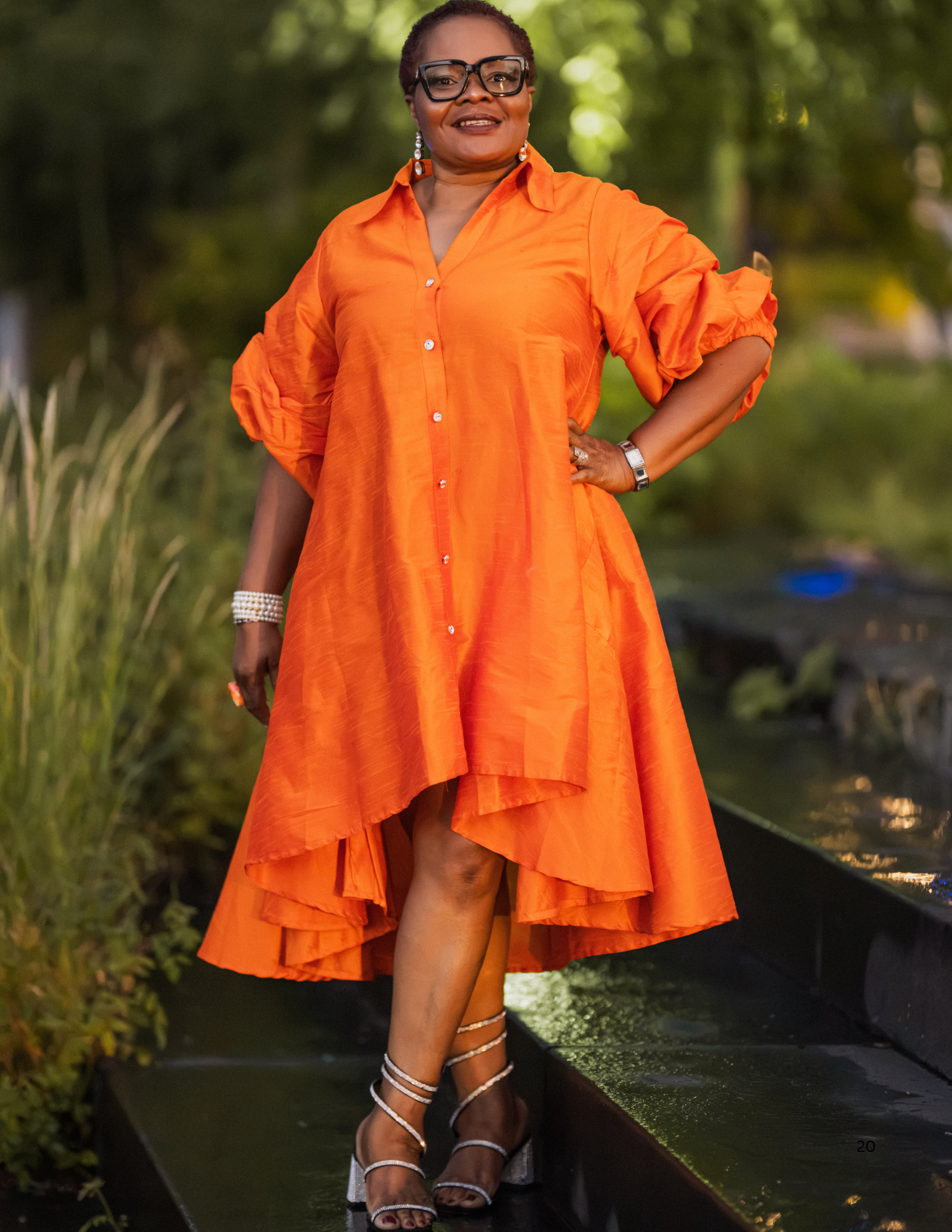
Suzzy has built Sober Runway to challenge the shame surrounding addiction and recovery, using fashion, community and lived experience to make recovery visible.
By Kimberley Dooshima Jev
When Suzzy began speaking publicly about her experience with alcohol, some members of her community asked why she had told people at all. She had discussed that period of her life while talking about Sober Runway, the organization she founded in 2025 to destigmatize addiction and recovery. Afterward, people she knew wondered why she had not asked for the reference to alcoholism to be removed.
For Suzzy, that reaction explained exactly why the work was necessary. “You see, that is the problem,” she recalled during an interview with Afros in tha City.
Sober Runway places people in addiction and mental-health recovery where professional models would usually stand. Fashion becomes a vehicle for visibility, giving people whose lives may once have been defined by crisis or illness a chance to be seen differently: dressed, celebrated and walking in front of an audience because they made it through something difficult.
The idea brings together several parts of Suzzy’s life. She has a background in education and counselling psychology, worked for years in addiction and mental-health services, and studied Fashion Apparel Technology at Olds College. She also has lived experience of the stigma Sober Runway is trying to dismantle.
After coming to Canada, Suzzy pursued fashion and eventually started a clothing line. Around the same period, her marriage was deteriorating, the COVID-19 pandemic arrived and she experienced serious health complications. Alcohol became something she used privately to numb what she was carrying and, at times, to help her sleep.
She believed her children did not know. Her daughter eventually confronted her with concern rather than anger. The conversation forced Suzzy to consider what would happen if she continued on the same path.
Her decision to change also meant confronting cultural, social and religious expectations surrounding marriage and endurance. She had been married for more than two decades. Leaving was not simply a private relationship decision. It meant challenging the idea that staying, regardless of what was happening inside the marriage, was the only acceptable outcome.
Suzzy is careful not to reduce that experience to an indictment of her community. People often try to help using the beliefs they inherited themselves. When addiction is understood primarily as a moral failing, shame can replace care. When mental illness is something families are taught not to discuss, silence can look like protection.
She eventually left the marriage and spent years working in addiction and mental-health treatment. The work changed how she understood recovery and forced her to unlearn assumptions she had previously held about addiction, parenting and support.
That experience raised one of the central questions behind Sober Runway: why are people so rarely celebrated for recovering?
Some forms of illness are readily met with empathy, fundraising and community support. Addiction often carries a different burden. People can be expected to conceal the illness, the treatment and sometimes the recovery itself.
Sober Runway reverses that expectation by making the person in recovery the person everyone has come to see. Participants must have lived experience of recovery. Conventional fashion standards are largely irrelevant. Suzzy recalled that some organizations and prospective models had asked whether Sober Runway had preferred model sizes.
Her response was simple:
“Addiction does not discriminate, so we don’t discriminate.”
The runway is an effective place to make that argument because fashion is already built around visibility. Models are presented deliberately and audiences are expected to look. Sober Runway gives that attention to people who may have spent years believing parts of their lives needed to remain hidden.
Last year, one participant wanted her father to attend the show but told Suzzy that he could not afford a ticket. Suzzy made sure he could come.
After watching his daughter walk the runway, the father approached Suzzy overwhelmed with emotion. He wanted reassurance that what he had just witnessed meant his daughter was doing well. She was, and the woman plans to walk again.
The moment illustrates what Suzzy believes celebration can offer. Treatment may stabilize someone’s life, but recovery continues long after a person leaves a facility. People return to families, work, bills and environments that may have little understanding of what recovery requires.
That gap is why she does not want Sober Runway to exist only as an annual fashion show. “I want it to be a community,” she said. “I want it to be a movement.”
Sober Runway is now a registered non-profit, with plans for programming that includes recovery coaches, counselling resources and ongoing spaces where people can connect after treatment. Suzzy imagines a community where people can access practical support, spend time with others or simply have somewhere they feel safe being present.
Her approach is rooted in the belief that support should not depend on someone proving they are already well. Recovery can be uneven, and people can finish treatment while still feeling isolated, misunderstood or unsure of what comes next.
That wider vision keeps Sober Runway from being simply a feel-good fashion event. The runway may be the most visible part of the project, but Suzzy is ultimately interested in what happens when the lights go down.
She wants a culture where saying “I struggled with addiction” is not immediately followed by the question she received after her own story became public: why did you tell people?
For Suzzy, telling people is part of freedom. Her history is not where her story ends. The years since have included professional growth, further education, community work and the creation of an organization built around making recovery visible without making it shameful.
On September 26, those stories will return to the runway at Platform Calgary. There will be clothes, music and the familiar structure of a fashion show, but fashion is ultimately the vehicle rather than the destination.
Sober Runway’s larger argument is simpler:
Recovery deserves to be seen.-Suzzy
Sober Runway takes place Saturday, September 26, 2026, from 1 p.m. to 4 p.m. at Platform Calgary.
Tickets and additional information are available through Sober Runway.
@soberunway on Instagram | Facebook.com/SoberRunway