
• EXPLORE AITC
  • SHOP
  • About Us
  • Masthead
  • Work
  • Contact Us
  • Standards
    • Our Philosophy
    • Diversity & Representaion
    • Editorial Standards
    • Editorial & AI Standards
    • Ethics & Corrections
    • Partnerships & Sponsorships
  • Privacy Policy
  • Terms & Conditions
  • Menu

Afros in tha City

Stories Shaping Culture
  • EXPLORE AITC
  • SHOP
  • About Us
  • Masthead
  • Work
  • Contact Us
  • Standards
    • Our Philosophy
    • Diversity & Representaion
    • Editorial Standards
    • Editorial & AI Standards
    • Ethics & Corrections
    • Partnerships & Sponsorships
  • Privacy Policy
  • Terms & Conditions

Kressha Turner - Photo Credit: Chris Sturwold

The Road They Built and the Stars Who Found Their Way Home

September 11, 2026 in Music

There was a time when Kreesha Turner’s voice was everywhere. Twenty years after Music for Mavericks helped prepare her and a generation of Edmonton artists for the world, they are returning home to the community that built them and asking what Alberta must build next.

By Kimberley Dooshima Jev

There was a time when you could turn on Canadian radio and hear Kreesha Turner.

Then change the station and hear her again.

“Don’t Call Me Baby” had the snap of a record that knew exactly what it was. Turner’s voice was playful, commanding and instantly recognizable. Released in 2008, the single reached No. 8 on the Canadian Hot 100 and No. 1 on Billboard’s U.S. Dance Club Songs chart. Her debut album, Passion, went platinum. Her music did not feel like a promising regional story waiting for the country to notice it. The country had noticed. For a moment, Kreesha Turner was inescapable.

Years later, finding her old videos online produces a peculiar kind of ache. The view counts refuse to let anyone minimize what happened: “Sexy Gal,” released during her later move into dancehall, has amassed approximately 7.8 million views on her official VEVO channel. An older upload of “Don’t Call Me Baby” has crossed one million. Beneath the videos, listeners gather around the memory. The comment sections read like search parties: people asking where she went, remembering where they were when the songs ruled radio and wondering why an artist this singular ever disappeared from the centre of the conversation.

In 2022, “Don’t Call Me Baby” was pulled back into the light when Chelazon Leroux and Miss Fiercalicious performed it as a lip sync on the third season of Canada’s Drag Race. A new generation met the song through drag, movement and the heightened theatre it had always deserved. For everyone who already knew it, the moment landed differently. It was proof that the record had not vanished. It had been waiting.

So had Turner.

After living in Los Angeles for approximately 15 years and stepping away from music for almost a decade, she returned to Edmonton. In 2026, she began releasing music again. Her return is not simply a comeback story, however tempting that frame may be. It is a story about what happens when an artist who reached the machinery of the international music business comes home to the grassroots system that first taught her how to build and discovers that the people who formed it are still there.

Before there was an established road for Alberta hip-hop, Music for Mavericks was helping to pave one.

The Edmonton collective and independent label brought together artists who would go on to build careers far beyond the city, among them Arlo Maverick, Mouraine, K-Riz and Kreesha Turner. Its work was rarely limited to recording and releasing music. Music for Mavericks taught artists how to write biographies, package CDs, approach media, build relationships, pursue opportunities and carry themselves as businesses before much of that language became commonplace in Canadian artist-development spaces.

That matters because Canadian music history has a habit of pulling everything toward the centre. Success is remembered through Toronto offices, national labels and eastern media, even when the artist was first imagined somewhere else. Turner’s career disrupts that geography. One of the most recognizable voices on Canadian radio in the late 2000s came from Edmonton. Before the platinum record, the JUNO nominations, Los Angeles and millions of views, there was a local community teaching her how to turn talent into a life.

Twenty years later, its legacy cannot be measured only in releases, stages or awards. It lives in the artists who learned how to make something where formal infrastructure was missing and in the people they have since helped along the way.

“Someone has to pave the road before anybody else can drive on it,” Mouraine says. “Then, when the next generation reaches the end of that road, their responsibility is to keep paving instead of stopping there.”

That road began in a version of Edmonton that now feels both recent and impossibly distant: community radio after midnight, independent record and clothing stores, mixtape DJs, local television, street teams, shared studios, posters on shop walls and rooms where artists met one another simply by being outside.
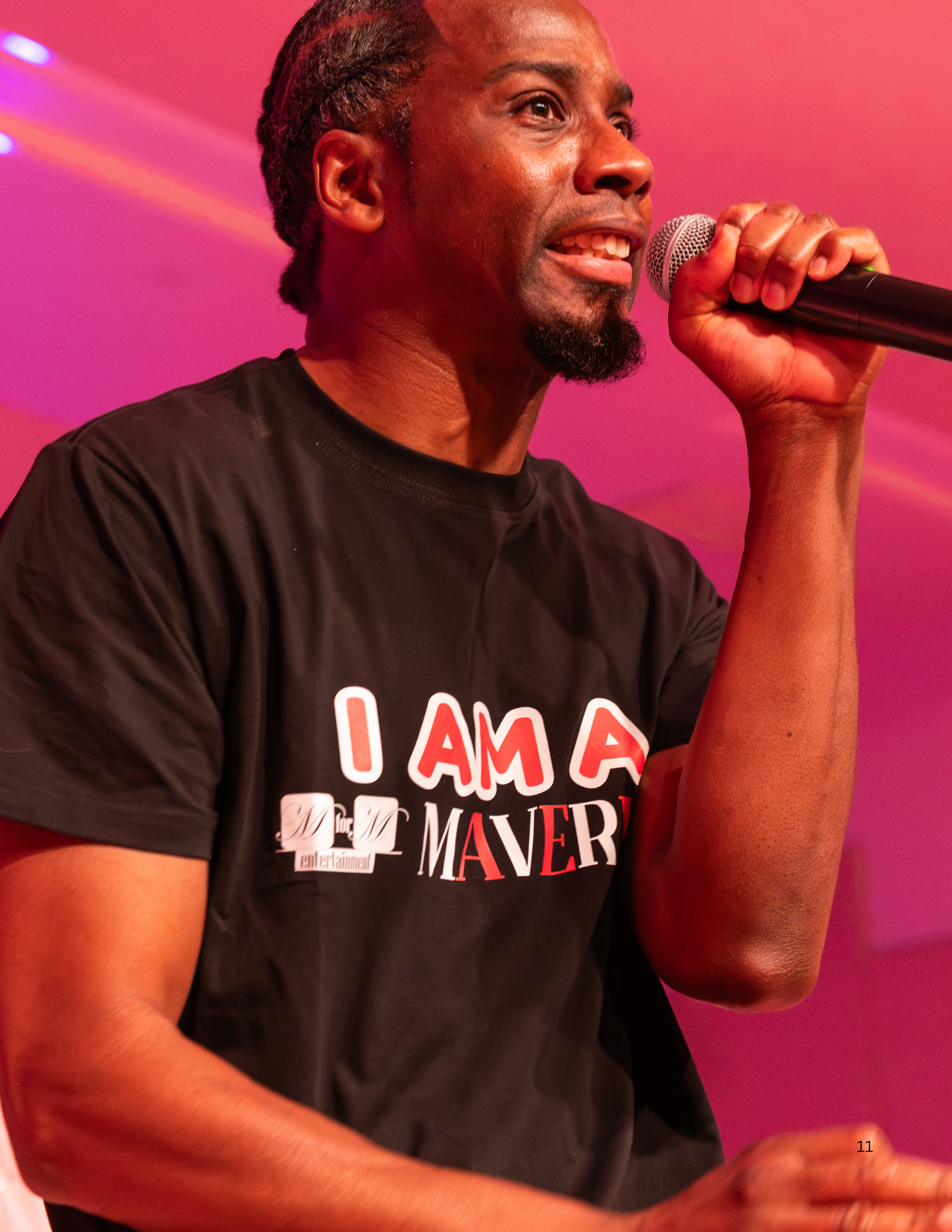
Arlo Maverick - Photo Credit: Chris Sturwold

Arlo Maverick was immersed in all of it. He hosted a radio show at CJSR, worked in music retail, represented labels through street teams and wrote about hip-hop. He was not only learning how the industry operated; he was seeing how its separate parts could work together.

“I began to look at it from the standpoint of an ecosystem without even knowing the word ecosystem at the time,” he says.

Radio could play an independent artist. A retailer could stock the CD. A clothing shop could display the poster. A DJ could place the song on a mixtape. A local hip-hop night could put the artist onstage. Each part strengthened the others.

“In hindsight, looking back at 2004, 2005, 2006, we had such a strong music scene because all those things were working in conjunction,” Arlo says.

The infrastructure was informal, but it was real.

Learning the business

Arlo did not arrive with an instinctive understanding of artist development. He was a teenage rapper who imagined talent would naturally produce a career. Mentors interrupted that fantasy and taught him to study the business surrounding the music: whether the songs were ready, whether the artist rehearsed, whether they understood what a professional career required.

He carried those lessons into Music for Mavericks. The knowledge that older artists and industry figures shared with him became knowledge he shared with others, often without payment or institutional backing.

For Mouraine, that education was foundational.

“What Music for Mavericks gave me was real artist development, especially in an era where that doesn’t really exist the same way anymore,” he says. “It wasn’t just about becoming a better artist or musician. It was also about understanding the business around the music: how to present yourself professionally, how to treat yourself as a business, how to build relationships, and how to contribute to the community and ecosystem around you.”

A sustainable career, he learned, required more than good music. Artists needed to understand their place within a community and build systems around their work that could last.

Kreesha Turner entered Music for Mavericks with some of that thinking already planted at home. Her mother was a small-business owner with an entrepreneurial spirit, and Turner grew up watching her build.

“She taught me very early that having a talent or an idea is only one part of it,” Turner says. “You also need the infrastructure around that idea to make it sustainable.”

Arlo translated those principles into the life of an artist.

“He helped me write my first bio,” she says. “He taught us to think about how we presented the CDs we were selling, how people could contact us, having a website, networking and all of these foundational things that seem obvious now, but weren’t obvious to a young artist in Edmonton in the early 2000s.”

Music for Mavericks was not merely giving young artists a stage. It was preparing them to recognize and use an opportunity once it arrived.

Turner would eventually enter the major-label system and take her music around the world. She lived in Los Angeles for approximately 15 years. The scale changed, but the fundamentals she had learned in Edmonton did not.

“You still need to know how to present yourself, how to build relationships, how to follow up and how to create systems that allow one opportunity to turn into another,” she says.

Freedom and the machine

The international music industry provided Turner with reach, resources and infrastructure that would have been extraordinarily difficult for an independent artist to reproduce at the time. It also imposed categories on music that had grown naturally from a Canadian-Jamaican artist raised in Edmonton’s culturally diverse community.

Turner’s music blended sounds because that hybridity honestly reflected who she was. The larger industry wanted to know where it belonged: R&B, rap or pop; which Grammy category could contain it; how it could be marketed.

“Ironically, the ideas I often received the most resistance toward were the ones that felt most authentic to me,” she says.

The contrast clarified what her earliest community had given her.

“Grassroots gave me something the industry struggled to provide: permission to discover who I was without first asking whether who I was could be marketed.”

After nearly a decade away from music, Turner returned to Edmonton and began building again, this time as an independent artist. The freedom has come with a new appreciation for how much work labels and management once carried behind the scenes, but it has also returned creative authority to her hands.

“What I have now is creative control, and that means everything to me,” she says.

Her return coincided with an industry in which the old gatekeepers no longer hold the same power, even as algorithms create new barriers. An independent artist can release a song and potentially reach millions; the route is more open, but no more predictable.

“There’s a lot of uncertainty in today’s music industry,” Turner says, “but there’s also incredible possibility.”

When community becomes infrastructure

Music for Mavericks continued even when it stopped functioning as a conventional multi-artist label. Arlo kept releasing his own work under the name and supporting artists whether or not they formally belonged to its roster.

“If I see someone needs help, I’m not going to say, ‘Well, because you’re not on our label, I can’t help,’” he says.

That ethos held the community together. Mouraine says its foundation was always bigger than the Music for Mavericks name: people continued sharing knowledge, creating opportunities and helping artists advance even after the traditional structure receded.

But community could not replace every missing institution.

“Alberta didn’t have the same level of industry support, management, labels, development and other resources you might find in bigger music markets,” Mouraine says. “So the community was there, but there were still gaps that artists had to learn how to fill themselves.”

Artists became their own labels, managers and marketing teams. Independence was not always a philosophical choice. It was a practical response to jobs and systems that did not exist around them.

Arlo filled many of those gaps personally. He taught grant writing, biographies, media kits, showcasing and market development. He placed other people in opportunities he might have pursued himself because he believed collective advancement mattered more than one person escaping the city.

When asked what that commitment cost him, he answers first with humour: “A lot of sleep.”

Then comes the deeper cost: “Career opportunities.”

It is difficult to hear that answer without feeling the weight of it. Arlo can name the artists he helped, the doors he opened and the knowledge he brought back into the community. What is harder to catalogue is the version of his own career that might have existed had he kept every opportunity for himself. Music history celebrates the person who gets out. It is less skilled at recognizing the person who stays, holds the door and makes sure nobody has to enter the room alone.

There is a structural contradiction inside that generosity. Alberta’s emerging hip-hop community needed shared knowledge because it lacked capital and institutional support. But when the work of developing an ecosystem depends on one person repeatedly donating labour, contacts and opportunity, the model cannot expand without exhausting the person holding it together.

Arlo describes his philosophy as trying to make money with his community rather than off it. The distinction is rooted in care. Yet sustainable community cannot mean the absence of payment. It requires money to circulate among artists, managers, photographers, writers, venues, promoters, labels and the people doing development work. Otherwise, care becomes the resource everyone relies upon but nobody funds.

Music for Mavericks did not prove that Alberta lacked an industry. It proved that many of the necessary components existed, while the durable financing and organization needed to connect them did not.

Preserving the evidence

The twentieth-anniversary reunion and pop-up museum made that history physical again.

Arlo had kept handwritten lyrics, CDs, vinyl, posters, flyers, photographs, VHS tapes and performance footage. These objects came from a time when music circulated hand to hand and relationships formed face to face. Some of the material existed nowhere online. It included evidence of artists whose careers continued far beyond those rooms and records of people the community has since lost.

This was not nostalgia for nostalgia’s sake. It was preservation in a country that has often failed to document its regional hip-hop histories.

There is grief inside that preservation. A flyer becomes evidence that the night happened. A handwritten lyric returns an artist to the room. A VHS tape holds voices, bodies and places that no algorithm would know to recommend. The archive says: we were here, we built this, and our history does not become disposable simply because the format changed.

“It’s not a matter of holding on to the past,” Arlo says. “It’s a matter of making sure that we never forget where we came from.”

For Turner, stepping onstage with her Music for Mavericks brothers after 20 years allowed two versions of her life to meet: the community that helped her become an artist and the artist shaped by everything that followed.

“So much life has happened between those two versions of us, but the spirit of Music for Mavericks hasn’t really changed,” she says. “The idea was always that if you knew something, you shared it. If you had access to something, you helped someone else understand how to access it too.”

Arlo’s role in her development did not end in the early 2000s. When Turner returned, he helped her navigate the grant system and apply for her first grant. Her new project has since received funding from the Alberta Foundation for the Arts and the Edmonton Arts Council.

Twenty years later, he was still extending the same hand.

That continuity is what makes Turner’s return so affecting. The public remembers the singles and the voice that once filled the radio. Music for Mavericks remembers the young artist before the machinery arrived. It remembers the CDs, the first biography, the questions and the preparation. Coming home did not require her to reintroduce herself to the people who knew where the story began.

Keep paving

The future of Music for Mavericks may not resemble its first incarnation. Arlo imagines the possibility of a boutique independent label representing three or four artists: small enough to offer genuine development, experienced enough to operate with the professionalism of a larger machine and intentional about giving artists a place where their work remains their own.

The ambition is not to manufacture celebrity. It is to help artists build audiences, tour, earn recognition and live modestly from their work.

For that future to exist, Alberta must invest beyond performances. Turner wants to see properly funded grassroots incubators where artists can develop their craft, learn the business, find mentorship, build networks and make mistakes before the entire world is watching.

She acknowledges that Alberta has meaningful public funding for the arts. The opportunity, she argues, is to ensure more of it reaches the people and organizations with the cultural knowledge and community relationships to serve artists who are not always reached by larger institutions.

“Alberta is also historically very strong in rock and country, and those genres have established ecosystems here,” Turner says. “I’d like to see equally intentional infrastructure for hip hop, R&B, jazz, soul and other genres, and for artists coming from culturally diverse communities.” Mouraine frames the work as cumulative.

Mouraine - Photo Credit: Chris Sturwold

“Nobody builds an ecosystem alone,” he says. “It takes a whole community, and every person lays a brick. If we keep laying those bricks, eventually the next generation has something stronger to build from instead of having to start from zero every time.”

Music for Mavericks laid those bricks before Alberta had fully developed the language to describe what was being built. Its artists carried that knowledge into international careers, independent businesses and the next generation of rooms they created for others.

The reunion did more than commemorate what survived. It made the unfinished work visible.

The talent was never the missing piece. The question now is whether Alberta will properly resource the people who have spent decades building the road and whether the next generation will keep paving when it reaches the place where they stopped.

What’s next

Kreesha Turner will headline An Evening with Kreesha Turner at The Rivoli in Toronto on September 16, 2026, with special guests Sean Jones, Phoenix Pagliacci and Notifi. Tickets are available at kreeshaturner.com.

Tags: Music for Mavericks, Kreesha Turner, Mouraine
Prev / Next
No results found


Stories
  • September 2026
  • August 2026
  • July 2026
  • June 2026
  • May 2026
  • April 2026
  • March 2026
  • February 2026
  • January 2026
  • July 2024
  • June 2024
  • May 2024
  • April 2024
  • March 2024
  • February 2024
  • January 2024
  • December 2023
  • November 2023
  • October 2023
  • September 2023
  • August 2023
  • July 2023
  • June 2023
  • May 2023
  • March 2023
  • January 2023
  • December 2022
  • November 2022
  • October 2022
  • July 2022
  • June 2022
  • May 2022
  • April 2022
  • March 2022
  • February 2022
  • January 2022
  • December 2021
  • November 2021
  • October 2021
  • September 2021
  • August 2021
  • July 2021
  • June 2021
  • May 2021
  • April 2021
  • March 2021
  • February 2021
  • January 2021
  • November 2020
  • October 2020

AITC - September 2026

Featured
Cover (1).png
AITC September 2026 - What Will It Take For Us To Feed One Another - Aquakultre
Read more →
What Sugar and Indigo Remember

Sugar, indigo, family photographs and the Atlantic carry histories that are easy to overlook until someone asks us to look again.

At Dalhousie Art Gallery, curator francesca ekwuyasi brings together Stina Baudin, Adama Delphine Fawundu, Bushra Junaid and Christina Leslie for Burnt Sugar Blue, an exhibition examining colonialism, Black diasporic memory, family, spirituality and the histories embedded in everyday materials.

In What Sugar and Indigo Remember, Afros in tha City looks at how these artists turn materials and archives into something living, while Roger Mooking’s SoundBites continues the conversation from across the gallery.

Read the full story and explore the September 2026 issue of Afros in tha City.

Read more →
Roger Mooking Is Building Beyond the Algorithm

Roger Mooking is thinking beyond the algorithm.

With SoundBites, the Canadian multidisciplinary artist is responding to streaming culture, shrinking attention spans and the rise of AI by asking a different question: what happens when technology distributes the work, but does not define its value?

In conversation with Afros in tha City, Mooking talks about the state of the music industry, the value of slow creative practice and why the future of music may look a lot more like a campfire than a platform.

Read the full story and explore the September 2026 issue of Afros in tha City.

Read more →
Prismatic Is Thinking Beyond Representation

Prismatic Arts Festival has spent nearly two decades creating space for Indigenous, Black and racialized artists. For Executive and Artistic Director Raeesa Lalani, the conversation now goes beyond visibility to sustainability, power and what artists need to build lasting careers.

In our September 2026 issue, Afros in tha City looks at the festival’s history, its place in Canada’s arts ecosystem and the artists shaping Prismatic 2026, including Walter Borden, Tara Taylor, Bageshree Vaze, Tania El Khoury and Dee Hernandez.

Read the full feature in the September issue of Afros in tha City, available digitally and in a limited print edition.

Read more →
Timeless: 100 Years of Oscar Peterson Extended at Studio Bell

The National Music Centre’s Timeless: 100 Years of Oscar Peterson has been extended at Studio Bell through January 3, 2027. Originally opened in July 2025 to commemorate the centenary of Peterson’s birth, the exhibition brings together instruments, archival materials, awards, personal artifacts, interviews and multimedia installations to tell the story of one of Canada’s most important musicians.

Read more →
Saul Williams Still Believes Art Has a Job to Do

With Leap Life and Songs My Mother Taught Me arriving eleven days apart, Saul Williams turns sound and page into one argument about art, memory and responsibility.

There is something almost unreasonable about the amount Saul Williams still expects from art. Nearly three decades into a career spanning poetry, music, theatre, film and literature, Williams has not arrived at the comfortable conclusion that art should simply entertain us. Within the span of eleven days this summer, he released two projects arguing that culture does much more than that.

His album Leap Life, released August 28 on Big Dada, moves through spoken word, hip-hop, jazz, ambient composition, African rhythmic traditions and improvisation. On September 8, Haymarket Books published Songs My Mother Taught Me: Why the Artist Must Take Sides, a political memoir tracing the people and experiences that shaped Williams’ understanding of art as power.

Read more →
Afros Picks: Three DJs Setting the Tone at MUSE N°001

Vancouver’s MUSE N°001 brings together four DJs with distinctly different approaches to the dance floor. RAEDIAMENDZ, SAANZ, DJ BOMBAE and DJ CHIP$ move through hip-hop, R&B, African electronic music, Afro House and open-format sounds, each bringing her own relationship to culture, rhythm and the room.

Created by creative director Drew Ragiste, MUSE is built around a bigger question: what happens when women are considered in the design of nightlife from the beginning?

In this month’s Afropicks, Afros in tha City meets the four selectors setting the tone for MUSE’s first night.

Read the full feature, see more from the artists and explore the September issue in the digital edition or limited print magazine.

Read more →
This Is What Calgary Sounds Like Now

Bijaan and Jaiden Riley arrive at the 2026 YYC Music Awards from very different corners of Calgary’s music community. Bijaan’s path runs from childhood rap sessions in northwest Calgary to two nominations for “Jungle,” while Riley enters with three nominations after a year shaped by rapid career growth, community and profound personal loss.

In conversation with Afros in tha City, both artists look beyond the awards to the friendships, mentors, family histories and years of work that made the nominations possible. From Bijaan’s third-culture story and long relationship with Calgary hip-hop to Riley’s rise through the city’s country and folk community, the feature offers a deeper look at what it actually takes to build a music career from here.

Read the full feature, with expanded interviews and photography, in the September 2026 issue of Afros in tha City.

Buy the digital edition or order a limited print copy at afrosinthacity.com.

Read more →
Recovery Was Never Meant to Be Hidden
Fashion, Wellness
Recovery Was Never Meant to Be Hidden
Fashion, Wellness

For Suzzy Anibueze, Sober Runway is bigger than a fashion show. Built from her lived experience, work in addiction and mental-health services, and belief in recovery through community, the organization uses fashion to challenge the idea that surviving addiction should remain hidden.

In the September issue, Anibueze opens up about stigma, culture, family, recovery and the community she is working to build beyond the runway.

The complete story is available in the September 2026 issue of Afros in tha City, available now in digital and limited print editions.

Read more →
Fashion, Wellness
The Road They Built and the Stars Who Found Their Way Home
Music
The Road They Built and the Stars Who Found Their Way Home
Music

There was a time when Kreesha Turner’s voice was everywhere. Her music filled Canadian radio, reached international audiences and made her one of the most recognizable artists to emerge from Western Canada. Then she stepped away.

Her return to Edmonton leads back to Music for Mavericks, the grassroots collective that helped prepare Kreesha, Mouraine and a generation of Alberta artists for the world. Twenty years later, they reflect on the music, sacrifice and community behind the movement, as well as the work Alberta still has left to do.

Read the complete feature and see the photographs documenting this history in the September 2026 issue of Afros in tha City. Purchase the digital edition or one of our limited print copies at afrosinthacity.com.

Read more →
Music
Afros in tha City - August 2026 - Adrian Younge
Identity, Music
Afros in tha City - August 2026 - Adrian Younge
Identity, Music

& Afro-Disco Makossa: The Dance Floor Record He’s Always Wanted to Spin & More.

Music never arrives without a history. It carries places, technologies, memories and the fingerprints of those who came before.

For our August cover story, Afros in tha City sits down with Adrian Younge to explore the sounds, relationships and creative philosophy behind Afro-Disco Makossa—a record born from his long-held desire to create music for the dance floor without surrendering the depth, musicianship or historical consciousness that defines his work.

Drawing from makossa, soul, funk and disco, the album does not treat these traditions as relics to be reproduced. Younge approaches them as living languages: sounds capable of holding their histories while continuing to move, transform and speak to the present. The result is music designed for movement, connection and deep listening—a record that looks backward only to understand where it might travel next.

But this conversation extends far beyond one album.

Younge reflects on the trust that can only be built through consistency, his enduring creative partnership with Ali Shaheed Muhammad, and the ecosystem they have created through Jazz Is Dead. Rather than positioning legendary musicians as figures frozen in the past, the platform invites living artists to continue creating, experimenting and adding new chapters to their own stories.

He also speaks about attending law school because he wanted to become what he calls “an educated artist”—someone equipped to understand contracts, intellectual property, ownership and the structures surrounding the work. His independence is not simply an aesthetic or an industry label. It is knowledge, preparation, discipline and the infrastructure required to protect a creative life.

That philosophy carries particular weight for an independent publication like ours. Building outside traditional systems requires more than vision. It requires learning how the machinery works, deciding what must remain yours and creating an ecosystem capable of supporting the work long after the excitement of an idea has passed.

Throughout the conversation, Younge retains the curiosity that first led him toward music. “We’re just bigger kids,” he says—a reminder that serious artistic practice does not require abandoning wonder. Growth can mean becoming more skilled, more informed and more intentional while remaining open enough to keep discovering.

This is a cover story about a dance-floor record, but it is also about something larger: how artists honour history without becoming trapped inside it, how independence is built rather than declared, and how curiosity keeps the conversation moving forward.

Adrian Younge covers the August issue of Afros in tha City.

Read “Afro-Disco Makossa: The Dance Floor Record He’s Always Wanted to Spin” at afrosinthacity.com and in our print publication.

Stories Shaping Culture.

Read more →
Identity, Music
Valerie June on the Practice of Joy
Music
Valerie June on the Practice of Joy
Music

A fifteen-minute festival interview with Valerie June begins with crossed schedules and a quiet moment of evaluation. Then the conversation finds its rhythm, becoming something much larger than an exchange about her latest album, Owls, Omens and Oracles.

In “The Practice of Joy,” Kimberley Dooshima Jev speaks with the Grammy-nominated artist about spirituality, independence and building a creative life that remains aligned with your values. June shares how meditation and affirmations become part of ordinary routines, why “small is powerful,” and how she measures the impact of her music through human connection rather than charts, algorithms or scale.

Their conversation also turns toward the ways Black women’s experiences are routinely flattened—and the freedom of creating new platforms instead of waiting for permission to belong. June’s declaration, “I’m keeping my joy because they would want me to,” transforms joy from a fleeting emotion into remembrance, responsibility and an inheritance carried forward.

What begins as an interview about music ultimately clarifies the values guiding Afros in tha City: community over scale, creation over permission and resonance over metrics. It is a reminder that joy is not escapism. It is a deliberate practice—and sometimes, an act of survival.

Read “The Practice of Joy” in full at Afros in tha City or in our print publication.

Read more →
Music
Lowkita - In Her Own Time
Music
Lowkita - In Her Own Time
Music

After nearly a decade between full-length projects, Lowkita returns with Why(Te) Tee—a deeply personal record shaped by motherhood, grief, burnout and the quiet confidence of an artist moving in her own time.

In “In Her Own Time,” Kimberley Dooshima Jev traces the Calgary-born, Vancouver-based artist’s years of rebuilding. Lowkita never stopped creating: she performed, produced, DJed, designed clothing and found new ways to sustain herself while raising her daughter and navigating profound personal loss.

The story also explores the meaning behind Why(Te) Tee. What began with the image of a white T-shirt as a symbol of starting over evolved into a larger meditation on purpose: the “Why” behind continuing, “TE” as a reminder that timing is everything, and the belief that every pause and setback has helped build the project’s foundation.

More than a comeback, Why(Te) Tee is an invitation to meet the person behind Lowkita’s bright, energetic presence. It captures an all-around artist who has learned that consistency does not require constant visibility—and that showing up, on your own terms, can be its own form of success.

Read “In Her Own Time” in full at Afros in tha City or in our print publication.

Read more →
Music
"There Has to Be a Festival"

For Calgary ReggaeFest founder and producer Leo Cripps, success has never been measured by crowd size, celebrity headliners or rapid expansion. It rests on one enduring belief: “There has to be a festival.”

This feature traces more than two decades of quiet resilience—from financial setbacks and pandemic uncertainty to the 2024 cancellation of Sunny Soul Jam. Through it all, Calgary ReggaeFest has built its reputation by growing responsibly, remaining debt-free and honouring its commitments to every artist, vendor and partner.

Cripps also reflects on the festival’s new home at The Rise on St. Patrick’s Island, the generations of families who return each summer and a lineup that carries reggae’s history forward through legends and emerging artists alike.

At its heart, Calgary ReggaeFest is a story of stewardship: choosing sustainability over spectacle and ensuring reggae music and Caribbean culture continue to have a home in Calgary. After more than twenty years, its greatest achievement may be beautifully simple—it kept its promise.

Read the full story at Afros in tha City or in our print publication.

Read more →
The Blueprint of Reggae  - Leroy Sibbles Looks Back on Six Decades of Rhythm
Identity, Music
The Blueprint of Reggae - Leroy Sibbles Looks Back on Six Decades of Rhythm
Identity, Music

Few musicians are as inseparable from reggae’s foundations as Leroy Sibbles. As a pioneering bassist and arranger at Studio One and the legendary lead vocalist of The Heptones, he helped create the rhythms, basslines and vocal sound that continue to reverberate through contemporary music.

In “The Blueprint of Reggae,” Cara Eyre speaks with Sibbles about six decades of innovation, from late-night rehearsals in Trench Town and groundbreaking recording sessions with Clement “Coxsone” Dodd to hearing new generations sample and reinterpret the music he helped build.

The conversation also traces the personal journey that brought Sibbles to Canada in the 1970s, where he helped cultivate Toronto’s reggae scene and established a lasting connection to his adopted second home. Looking back, he measures his legacy through the musicians he inspired, the careers he strengthened and the joy his work continues to create.

At the heart of it all is a message of unity. Sibbles’ music has crossed oceans, bridged generations and brought millions together—and after six decades, his invitation remains beautifully simple: “We all sing together.”

Read “The Blueprint of Reggae” in full at Afros in tha City or in our print publication.

Read more →
Identity, Music

July 2026 - The Omnibus - Print July 2026 - The Omnibus - Print
Sold Out
July 2026 - The Omnibus - Print
CA$50.00

The Summer Omnibus is our most ambitious issue yet. Bringing together seven months of journalism, photography, and storytelling, this special collector's edition celebrates Black arts, business, fashion, music, and community across Canada and the diaspora.

Featuring exclusive cover stories with Judith Demosthene, Funmi Osatuyi, Adrianne Williams, Nancy Nixon, Ayokunle Akinsebikan, Femi Jr., and more, this 70-page volume captures the people, ideas, and conversations shaping culture today.

Beautifully printed in limited quantities, the Summer Omnibus is designed to be collected, shared, and revisited long after publication.

Limited print copies available.


“It always seems impossible until it’s done.”
— Nelson Mandela


Promotional image of a woman suspended in the air with hand placed above a deluxe jar of DTouch quiet gravity mineral salts


© 2026 Afros in tha City